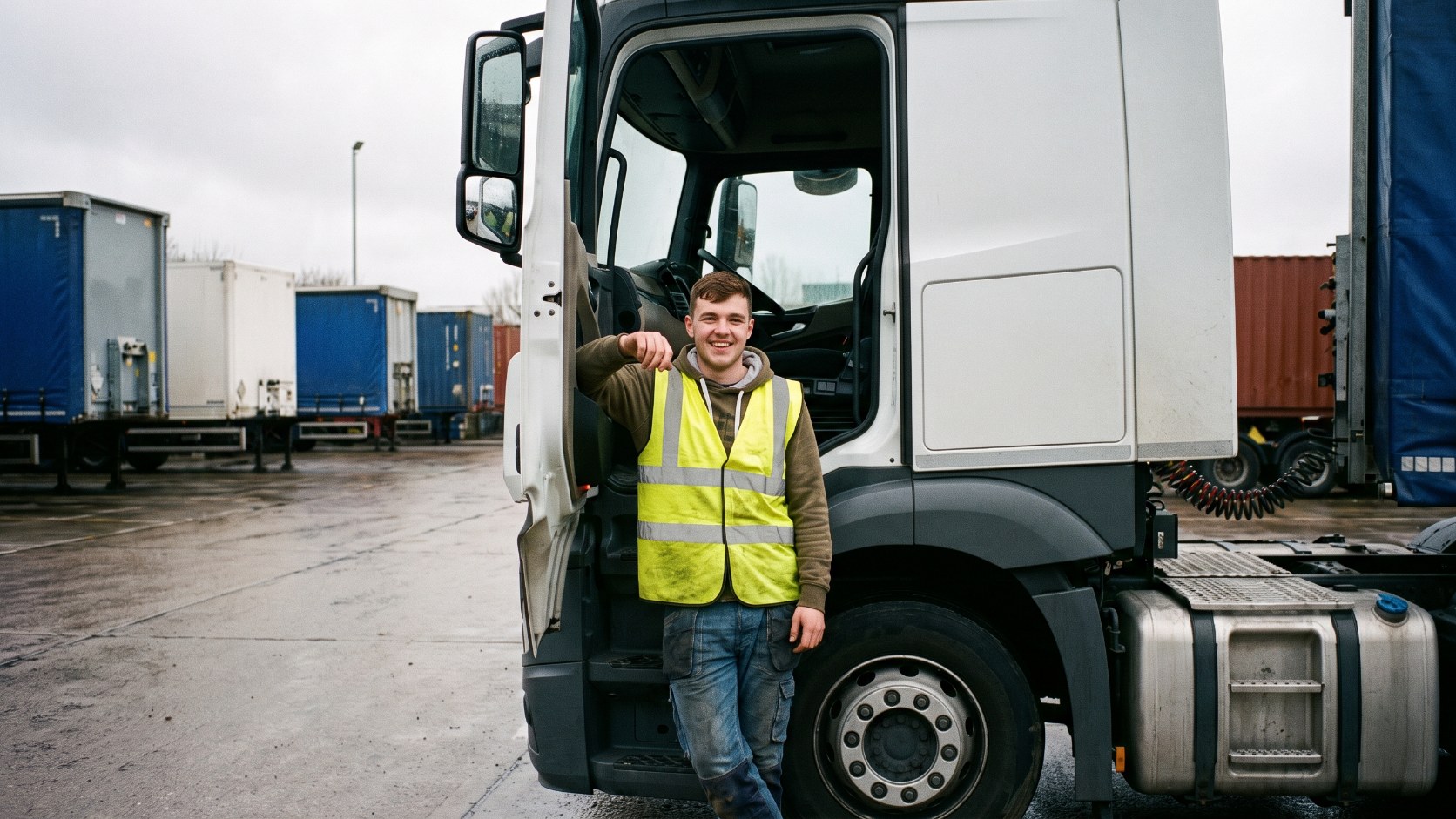
A C+E licence, also known as Class 1, lets you drive articulated lorries, the largest vehicle combinations on UK roads. Since a November 2021 rule change, you no longer need to hold a Cat C licence first, you can train for C+E directly from a car licence.
C+E training at a glance
- Minimum age: 18, with a full car (Category B) licence
- Route to C+E: straight from a car licence, or from Cat C1 or Cat C if you already hold one
- Medical: a D4 medical exam is required before your provisional entitlement is granted
- Vehicles covered: articulated lorries and rigid vehicles towing large trailers, with no upper weight limit
- Typical roles: long-haul and international freight, the highest-paid HGV driving category
Who can train for a C+E licence?
You need to be at least 18 and hold a full car licence to begin. Since November 2021, the DVSA no longer requires you to hold a Cat C licence before training for C+E, so you can go straight from a car licence to an articulated lorry if that is the qualification you want. You will still need to pass a D4 medical exam and the LGV theory tests before your provisional entitlement is added.
What does C+E training with HGV Learning involve?
Training covers both theory and the practical skills needed to handle an articulated vehicle safely. Click each section below for what it covers.
Theory and medical
Before practical training, you complete a D4 medical exam and the LGV theory tests, covering hazard perception and multiple choice questions on topics such as road safety, vehicle maintenance and commercial driving regulations.
Practical training
Most C+E courses run over a working week, with around 20 to 30 hours of practical tuition in a dedicated articulated vehicle. Training covers coupling and uncoupling, reversing, manoeuvring and safe on-road driving, building up to your practical test.
Driver CPC
Alongside your C+E licence, most learners also need a Driver CPC (Certificate of Professional Competence) to drive commercially. We can help you plan the initial qualification and the 35 hours of periodic training you need every 5 years.
How much does C+E training cost?
Costs vary depending on your prior experience, how much practical tuition you need, and whether you are self-funding or looking at finance or employer sponsorship. See our Class 1 training cost guide for a full breakdown, or contact us for a tailored quote.
C+E or a different HGV licence?
C+E covers articulated lorries with no upper weight limit, the top tier of HGV licences. If you would rather start on a rigid vehicle first, a Cat C licence covers rigid lorries up to around 32 tonnes, and a C1 licence covers smaller rigid vehicles up to 7.5 tonnes. Since the 2021 rule change you can go straight to C+E without training on a rigid vehicle first, so the right route depends on the work you want, not a fixed order.
Career opportunities with a C+E licence
A C+E licence opens up long-haul and international freight driving, the highest-paid category of HGV work, along with abnormal loads, tanker work when combined with ADR, and general haulage roles that need the largest vehicles. See our HGV driver salary guide for current UK pay ranges, or read our practical guide to Class 1 driver training.
Frequently Asked Questions
Do I need to hold a Cat C licence before training for C+E?
No. Since a November 2021 rule change, you can train for C+E directly from a full car licence, without holding Cat C first.
Do I need a medical for a C+E licence?
Yes. You need to pass a D4 medical exam before your provisional C+E entitlement is granted.
How long does C+E training take?
Most courses run over a working week, with around 20 to 30 hours of practical training, though this varies with prior driving experience.
Do I need a Driver CPC to drive C+E commercially?
Yes, most commercial drivers need a Driver CPC alongside their C+E licence. We can help you plan this alongside your training.