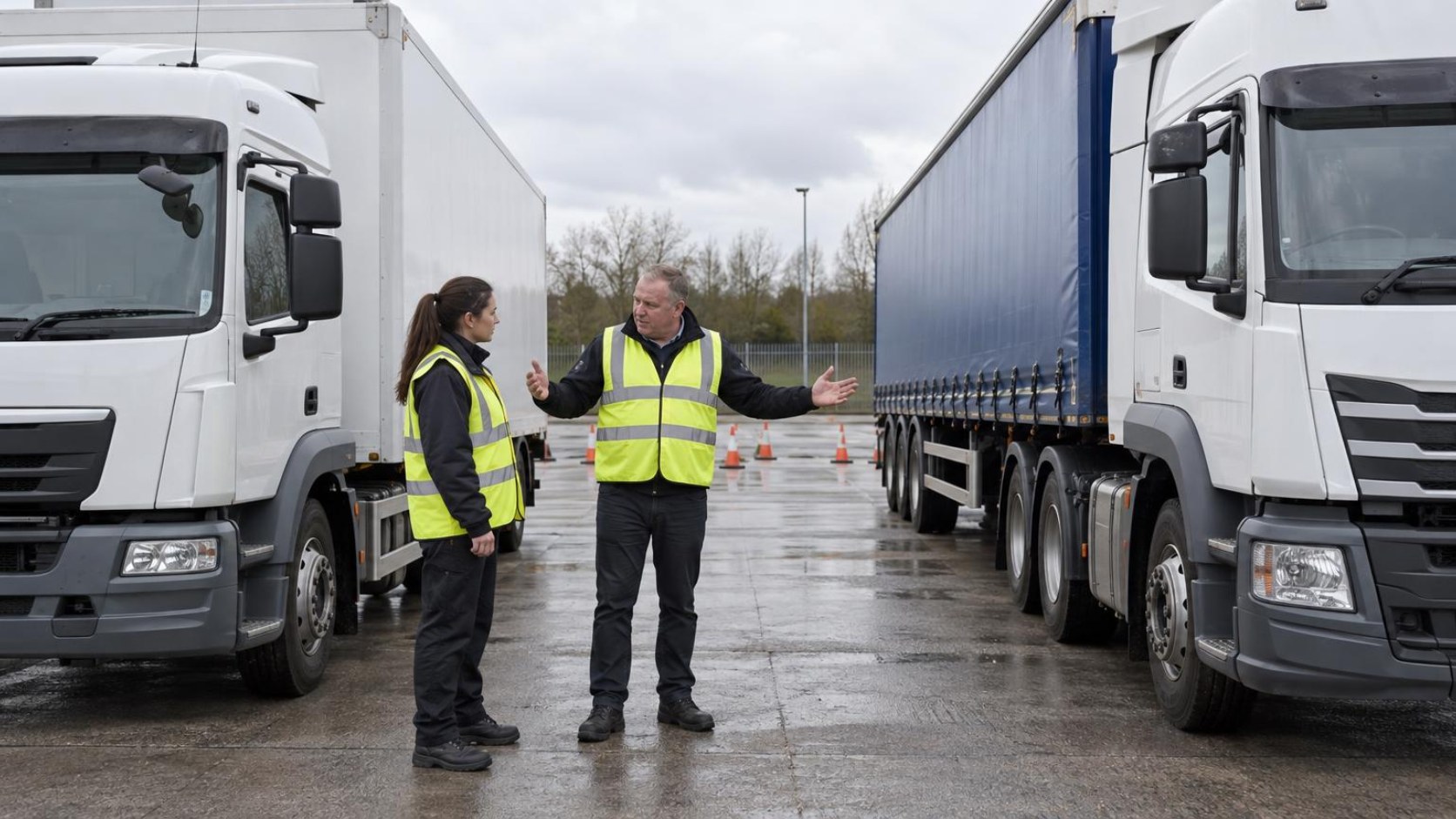
Passing your test is one job done. Working out what kind of HGV driving you actually want to do is the next one, and it matters more than most new drivers realise. A C+E licence can take you into three very different working lives: home every night on a local multi-drop round, running the same trunk route on a fixed shift pattern, or away in the cab for days at a time on long-haul tramping work.
These aren’t just different job titles. They mean different hours, different pay structures, different physical demands and a completely different relationship with home life. Get the match wrong and you can end up qualified, employed, and still unhappy with the job. This guide breaks down the main types of HGV driving work in the UK, what each one is actually like day to day, what it pays in 2026, and how to work out which one fits the life you want to build around it.
What We Mean by “Types of HGV Driving Jobs”
Licence category (C1, Cat C or C+E) tells an employer what you’re legally allowed to drive. It doesn’t tell you what the job will actually involve day to day. Two drivers with the same C+E licence can have completely different working lives depending on the type of operation they join.
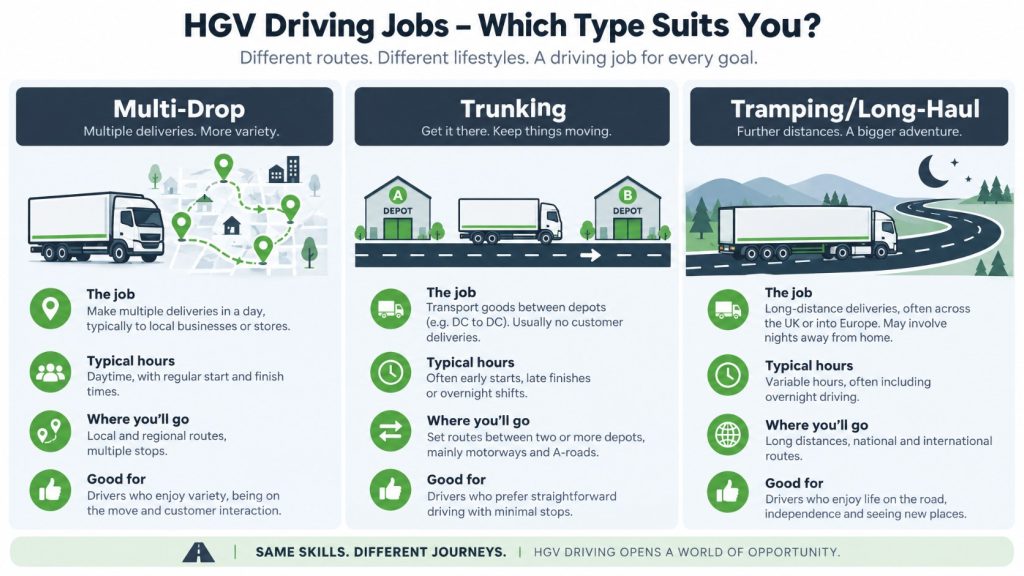
That’s the distinction this guide works through: not which licence to get, but which shape of job to look for once you’ve got it. The main categories UK hauliers and recruiters use are multi-drop, trunking, and long-haul or tramping, with specialist work such as ADR and HIAB cutting across all three.
Your licence decides what you can drive. The job type decides what your week actually looks like.
Multi-Drop Driving: Local, Many Stops, Home Every Night
Multi-drop is exactly what it sounds like: one vehicle, one round, lots of stops. Think retail distribution, parcel and pallet networks, or supplying shops and building sites across a local or regional patch. It’s the job most people picture when they think of a delivery driver, just scaled up to HGV size.
It’s also the job type with the widest range within it. A small-van-replacement round delivering to shops might involve 25 light drops a day, while a building-merchant round might mean five or six heavy, awkward deliveries that each take 20 minutes with a crane offload or pallet truck. Both count as multi-drop, but they feel very different behind the wheel.
What a Typical Multi-Drop Day Looks Like
You’ll usually start early, load or check a pre-loaded vehicle against a manifest, then work through a planned route of anywhere from a handful to 20+ drops. Expect regular lifting, pallet truck work, proof-of-delivery scanning, and a fair amount of customer contact at each stop.
Shifts are typically 8 to 10 hours, and you’re home the same day, every day. The trade-off is that the work is physically busier than a motorway-heavy trunk run, and the day rarely goes exactly to plan once traffic, access issues or a difficult drop get involved.
Who Multi-Drop Work Suits
Multi-drop suits drivers who want predictable home time above almost everything else, don’t mind manual handling, and prefer variety (different sites, different customers) over long stretches of motorway. It’s also the most common entry point for newly qualified Cat C and C1 drivers, since routes and vehicles are often smaller and slower-paced than trunking or tramping work.
Feature
Multi-drop
Typical vehicle
Rigid (C1 or Cat C), occasionally artic for larger networks
Home time
Every night, fixed daily shift
Physical demand
High – regular lifting and pallet work
Best suited to
Newly qualified drivers, those prioritising routine and home life
Typical weekly hours
45–50
Trunking: The Same Route, Different Shift Patterns
Trunking means running a fixed route between two points, usually depots, distribution centres or ports, on a repeating schedule. There’s typically one drop (or a small number), rather than the dozens you’d see on a multi-drop round, and the job is built around consistency rather than variety.
It’s common across supermarket distribution, parcel hubs and manufacturing, where the same trailer needs moving between the same two or three points, day after day. Because the route rarely changes, trunking drivers tend to know every junction, weighbridge and awkward yard entrance on their run better than almost anyone else in the business.
Day Trunking vs Night Trunking
Day trunking suits drivers who want regular daytime hours and minimal customer-facing work. Night trunking runs the same principle through the small hours, usually to move stock ahead of store openings or to make better use of quieter roads, and often pays a shift premium to reflect the unsocial hours.
Either way, you’re almost always home at the end of the shift. Some operations use driver relays, where one driver takes a trailer partway and hands over to another, specifically to keep everyone home every night even on longer routes.
Trunking Pay and Lifestyle Trade-Offs
Trunking tends to sit between multi-drop and tramping on pay, reflecting the longer hours and (for night shifts) unsocial hours premium, against a lighter physical workload than multi-drop. The main trade-off is monotony: the same route, repeated, suits some drivers and bores others.
Trunking trades variety for predictability – the same road, the same hours, home every night.
Long-Haul and Tramping: Nights Away, Higher Mileage
Tramping is long-distance work where drivers are away from home for several days, sometimes a full week, often sleeping in the cab’s bunk between legs. It’s almost always done in an articulated lorry on a C+E licence, covering far more miles than multi-drop or trunking work.
What Tramping Actually Involves
A tramping week might mean collecting a load on a Monday, running it across the country or into Europe, picking up return loads along the way, and not seeing home again until Thursday or Friday. Drivers plan their own rest breaks around the legal driving-hours limits, use truck stops and motorway services, and build a routine around life on the road.
Night-Out Allowances and Subsistence Pay
Because tramping drivers can’t go home to eat and sleep, the industry pays a separate overnight subsistence allowance on top of basic wages, to cover meals and the cost of living away. The RHA’s 2026 Pay Report puts the agreed industry rate at roughly £34.90 a night for a driver without a sleeper cab, or around £26.20 where the vehicle has one, since food and facility costs are assumed to be lower.
Allowance type
2026 rate
Applies to
Night out, no sleeper cab
~£34.90
Drivers without a sleeper berth, covering meals and facilities
Night out, sleeper cab
~£26.20
Drivers with a sleeper berth, where living costs are lower
Basic weekly pay (C+E average)
£883
All C+E/Class 1 drivers, before night-out allowances
Some employers have moved to receipt-based claims instead of a flat nightly rate, so always check your own contract rather than assuming the standard figure applies.
Who Tramping Suits (and Who It Doesn’t)
Tramping tends to pay more than multi-drop or trunking once allowances are added, and it suits drivers who are comfortable with their own company, don’t mind cab life, and want to maximise earnings. It’s a harder sell for anyone with young children, caring responsibilities, or a strong preference for being home every evening.
Higher earning potential once night-out allowances are included
Genuine independence – you plan your own day within the legal limits
Access to a wider range of work, including European runs for some operators
Significant time away from home, often several nights a week
More reliance on truck stops and cab facilities for rest and meals
ADR, HIAB and Specialist Driving: A Different Shape of Job Again
Specialist work adds a layer on top of multi-drop, trunking or tramping rather than replacing it. An ADR-qualified driver carrying hazardous goods, or a HIAB-qualified driver running a crane-fitted lorry, might still be doing a local multi-drop round or a long-haul trunk route. The specialism changes the cargo and the certification, not necessarily the working pattern.
What it does change is pay and demand. ADR and HIAB qualifications are scarcer than a standard HGV licence, so they tend to command a premium and give you a wider pool of jobs to choose between, including work that standard-licence drivers simply can’t take on. Our guide to ADR driver salaries breaks down exactly how much of a premium that can be.
A specialism doesn’t replace your job type – it adds a premium on top of whichever one you choose.
Agency vs Direct Employment: Does It Change the Job Type?
Agency work and direct employment are a separate axis from multi-drop, trunking and tramping, but they interact with each other. Agencies place drivers into all three job types, often at short notice, which suits drivers who want flexibility or are testing out a job type before committing.
Agency work offers flexibility and quick starts, but shifts can be inconsistent and you’ll usually move between different vehicles and sites.
Direct employment offers a fixed route or round, more predictable hours, and typically better access to holiday pay, pension and sick pay from day one.
Agency-to-permanent roles let you trial a specific job type with an employer before either side commits, which is useful if you’re not sure whether tramping or trunking suits you.
Many newly qualified drivers start with an agency precisely because it lets them sample multi-drop, trunking and even short tramping contracts before settling on the type of work they want long term.
The trade-off runs both ways, though. Agencies take a margin on your hourly rate for the flexibility they provide, and a driver who’s genuinely sure they want, say, permanent night trunking is often better off applying directly to operators who run that work, rather than paying for flexibility they don’t need.
Pay Across Job Types: What the 2026 Figures Actually Show
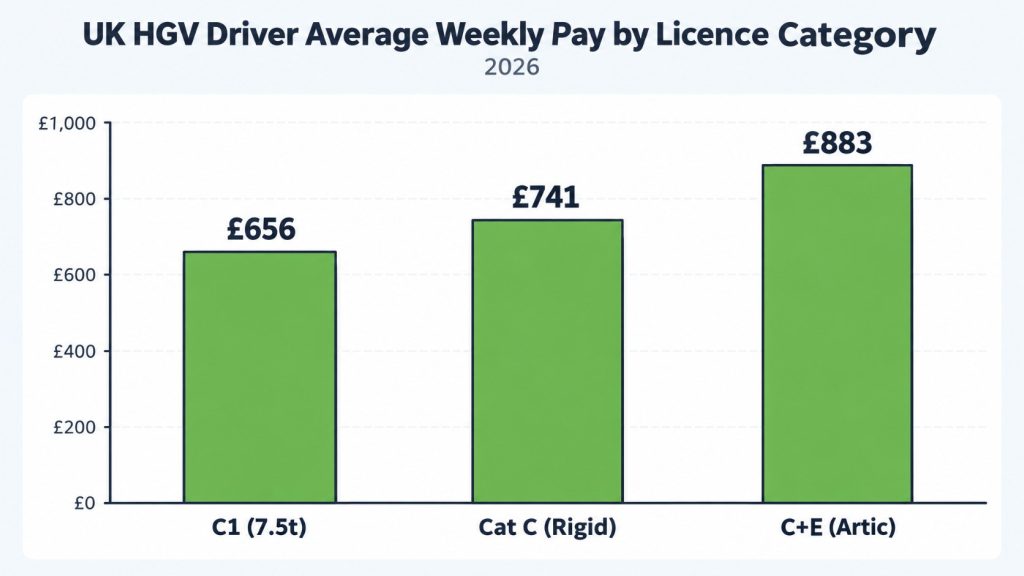
The clearest UK-wide pay data comes from the RHA’s own annual pay survey, which breaks figures down by licence category rather than job type. It’s still useful as a baseline, since job type then shifts you up or down within your category’s range – our own guide to average HGV driver pay goes further into how that works.
Licence category
Average weekly pay
Average weekly hours
C1 (up to 7.5t)
£656
48
Cat C / Class 2 (rigid)
£741
49
C+E / Class 1 (artic)
£883
55
Within each category, multi-drop pay tends to sit at the lower end once you account for the shorter hours and local-only driving. Trunking usually adds a modest premium for night or unsocial shifts, and tramping adds the most through a combination of longer hours, higher mileage-linked pay in some operations, and the night-out allowances covered above.
Driver pay has also been rising faster than headline figures sometimes suggest. Government data shows that in the final quarter of 2025, 42% of haulage businesses with driver vacancies named “better pay or benefits elsewhere” as the top reason drivers were leaving, which means employers are actively competing on pay right now, particularly for trunking and tramping roles that are harder to fill.
Driving Hours and Rest: The Same Limits, Different Pressure
Whichever job type you choose, the legal driving-hours and working time rules are the same: a daily driving limit, mandatory breaks, and weekly and fortnightly caps that apply across the board. What changes is how much those limits actually bite.
Multi-drop and trunking drivers rarely come close to the daily driving limit, since loading, unloading and customer time eat into the shift. Tramping drivers are far more likely to plan their whole week around exactly where the legal breaks and rest periods fall. We’ve covered the full rules, including the UK’s working time directive for mobile workers, in a separate guide if you want the detail. The official drivers’ hours rules and guidance collection on GOV.UK is the primary source if you need the exact legal limits.
How to Decide Which Type of HGV Job Is Right for You
There’s no universally “best” job type, only the one that fits your circumstances. Work through these questions honestly before you start applying.
How much do you need to be home every single night, versus home most nights, versus home at weekends only?
Are you comfortable with physical graft (lifting, pallet work) or would you rather sit behind the wheel for longer stretches?
Do you want routine, or does the same route every day sound unbearable within a month?
Could a specialism (ADR, HIAB) open up better-paid work within the job type you’ve already chosen?
Would agency work help you try a job type before committing to it permanently?
The right job type is the one that fits your life outside the cab, not just the one that pays the most per mile.
How Your Licence Category Shapes Your Options
Your licence category sets the ceiling on which job types you can realistically go for. A C1 licence (up to 7.5 tonnes) opens up most multi-drop and local trunking work, but very little tramping, since long-haul operators almost always run artics. Cat C gives you access to rigid trunking and multi-drop at higher weights, while C+E opens every door, including long-haul and European tramping work.
This is worth thinking about before you train, not after. If your goal is maximum earning potential through tramping, training straight for C+E makes more sense than starting on C1 and working your way up, since you’ll spend less time and money overall reaching the licence that actually opens that door. If you’re weighing up Cat C against going straight to C+E, we’ve written a full comparison of the two routes covering cost, training time and the job types each one realistically opens up.
Getting Your First Job in a Job Type You Haven’t Tried
Most newly qualified drivers get their first real feel for a job type on the job itself, not before it. Agencies and sympathetic employers both know this, and plenty of operators run structured inductions specifically for new licence holders moving into multi-drop or trunking work for the first time.
It’s also worth being honest with an employer or agency about where you’re starting from. Saying plainly that you’ve only done multi-drop work and want to try trunking, or that you’ve never spent a night away from home and aren’t sure tramping is for you, gets you steered towards suitable roles far faster than saying yes to everything and hoping it works out.
None of these job types is a permanent choice, either. Plenty of experienced drivers move between multi-drop, trunking and tramping more than once across a career, chasing better pay at one stage, more home time at another, and a change of scenery when a route or round starts to feel stale. Treat your first job type as a starting point, not a life sentence.
Frequently Asked Questions
What’s the difference between trunking and tramping?
Trunking means running a fixed route and returning home at the end of the shift, whether that’s a day or night shift. Tramping means being away from home for several days at a time, covering long distances and sleeping in the cab between legs.
Which pays more: multi-drop, trunking or tramping?
Tramping usually pays the most once night-out allowances are included, followed by trunking (particularly night shifts), with multi-drop typically at the lower end within the same licence category. The gap narrows once you account for the shorter, more predictable hours multi-drop offers.
Can I do multi-drop work with a C1 licence?
Yes. C1 (up to 7.5 tonnes) is a common licence for local multi-drop work, particularly for smaller retail and parcel networks. Larger multi-drop operations running heavier vehicles need a Cat C or C+E licence instead.
Is tramping suitable for new drivers?
It can be, but most tramping operators prefer at least some driving experience before putting a new licence holder on long, unsupervised routes. Many newly qualified drivers start with multi-drop or trunking and move into tramping once they’ve built confidence and a clean driving record.
How many nights away does tramping typically involve?
It varies by operator and route, but two to four nights away per week is common, with some long-distance or European work running closer to a full week before a driver returns home.
Do agency drivers get to choose their job type?
Agencies generally try to match drivers to the work they’re comfortable with, but availability depends on what clients need at the time. Being upfront with your agency about which job type you want, and which you’ll turn down, tends to get better results than accepting anything offered.
Does ADR or HIAB training lock you into one job type?
No. An ADR or HIAB qualification is a certification you carry alongside your licence, and it can be used in multi-drop, trunking or tramping work depending on the employer and the loads involved. It widens your options rather than narrowing them.
What’s the night-out allowance for HGV drivers in 2026?
The agreed industry rate is roughly £34.90 a night for drivers without a sleeper cab, and around £26.20 for those with one, on top of basic pay. Some employers now use receipt-based claims instead, so check your own contract for the exact arrangement.
Should I choose my job type before or after I qualify?
It’s worth having a preference going in, since it can influence which training provider or employer links you pursue, but most drivers only know for certain once they’ve tried the work. Treat your first role as useful information, not a permanent decision.
Can I switch job types later in my career?
Yes, and many drivers do. Moving from multi-drop into trunking, or from trunking into tramping and back again, is common as personal circumstances, pay expectations and preferences change over time. Your licence and experience carry across all three.
Related Articles
10/11/2026
The HGV Practical Test Explained: Reversing, Coupling and What Happens on the Day
You pass your theory test, book your practical, and then realise nobody has actually told you what happens on the day itself. Most guides talk...