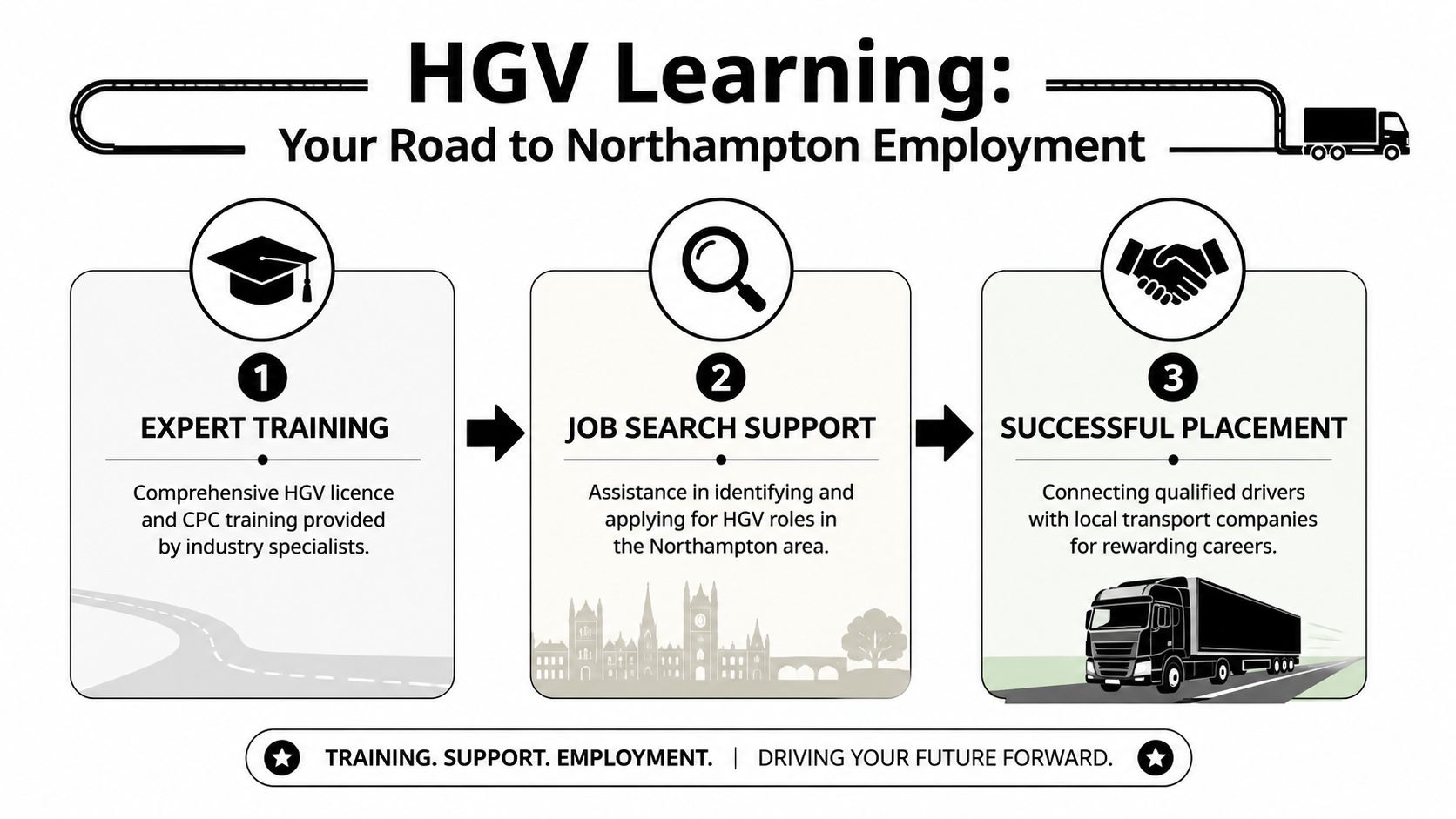
You're probably looking at Northampton's roads and industrial estates and thinking the same thing a lot of people think. There are lorries everywhere. The work looks steady. The money looks decent. But the hard part isn't spotting the opportunity. It's working out how to get from a car licence to an actual paid driving job.
That's where many get caught out.
They pass the test, update the CV, fire off applications, and then hit the same wall. Employers want the right licence, the right CPC status, the right shift availability, and often some proof that you can handle the job safely from day one. In Northampton, that matters because this is a busy logistics area with fast-moving recruitment and strict screening.
Your Introduction to Northampton's HGV Sector
You pass your test on Friday, start applying on Monday, and by the end of the week you've learned a hard truth about Northampton HGV jobs. A licence gets you through the first filter. It does not guarantee a start date.
That catches out a lot of newly qualified drivers in this area because Northampton has plenty of transport work, but it also has busy depots, tight delivery schedules and employers who need someone ready to work safely from day one. The local market suits people who plan the route into work properly. It is less forgiving if you qualify first and only then start thinking about what employers want.
Pay is one reason people look seriously at the trade. If you want a broader benchmark beyond local job ads, Go Hires' analysis of truck driving wages gives useful context on how driver pay changes by role and location. If you are still weighing up whether the job fits your hours, lifestyle and long-term plans, this guide on whether HGV driving is a good career is worth reading before you spend money on training.
Northampton also has a practical split in the jobs available. Some firms want trunking and depot-to-depot work. Others need store deliveries, multidrop rigid work, night shifts or weekend cover. That matters because your first job is rarely about chasing the highest rate. It is about getting into the part of the market that will take a newly qualified driver and give you usable experience.
Know the licence terms before you spend money
A lot of people lose time here.
C1 covers smaller rigid vehicles above car size and below full-sized heavy lorries.
Category C is the usual Class 2 route for rigid HGVs.
C+E is the artic route, often called Class 1.
The better choice depends on the work you can get, not the badge you want on the licence. I tell Northampton trainees the same thing every week. Pick the route that matches the entry-level jobs you can realistically secure, your shift flexibility, and the kind of driving you want to build experience in first.
The typical route into work
For most new drivers in Northampton, the path looks like this:
Sort the medical and licence paperwork
Get provisional entitlement in place
Pass theory and CPC requirements
Complete practical training and the test
Target jobs that fit your actual licence and your current experience level
Step five is where the gap opens up.
A new pass with a C or C+E licence still needs to show something useful to an employer. That usually means applying for the roles that are more open to fresh passes, being flexible on start times, and understanding that the first six to twelve months are often about building a safe work record. In Northampton, that first foothold matters more than chasing the perfect job title straight away.
Securing Your HGV Licence and Certifications
The licensing route is more structured than one might expect, which is good news. If you tackle it in order, it's manageable. If you skip steps or rush your category choice, you create problems later when you start applying.
Start with the legal route
The National Careers Service describes HGV driving as a structured occupation that can be entered through an apprenticeship, a work-based route, or specialist training. It also says an LGV Driver C and E Level 2 Intermediate Apprenticeship can take around 1 year, and confirms that HGV drivers need the Driver CPC, while hazardous-goods work requires an ADR certificate in its large goods vehicle driver profile.
That matters in Northampton because many employers aren't just looking for someone who's technically allowed to drive the vehicle. They want a driver whose paperwork already lines up with the role.
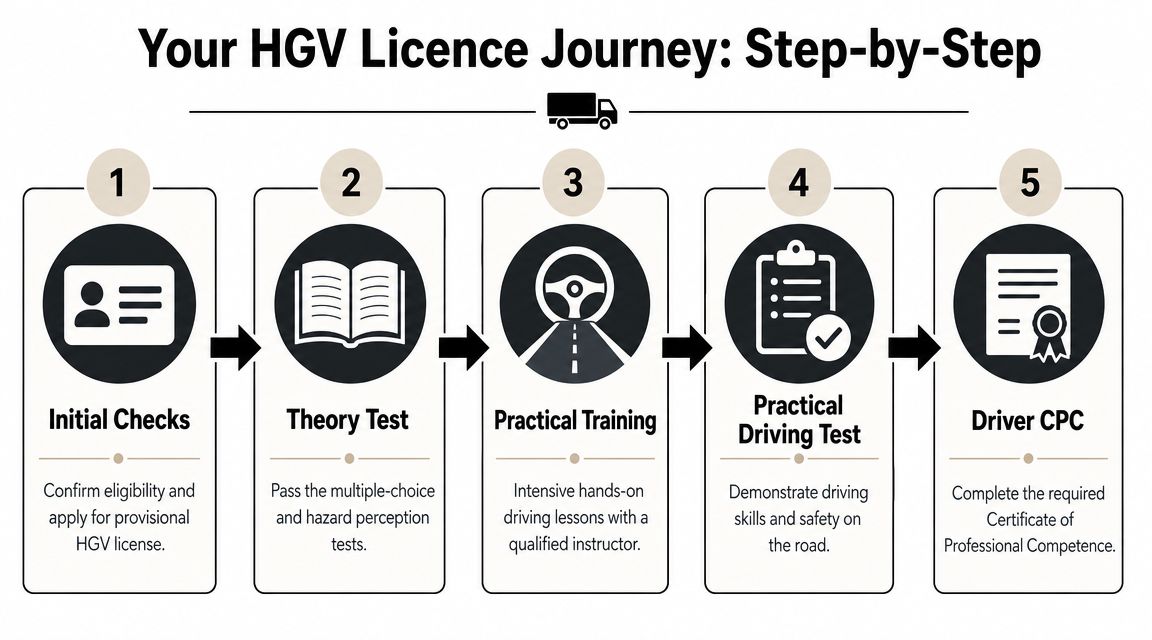
The five-stage route that works
Most new drivers need to think in sequence.
Stage
What you do
Why it matters
Initial checks
Confirm eligibility and sort the medical and provisional application
Without this, nothing else moves
Theory test
Revise properly for multiple choice and hazard perception
Weak prep delays training
Practical training
Learn in the vehicle class you plan to work in
Training should match job goals
Practical test
Show safe, consistent on-road control
Employers care about standards, not just passes
Driver CPC
Complete the professional qualification requirement
Here's the mistake I see most often. People assume the top licence category solves everything. It doesn't.
A new Cat C+E driver can still struggle if the vacancies they target want recent trunking experience, night flexibility, or familiarity with a specific operation. A Cat C driver can sometimes get moving faster if local rigid work has a better fit for their background and confidence level. The right answer depends on what you can do safely and what the local ads are filtering for.
Get qualified first, but qualify with the labour market in mind. A licence that doesn't line up with local demand and your own readiness can leave you waiting longer than you expected.
Specialist tickets can widen your options
ADR is the obvious example. Not every new driver should rush into it, but if you know you want fuel, chemicals or hazardous goods work later, it's a sensible progression route. The same applies to other specialist training depending on the sectors you want to enter.
There's also the support side. Some training coordinators handle the paperwork, theory preparation and practical bookings as one process. HGV Learning is one example of that model, coordinating documentation, theory support and local practical training rather than leaving learners to organise each stage alone.
Finding the Right HGV Roles in Northampton
The Northampton market looks wide open until you read the adverts properly. That's where reality kicks in.
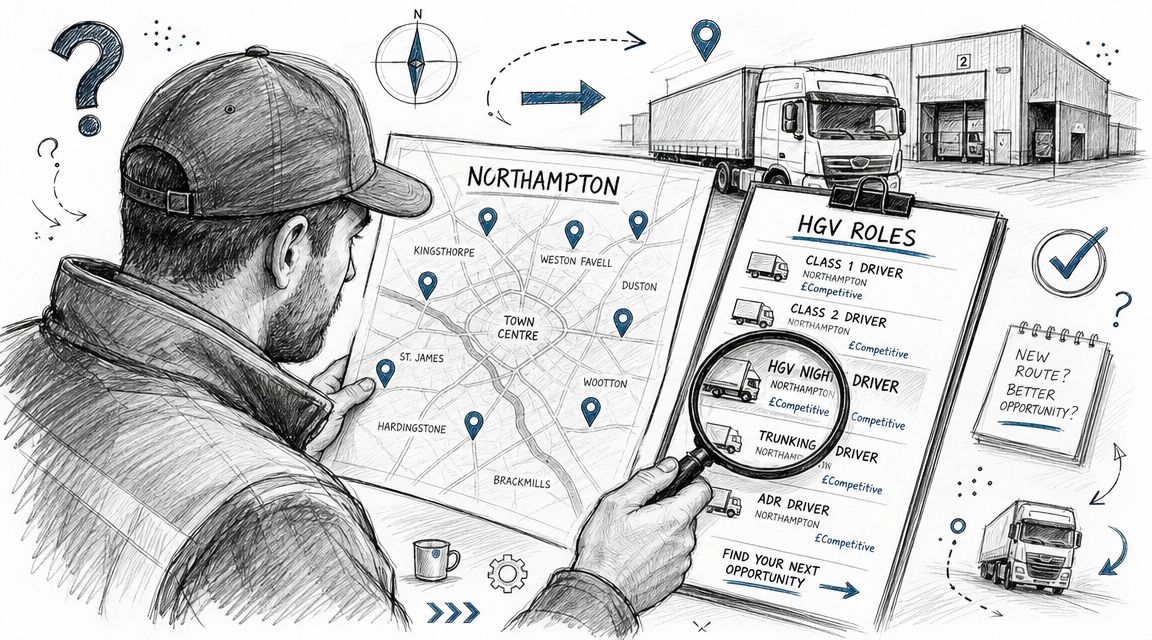
A lot of drivers search “HGV jobs Northampton”, see page after page of vacancies, and assume volume equals easy entry. It doesn't. Local listings often split into two lanes. One lane is for drivers with recent, relevant experience. The other is a smaller pool of roles marked for newly qualified or no-experience applicants.
A recruitment angle that doesn't get enough attention is this split. Local ads often filter for recent experience or specific shift patterns, while some recruitment pages separately advertise no-experience roles, which points to a divided market rather than one easy route for everyone. That issue is visible in this Northampton Class 1 recruitment example.
Read the advert like a transport manager
Don't skim HGV adverts. Screen them hard.
When local employers write things like valid Cat C, early starts, store work, trunking, multi-drop, weekend cover or recent experience, they're usually telling you what they reject on first pass. That's not just description. It's a filter.
Use this quick test before you apply:
Licence fit: Does the role match your exact entitlement?
Experience fit: Are they asking for recent work you have?
Shift fit: Can you do the start times and finish pattern?
Work type fit: Trunking, multi-drop and store deliveries need different strengths.
New drivers rarely break in by applying at random. They usually get traction through one of these routes:
Agency registration: Agencies can place drivers into short-term or lower-risk runs that build recent experience.
No-experience recruitment pools: Some larger operations do keep these separate from their standard adverts.
Shunting or yard-based work: It's not glamorous, but it builds confidence and site discipline.
Rigid vehicle roles first: For some drivers, Cat C work is the practical bridge before moving further.
This short video is worth watching if you're trying to understand how to approach the market more realistically.
What doesn't work
Sending the same generic CV to every Northampton HGV vacancy is one of the fastest ways to waste a week. So is applying for roles that clearly ask for experience you don't have.
The best applications are narrow, not broad. Match the licence, match the shift, match the experience band, then apply.
Creating a Standout HGV Driver Application
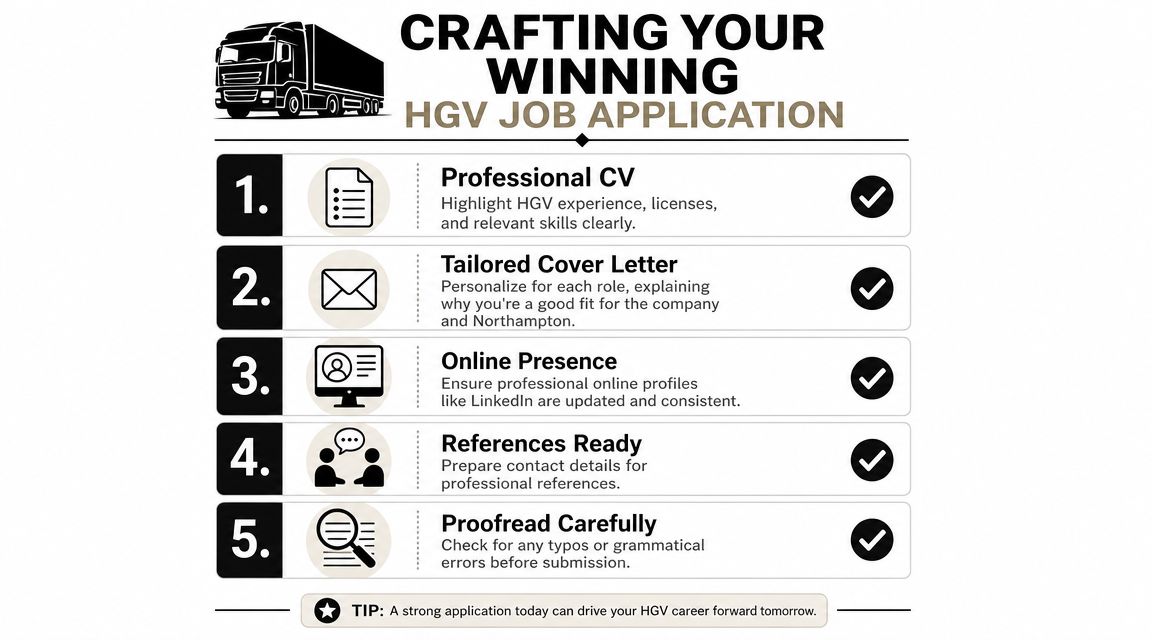
A transport manager doesn't read your CV the way a general office recruiter does. They scan for licence class, compliance, availability, and whether you look like a risk. If that information is buried, your application weakens fast.
In Northampton, local listings often set hard filters such as a valid Cat C licence, at least 12 months of Class 2 experience, and early start windows of 05:00 to 07:00. They also point applicants toward highlighting licence category, CPC status, shift flexibility and recent mileage. Role-level benchmarking in local listings also shows Cat C work advertised at around £15.02 per hour, or about £37,489.92 annually, with up to a £45 bonus, which is useful as a comparator when screening offers, as shown in these Northampton HGV listing patterns.
What your first half page should do
Your top section should answer four questions before the reader reaches your work history:
What licence do you hold
Is your CPC current
Do you have a digital tachograph card
What shifts can you work
That information shouldn't sit in a side box or tiny footer. Put it near the top in plain language.
A practical opening looks like this in substance:
Category C licence holder with current Driver CPC and digital tachograph card. Available for early starts, weekdays and weekend cover. Comfortable with local delivery schedules and safety-led vehicle checks.
CPC, ADR if held, any additional plant or site tickets
How the interview day usually feels
Most HGV interviews follow a pattern. You arrive at the depot, sign in, and quickly realise they're watching before the formal interview even starts. Are you early. Are you organised. Do you speak clearly. Can you produce the right documents without rummaging through your bag.
Then the conversation turns practical. They ask about walk-around checks, drivers' hours, tachograph use, defects, reversing confidence, loading awareness, and what kind of runs you've done. If there's an assessment drive, they're not looking for flash. They want calm control, mirror use, road awareness, sensible speed, and respect for the vehicle.
Application test: If your CV promises trunking, store delivery, nights and weekend flexibility, be ready to talk confidently about all four. If you can't, strip the claim out before you apply.
Acing Your Interview and Driving Assessment
The interview and assessment stage is where weak preparation shows up. A lot of applicants focus on the licence pass and assume that's enough. It isn't. Operators hire for safety, reliability and fit with the run pattern.
The interview usually turns on practical judgement. Can you explain your daily checks clearly. Do you understand how to report a defect. Can you talk through what you'd do if a delivery site is tight, delayed or badly organised. Employers don't need polished speeches. They need signs that you won't create avoidable problems.
What assessors actually notice
Assessors often care more about your approach than your polish.
Preparation: Bring licence, CPC and supporting documents ready to hand.
Vehicle sympathy: Don't rush gears, force manoeuvres or show-off.
Observation: Use mirrors properly and keep scanning well ahead.
Composure: If a manoeuvre needs resetting, reset it safely.
One calm correction is better than one bad decision pushed through to save face.
Why joined-up support saves time
An integrated route makes sense. If your training, compliance preparation and job search support all sit in separate places, small gaps creep in. One provider focuses on the test. Another gives general job advice. Nobody checks whether your CV matches the kind of assessment you're likely to face.
That wastes effort in a market where the reward is worth taking seriously. Earlier in this guide, the Northampton salary picture showed meaningful earning potential and a strong vacancy pool in the town. That's exactly why it makes sense to treat the whole route as one process, not a pile of disconnected tasks.
Your Fast Track from Training to a Northampton HGV Job
A common Northampton story goes like this. Someone passes the test, gets the new licence in hand, applies for ten jobs, then hears nothing back because every role asks for experience. The licence matters, but it only gets you to the gate.
The drivers who get into work faster treat the first few months as a planned handover from training into employment. That means choosing the right licence path, sorting documents early, and aiming at operators who do consider a newly qualified driver. In Northampton, that usually means being realistic about where you start. General haulage, pallet networks, store deliveries and support roles with larger fleets often give new drivers a better first step than chasing specialist work too early.
Money needs a clear view as well. Training costs, time off work, medicals, tests and day-to-day bills all need factoring in before you book anything. If payment options help spread the cost and keep the process moving, that can make the switch easier to manage. As noted earlier, Northampton offers enough demand and earning potential to make this a practical career move, but only if you plan past test day.
The experience gap catches out a lot of new pass drivers. Employers are not always asking for years on the road. Many are asking for signs that you understand the job beyond the licence. They want someone who can turn up on time, handle paperwork properly, follow site rules, protect the vehicle, and stay steady when a delivery does not go to plan.
That changes how you should approach the job search.
Target entry-point roles first: Look for companies open to newly qualified drivers, driver mate to driver routes, warehouse-to-driving progression, and larger firms with structured inductions.
Show work-readiness, not just licence status: Put CPC, digital tachograph card, shift flexibility, route discipline, and any transport, warehouse or delivery background near the top of your CV.
Apply with a local plan: Northampton employers often care about start times, depot access and run patterns. Make it easy to see that you can get to the yard reliably for early starts or night work.
Build references before you need them: A training instructor, transport supervisor, warehouse manager or previous employer who can speak about punctuality and attitude helps more than vague claims about being hard-working.
I tell new drivers this all the time. Your first HGV job does not need to be perfect. It needs to get you safely through that first six to twelve months so your next application is stronger.
If you want one place to sort training, paperwork support and job-focused guidance, HGV Learning is worth a look. It helps new and progressing drivers move from licence planning into practical training and then into the job search with support that fits how the HGV market works.