You might be sitting in Aylesbury right now weighing up a career change. Maybe you're fed up with shift patterns that go nowhere. Maybe you need a licence for ambulance work, a horsebox, or a proper move into logistics. Whatever brought you here, the good news is that HGV training isn't guesswork if you follow the right path in the right order.
A lot of people overcomplicate it at the start. They jump straight to course prices or test dates before they've worked out which licence they need, whether their paperwork is ready, or how the training flow works from medical to first job. That's where most delays begin.
Your Guide to a New HGV Driving Career in Aylesbury
If you're looking at HGV training in Aylesbury, you're not chasing a niche licence. You're stepping into a part of the UK economy that runs every day. The Office for National Statistics has published dedicated analysis of HGV drivers, which shows how closely this workforce is tracked, and industry commentary linked in that context notes there are around 500,000 lorries on UK roads. That gives local training real weight for people aiming at logistics work in and around Aylesbury and Buckinghamshire, as reflected in the ONS analysis of HGV drivers.
Aylesbury suits learners because it sits in reach of distribution routes, commercial estates, and employers that need drivers who can turn up prepared, safe, and compliant. That matters more than flashy marketing. The local market tends to attract a mix of career changers, new entrants to transport, and specialist drivers who need the right entitlement for a specific role.
What people usually want to know first
Most learners ask the same practical questions:
Which licence fits my plan. C1, Cat C, and C+E lead to different kinds of work.
How long does the process feel in real life. The answer depends on paperwork, test readiness, and how organised your training provider is.
Whether local training leads to real work. It can, if you choose the right licence and treat the process like a job route, not just a test booking.
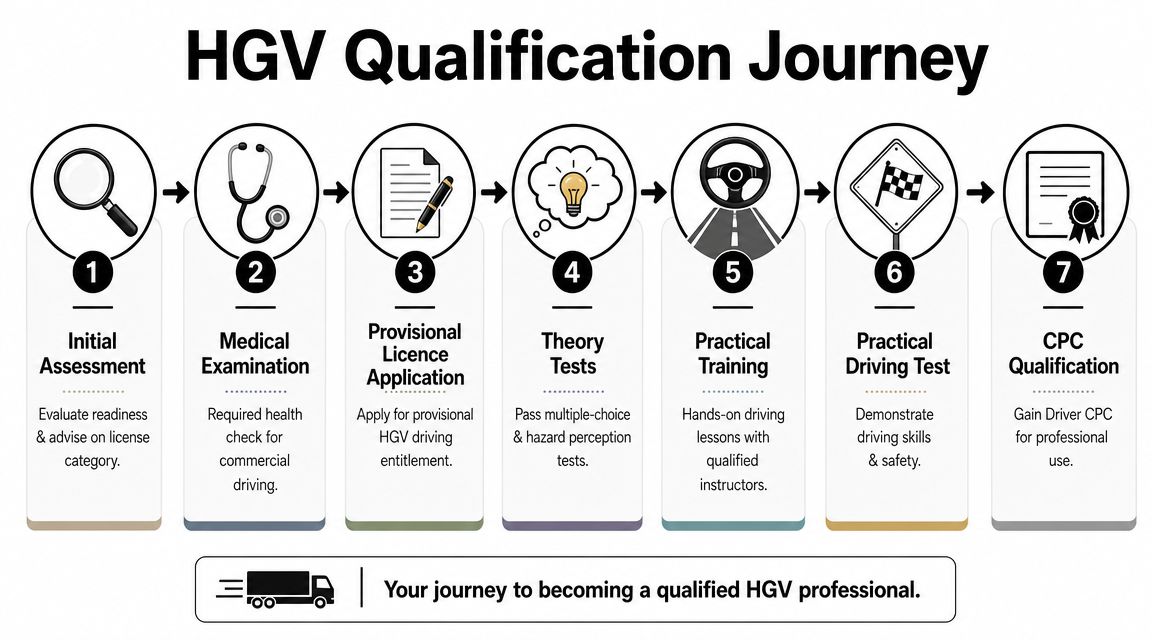
HGV training works best when you think in stages. Medical, provisional, theory, practical, CPC, then job search.
If you're still at the research stage, a good starting point is this guide to finding HGV driver training near you. It helps you compare what local training support should include.
Choosing the Right HGV Licence for Your Goals
The biggest early mistake is choosing a licence by name instead of by job outcome. You don't need every category. You need the one that matches the work you want to do.
UK driver licensing follows a structured route, and local training around Aylesbury is built around DVSA-compliant preparation for Category C1, Category C, and C+E. For C1 applicants in particular, training is often linked to ambulance, horsebox, and other specialist driving needs, which is set out in the government guidance on training to drive an HGV.
HGV licence categories at a glance
Licence Category
Vehicle Type
Maximum Weight
Common Jobs in Aylesbury Area
C1
Smaller commercial vehicles
3.5 to 7.5 tonnes
Ambulance roles, horsebox driving, specialist delivery work
Category C
Rigid lorries
Over 7.5 tonnes
Local distribution, builders' merchants, pallet work, municipal driving
C+E
Articulated or drawbar combinations
Combination vehicles
Trunking, general haulage, RDC work, long-distance freight
C1 makes sense for specialist roles
C1 is often the right choice when the vehicle is part of the job rather than the whole career. That's common with ambulance applicants, private medical transport, and people moving larger horseboxes. If your aim is one of those roles, don't let anyone push you into a bigger category just because it sounds more impressive.
The trade-off is simple. C1 is targeted and useful, but it doesn't open the same range of mainstream haulage work as Cat C or C+E.
Category C suits rigid vehicle work
Category C is the practical middle ground for a lot of new drivers. If you're aiming for rigid lorries used in local and regional delivery, this is often the licence that fits. It can suit learners who want commercial driving work without going straight into artic training.
Practical rule: Choose Category C if you want broad access to local logistics work and you'd rather master a rigid vehicle first.
For many learners, Cat C also feels like the most manageable first step because the vehicle handling is demanding without adding trailer articulation into the mix.
C+E gives you the widest reach
C+E is the licence people usually mean when they say Class 1. It's the route into articulated combinations and the broadest freight options. If your target is trunking, depot-to-depot work, or larger haulage firms, this is the category that opens those doors.
That doesn't mean it's automatically the best first choice for everyone. If your confidence is low or your recent driving has been limited to short car journeys, jumping straight to C+E can work, but only if the training is well assessed and properly paced.
For a plain-English overview of how categories fit together, this guide on what an HGV licence is is useful before you book anything.
The Complete Pathway to HGV Qualification
Many individuals seek a clean answer to one question: What happens from day one to being qualified?
In practice, the route is structured. The typical sequence in UK HGV training is D4 medical screening, DVLA provisional entitlement, theory and hazard perception preparation, practical driver tuition, then initial Driver CPC modules, and the full journey commonly takes about 2 to 3 months from provisional application to full licence according to this outline of the UK HGV training process.
It starts with your medical and documents
Your first serious step is the D4 medical. This checks that you're fit for commercial driving and gives you the paperwork needed for your provisional entitlement. If the form is incomplete or signed incorrectly, the whole process slows down before it has really started.
After that, you apply to the DVLA for the provisional category you need. This stage sounds simple, but small errors create big hold-ups. Wrong details, missing signatures, or poor document handling can leave you waiting when you should be studying for theory.
Theory preparation matters more than people think
A lot of learners treat theory as the easy bit. That's a mistake. If you're under-prepared here, practical training gets pushed back, and your whole plan drifts.
Your theory preparation usually covers:
Multiple-choice revision that focuses on road law, signs, safe loading principles, and commercial driving awareness.
Hazard perception practice so you react early and consistently, not too late.
CPC case study prep if you're going into professional driving and need the full qualification route.
What works is steady prep over a short, focused period. What doesn't work is booking the test and hoping your car driving experience carries you through.
If theory slips, practical dates slip with it. Keep the whole chain moving.
Practical training is where confidence gets built
Once theory is passed and your provisional is sorted, practical driving begins. Here, good training earns its keep. You're not just learning to move a bigger vehicle. You're learning to think further ahead, use the mirrors properly, position early, manage speed on approach, and stay calm while handling a vehicle that punishes rushed decisions.
A proper practical course usually covers:
Vehicle safety checks so you can show the examiner you know what to inspect and why it matters.
Roadcraft including junctions, lane discipline, roundabouts, planning space, and smooth progress.
Reversing practice because this catches out learners who rely on instinct instead of repeated setup and control.
Test standard habits such as mirror use, signalling timing, and controlled observation.
The learners who improve fastest usually accept correction early. The ones who struggle often do one of two things. They either argue with the process because they've driven vans for years, or they stay so tense that they stop listening.
CPC and the move into professional driving
If you're driving professionally, the licence itself isn't the whole job ticket. You also need to complete the relevant Driver CPC elements. That part often feels like admin, but it matters because employers need drivers who are legally ready to work, not drivers who are half-qualified.
Some learners also look ahead to employment while training. If you're comparing wider pathways and employer-linked options, this overview of truck driver training programmes for 2026 gives useful context on how training routes can connect to work.
What keeps the process moving
The smoothest learners usually do a few basic things well:
They return paperwork quickly and check every form before sending it.
They revise before booking theory, not after.
They keep training days close together so skills don't go stale between sessions.
They ask early about CPC requirements instead of leaving it until the end.
That's the pathway. No mystery. Just a sequence that rewards organised learners.
Understanding HGV Training Costs and Course Options
Price matters, but price on its own is a poor way to choose training. The better question is what you're paying for, what support is included, and whether the course structure matches your ability level.
In Aylesbury, learners often come across two broad options. One is a package that bundles the key stages together. The other is a more customised route based on your starting point. Neither is automatically better. It depends on whether you need a straight run from paperwork to test, or whether you need extra support in one part of the process.
What a course usually includes
A standard package often brings together the parts most learners need:
Medical and document support so the D4 and provisional steps don't stall.
Theory preparation including hazard perception and CPC-related study where needed.
Practical tuition in the vehicle category you've chosen.
Test booking support so timing and availability line up properly.
The thing to watch is what's assumed but not stated. Some people think a package includes everything from first enquiry to full qualification, then find they still need separate help with theory revision, CPC, or extra training days.
Why the assessment drive matters
One of the most useful tools in HGV training is the assessment drive. Instructors often use it to estimate how many tuition hours a learner is likely to need, because test standard depends heavily on reversing control and road craft, as explained in this guide to HGV driver licence training.
That matters because a nervous but coachable learner may need a different plan from someone who's been driving larger vehicles informally for years. Paying for the wrong size course can cost more in the long run.
A short assessment at the start can save wasted lessons later.
If you're worried about affordability, it's sensible to look at structured help rather than guessing what you can stretch to. This guide to funding for HGV training is worth reading before you commit.
A quick visual run-through can also help if you want to see how the training pieces fit together in practice:
What works and what usually doesn't
Good value doesn't always mean the cheapest quote. It usually means the training is honest about what you need.
Approach
What tends to happen
Tailored course after assessment
Better fit for your current driving level
Package with clear inclusions
Fewer surprises on paperwork and bookings
Rushed booking with no assessment
Higher risk of under-preparation
Choosing by price alone
More chance of extra lessons later
If you're comparing providers, ask direct questions. Does the quote include medical support, theory help, practical training, and test coordination? If the answer is vague, expect gaps later.
Specialist Training and Landing Your First Driving Job
Getting the licence is the start of the career, not the finished article. Once you've got your entitlement, the next question is how to make yourself more useful to employers in the sectors around Aylesbury.
Some drivers stay broad and take general haulage or distribution work first. Others improve their options with specialist qualifications that fit construction, utilities, warehouse operations, or regulated loads.
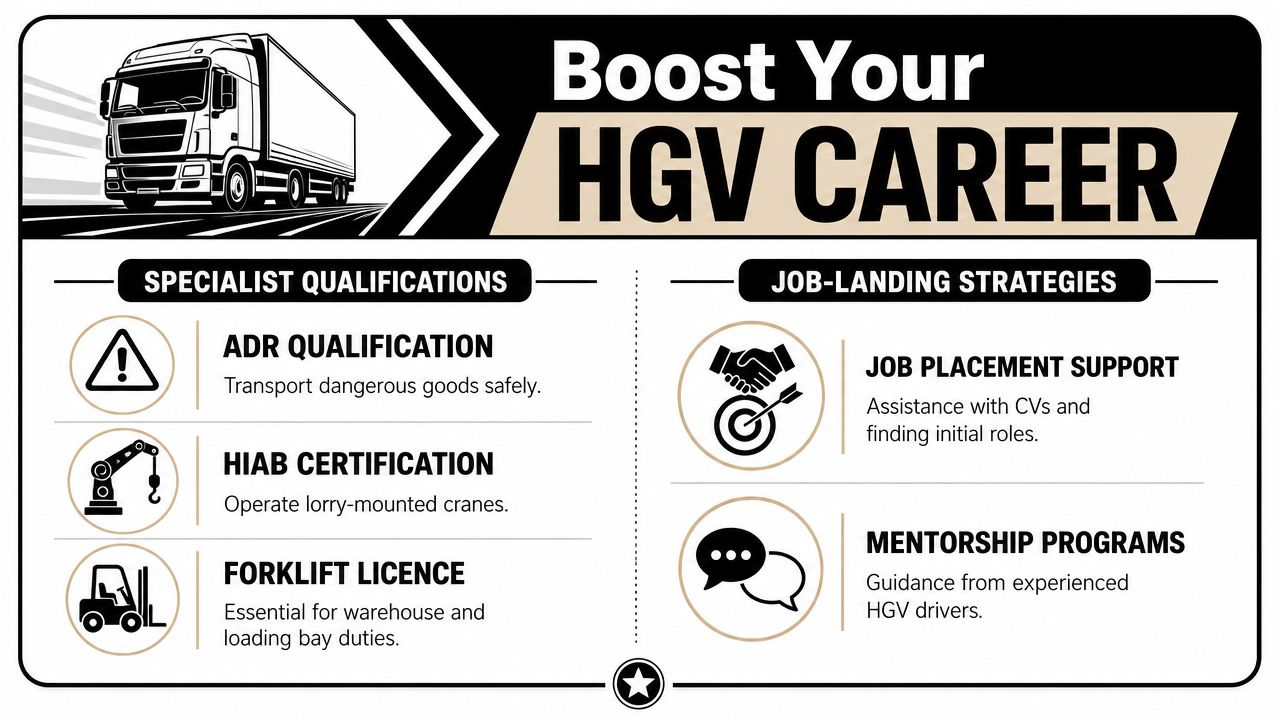
Specialist tickets that can widen your options
A few add-ons come up again and again because they link directly to practical work:
ADR for drivers who want to move hazardous goods safely and legally.
HIAB for work involving lorry-mounted cranes, often seen in builders' merchants, site delivery, and utilities.
Forklift or telehandler-related skills for people who want wider loading, yard, or site-based responsibilities.
These aren't mandatory for every new driver. They make more sense when they match the kind of employer you're targeting.
Getting into the first role
Your first driving job often depends less on having a perfect CV and more on showing that you're ready for real work. Employers want drivers who understand compliance, turn up on time, inspect the vehicle properly, and don't treat the road test as the end of learning.
A sensible early plan is:
Start with reachable roles rather than waiting only for the ideal one.
Be clear on your licence category and CPC status when speaking to employers.
Stay open to local rigid work first if that gets you commercial experience faster.
Add specialist training later when it matches a real vacancy type.
The best first job is usually the one that builds good habits, not the one with the flashiest job title.
Support after training also matters. Drivers who get help with job matching, interview preparation, and understanding which roles fit their licence tend to move into work more smoothly than drivers left to figure it all out alone.
Common Questions About HGV Training in Aylesbury
How long does the full process usually take
If your paperwork is clean and you keep each stage moving, the full route commonly takes about 2 to 3 months from provisional application to full licence, as noted earlier from the training process guidance. Delays usually come from admin errors, slow theory prep, or gaps between lessons.
What happens if you fail a test
It happens. Failing a theory or practical test doesn't mean the career is off the table. It usually means you need a sharper review of what went wrong, then a sensible rebooking plan. The key is not to rush back in without fixing the reason for the fail.
Should you go straight to C+E or start with Category C
That depends on your confidence, driving background, and job goal. If your target role needs artic work, direct progression can make sense. If you want to build commercial road sense first, Category C can be the steadier route.
Is an assessment drive worth doing
Yes, in most cases. It gives you a realistic view of the training level you need and helps avoid paying for a course that's too short or more than you require.
Can you spread the cost of training
Many learners look for staged payment options or finance-style support because training is an investment, not a casual purchase. Always ask exactly what the payment plan covers and whether tests, theory support, and CPC are included.
Do training providers help with jobs after passing
Some do, some don't. Ask this before you book. If first-job support matters to you, look for help with matching your licence category to suitable roles, basic CV guidance, and practical advice on where newly qualified drivers tend to start.
If you're ready to move from research to action, HGV Learning can help you organise the full route from medical and paperwork through theory, practical training, specialist courses, and support into work. It's a practical option for learners who want a clear path instead of trying to piece the process together on their own.
What Age Can You Start HGV Driver Training? A 2026 UK Guide to Licence Age Requirements
If you're asking what age you can start HGV driver training, the honest answer depends on which licence you're after. A C1 licence, covering vehicles...