You’re probably here because you’ve seen telehandler jobs in Manchester, heard people talk about “getting your licence”, and realised the advice online often makes the process sound more complicated than it is.
That confusion puts a lot of good candidates off. It shouldn’t. If you want a practical route into construction, logistics, yard work, or site support, telehandler work is one of the clearer plant pathways. You need the right training, the right card, and a sensible plan for what happens after the test.
Your Path to Becoming a Telehandler Operator in Manchester
Walk past a major site in Manchester and you’ll usually see the same pattern. Materials arrive early, lifts need to happen safely, and the day only runs smoothly when the machine operators know exactly what they’re doing. Telehandler operators sit right in the middle of that.
That’s why this role suits career-changers so well. The work is visible, practical, and built around competence. If you like clear tasks, safety-focused work, and the idea of being trusted with valuable equipment, this is a realistic next step.
The main problem isn’t motivation. It’s mixed information. People hear “licence”, “card”, “NPORS”, “CPCS”, “Red Card”, “Blue Card”, and assume there must be a maze of rules behind it all.
There isn’t. There’s a sequence.
What the route usually looks like
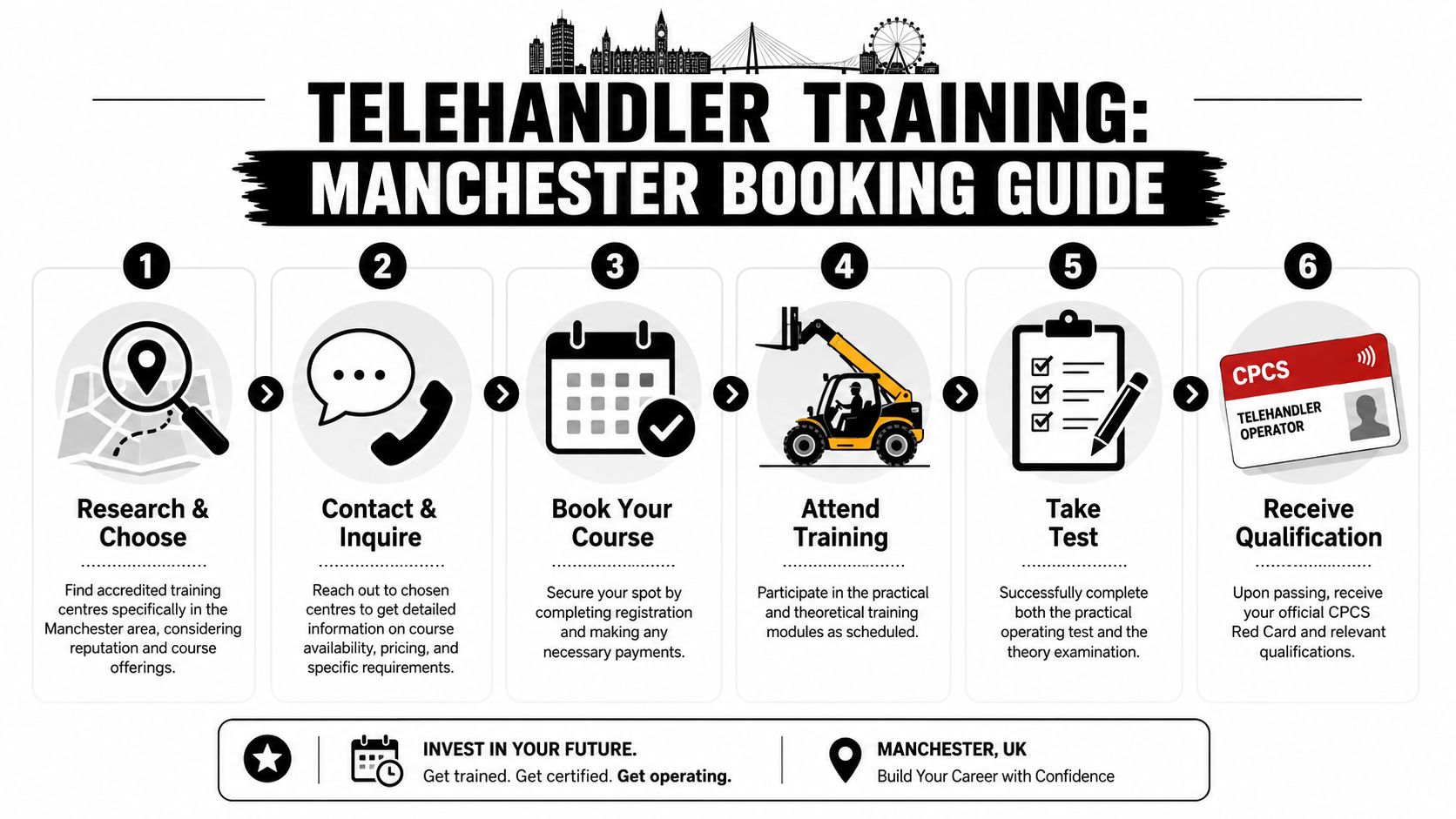
In Greater Manchester, the pathway is generally straightforward:
Work out your starting point. Complete beginner, experienced but uncertified, or already carded and due a refresher.
Choose the right scheme. Common schemes include NPORS or CPCS.
Book accredited training in or around Manchester.
Complete theory and practical assessment.
Use the qualification properly on real sites and keep it current.
A lot of new entrants focus only on passing. That’s too narrow. Good telehandler training should prepare you for the machine, the assessment, and the standards employers expect on day one. If you want a quick overview of why proper training matters beyond the certificate, this guide to the benefits of telescopic handler training is worth reading.
Practical rule: Choose the course that matches your real experience, not the course you hope to get through fastest.
That matters because the right route saves time, avoids retests, and gives you a much better chance of arriving on site ready to work.
Who Needs Telehandler Training and Are You Eligible
The first thing to clear up is the legal wording, which often tangles most new starters.
In the UK, there is no official government licence required to operate a telehandler. What the law requires is proper training and competence, which is usually shown through CPCS or NPORS certification, as outlined in this explanation of telehandler licence requirements in the UK.
That distinction matters. If someone tells you “just get your licence”, what they usually mean is “get certified under the scheme employers recognise”.
Who normally needs certification
Telehandler training isn’t only for one type of worker. It’s commonly relevant if you’re:
Changing career from warehousing, driving, labouring, or another hands-on role
Already working on site and want to move into a machine operator position
Experienced on machines but have never formalised that experience with a recognised card
Returning after a gap and need a refresher before going back onto active sites
An employer training staff for yard, site, or materials handling duties
Some readers assume telehandlers are only for large construction jobs. In practice, the role can sit across building sites, industrial premises, logistics yards, and other private work areas where materials have to be moved safely and efficiently.
Basic eligibility in plain English
The entry point is usually less restrictive than people expect. What matters most is that you can train safely, understand instruction, and operate responsibly.
As a rough self-check, ask yourself this:
Age. You’ll usually be looking at adult entry routes, and most career-changers start from that point.
Site use versus road use. Training for site work is different from driving on public roads.
Fitness and awareness. You need the practical ability to control machinery and follow safety rules.
Willingness to learn theory. This isn’t just hopping in a cab and moving pallets.
Later on, you may hear another common myth: that you need a standard UK driving licence before you can even start telehandler training. That isn’t generally the barrier people think it is. For private sites and training use, the key issue is competence and certification rather than a car licence. One provider’s breakdown of the CPCS A17 route also notes that a driving licence isn’t required for private land operation in that context, which helps many newcomers stop ruling themselves out too early.
A short video can help if you prefer seeing the machine context before booking.
The right question isn’t “Can I get a telehandler licence?” It’s “Which certification route matches the work I want to do?”
If you’re motivated, reliable, and comfortable learning both safety rules and machine handling, telehandler training in Manchester is open to far more people than they first assume.
Choosing the Right Telehandler Course for You
Once you know you’re eligible, the next decision is practical. You need the course that fits your actual experience level.
In Greater Manchester, novice telehandler training typically lasts 3 to 5 days, experienced operator training is usually 1 to 2 days, and refresher or conversion courses are also commonly 1 to 2 days. Course length depends on your starting experience, so it’s worth checking HGV Learning’s telescopic handler training for the exact options available.
Telehandler course options at a glance
Course Type
Ideal For
Typical Duration
Novice
Complete beginners with no formal training
3 to 5 days
Experienced Worker
Operators with practical experience but no recognised certification
1 to 2 days
Refresher or Conversion
Existing operators renewing skills or changing category
1 to 2 days
That table gives you the shape of it, but the right choice depends on honesty. If you’ve moved telehandlers informally on a farm, in a yard, or on small jobs, that doesn’t automatically make you an experienced candidate in the assessment sense. A proper experienced route works best when your machine control is already solid and you mainly need formal evaluation.
What novice training is really like
Novice training is the right fit if you’re starting from zero. It gives you time to build habits properly.
Expect two broad parts:
Theory work covering safety checks, hazards, load handling, stability, and site rules
Practical machine time covering control, manoeuvring, lifting, placing, and safe working methods
This is the route I’d point most career-changers towards unless they have strong recent operating experience. It takes longer, but it usually produces more confident operators.
When the shorter route makes sense
The experienced worker route sounds attractive because it’s quicker. Sometimes it’s exactly right. Sometimes it’s the wrong shortcut.
Take it if you can already do the job to a recognisable standard and only need your competence assessed formally. Avoid it if you still hesitate over pre-use checks, load judgement, or machine positioning.
A shorter course saves time only if you’re already ready for it.
Refresher training sits in a different category. It’s for people who’ve already been through the system and need to stay sharp, compliant, and current. That can be especially useful if you’ve been off the tools for a while or your employer wants documented renewal.
NPORS or CPCS
Most learners compare the scheme as much as the course length.
A simple way to think about it is this:
CPCS is often associated with traditional construction site access and recognised plant competence.
NPORS is also widely recognised and can be a good fit depending on employer requirements and the type of work you’re targeting.
Your best choice depends on where you want to work, not which acronym sounds better. Before booking, it also helps to understand how the knowledge side is assessed. This breakdown of the telehandler theory test is useful if you want to know what the classroom part feels like.
Booking Training and Test Centres in Manchester
A lot of people stall at this point because they assume booking is awkward. It usually isn’t. The mistake is leaving your checks too late and ending up with a course that doesn’t suit your timing, location, or work goals.
In Manchester, accredited centres are accessible, with some located within 20 minutes of the City Centre, and providers can also deliver on-site training at company premises across the UK, according to this guide to Manchester telehandler training locations and on-site options.
What to check before you book
Start with the provider’s accreditation and the course category. You want to know whether they offer the exact route you need, not just “telehandler training” in general.
Check these points carefully:
Scheme fit. Make sure the provider offers NPORS or CPCS for your intended work.
Course level. Confirm whether you’re being booked as a novice, experienced worker, or refresher.
Location. Some candidates prefer a training centre near Manchester. Employers with teams often prefer on-site delivery.
Assessment format. Ask what theory and practical elements are included.
Availability. Popular dates go first, especially when employers need several staff trained together.
A simple booking sequence
The process normally works best in this order:
Choose your route based on experience.
Speak to the training coordinator and explain your background.
Confirm dates and location.
Send any required details for registration.
Secure the place and prepare for the training days properly.
That sounds basic, but it prevents most booking mistakes.
Cost and payment planning
Course prices vary by provider, course type, and whether training is centre-based or delivered on-site. Since pricing changes, the sensible move is to ask for a full breakdown before you commit.
If cash flow is a significant issue, don’t assume training is out of reach. Some coordinators offer payment options that spread the cost over 10 to 12 months. That can make a big difference if you’re changing careers, covering the course yourself, or balancing training against reduced work hours.
Booking advice: Tell the provider what job you want afterwards. A good coordinator will help match the right card to the right type of site.
If you’re still comparing local options, this page on telehandler training near you helps frame what to look for when choosing a nearby provider.
Life After Your Test What Your New Qualification Means
Passing the test is a milestone, not the finish line. What matters next is understanding exactly what your card allows, how long it lasts, and what action you need to take before it expires.
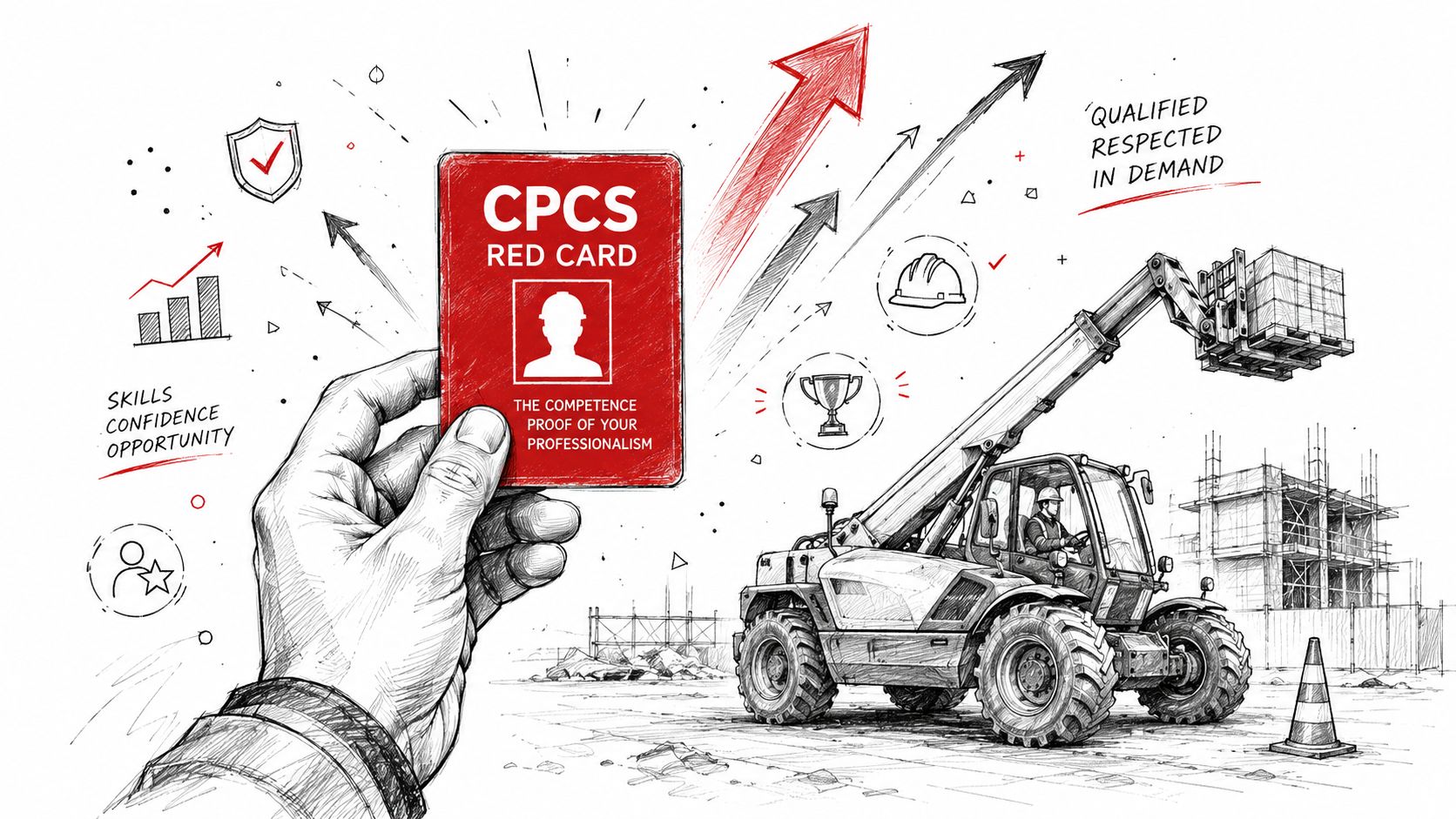
For the CPCS A17 route, the Red Card lasts two years. During that period, the operator must complete NVQ Level 2 in Plant Operations on-site to move to the permanent Blue Card. If that doesn’t happen within the two-year window, the Red Card expires, as explained in this guide to the CPCS A17 telescopic handler card route.
What you receive after passing
What you leave with depends on the scheme you trained under.
You’ll normally receive one of these:
CPCS card route, often starting with the Red Trained Operator card
NPORS operator card, where applicable under that scheme
The important point is not just possession of the card. It’s understanding what stage of competence that card represents.
Why the Red Card matters
The Red Card is useful because it gets you into the system properly, but it’s also time-sensitive. Too many new operators treat it like a final destination and only realise later that progression was part of the deal from the start.
If you’re on the CPCS route, plan your next step early. Don’t wait until the final months to think about the NVQ.
Your first card proves you passed training. Your long-term value comes from building site experience and keeping your qualifications active.
Keeping your certification current
Across UK telehandler training, certification commonly stays valid for 3 to 5 years, with re-assessment usually involving theory, practical checks, and safety procedures.
That’s worth treating seriously. Skills fade when operators don’t use the machine regularly, and bad habits creep in fast. Refresher training isn’t box-ticking when it’s done properly. It’s how competent operators stay competent.
A practical habit helps here. Keep a note of:
Your card issue date
Renewal window
Any NVQ requirement
The type of sites you’re using the card for
That makes renewals much easier and keeps you from scrambling when a new employer asks for proof.
Turning Your Telehandler Certificate into a Career
A telehandler certificate only becomes valuable when it turns into regular work. Manchester gives you a solid base for that because the role crosses more than one sector. Construction is the obvious one, but materials handling, industrial yards, and site logistics can all create openings for trained operators.
The people who move fastest into work are usually the ones who think beyond the pass. They prepare for the hiring conversation. They can explain their card, describe the machine safely, and show they understand site discipline.
What employers actually look for
Most employers want more than a pass slip. They want signs that you’ll be safe, reliable, and easy to place on a live job.
That usually means:
A recognised card that matches the work environment
Basic site awareness rather than just machine confidence
Good communication with banksmen, supervisors, and delivery teams
A realistic attitude about starting points and gaining hours
A skills-first mindset is beneficial. If you’re interested in defining a fairer hiring process, the wider idea is useful here too. Better employers increasingly look at practical competence, trainability, and behaviour, not just whether someone has the perfect background on paper.
Turning a course into steady employment
If you’re new to plant work, don’t make the mistake of applying blindly and hoping the card does all the talking. A stronger approach is to line up three things together:
Your certification
Your availability
A clear explanation of the work you’re ready to do
That could mean entry-level site support with telehandler duties, yard-based materials movement, or a role where the machine ticket strengthens a broader labouring or logistics application.
Telehandler training in Manchester is most useful when you treat it as part of a career pathway, not a one-off course. The operator who keeps learning, keeps documents in order, and takes sensible first jobs usually builds momentum much faster than the one waiting for a perfect vacancy.
If you want help with the full journey, from choosing the right telehandler course to arranging training dates, spreading the cost with flexible payment options, and getting support towards work afterwards, speak to HGV Learning. They coordinate specialist training across the UK and can help you take the next practical step into telehandler work.
What Age Can You Start HGV Driver Training? A 2026 UK Guide to Licence Age Requirements
If you're asking what age you can start HGV driver training, the honest answer depends on which licence you're after. A C1 licence, covering vehicles...