Let’s talk money. It’s often the first question on anyone’s mind when thinking about a new career, and rightly so. In the world of HGV driving, the pay is a major draw.
As of 2024, the average HGV driver salary in the UK is sitting around a very healthy £42,000 per year. But that’s just an average – the full picture is much more interesting.
For those just getting their keys, a newly qualified driver can expect to start somewhere between £26,000 and £30,000. On the other end of the scale, an experienced Class 1 (C+E) driver with a few years under their belt can pull in significantly more.
A Snapshot of UK HGV Driver Pay
Getting your head around potential earnings is a great first step. While that national average gives you a good benchmark, what you actually take home is shaped by a few key things: the type of HGV licence you hold and your time on the road.
Someone starting out with a C1 licence for smaller rigid vehicles, like local delivery vans, will be on a different pay scale than a seasoned pro holding a C+E licence, manoeuvring the biggest articulated lorries up and down the country.
HGV Driver Salary UK At a Glance
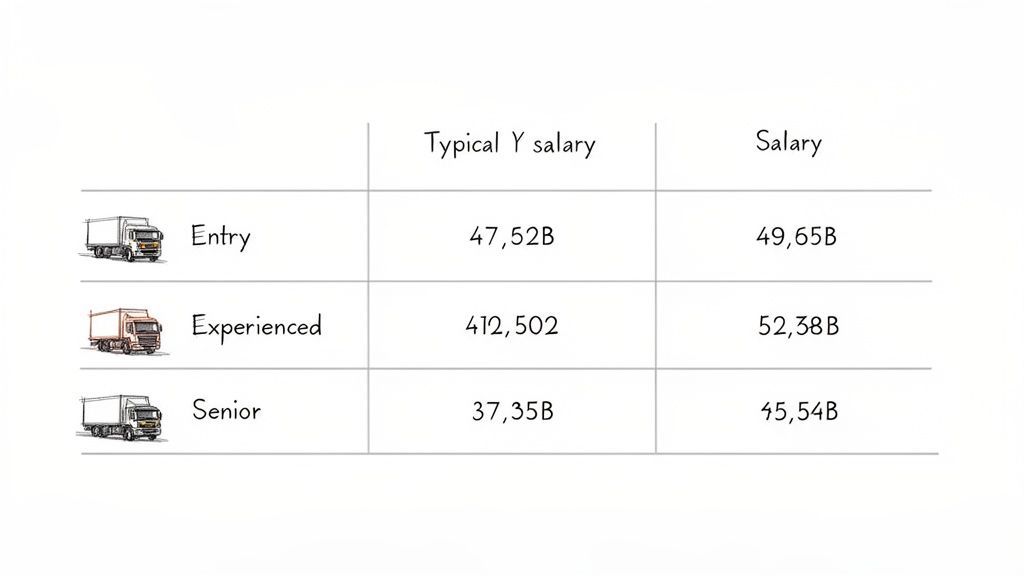
To give you a clearer idea, here’s a quick breakdown of what you might expect to earn based on your licence and experience level.
Licence Category & Experience
Typical Annual Salary Range
C1 Driver (Newly Qualified)
£24,000 – £28,000
C1 Driver (Experienced)
£28,000 – £34,000
Category C Driver (Newly Qualified)
£28,000 – £33,000
Category C Driver (Experienced)
£33,000 – £40,000
C+E Driver (Newly Qualified)
£34,000 – £40,000
C+E Driver (Experienced)
£40,000 – £55,000+
This variation is one of the best things about the industry. It means that every bit of training and experience you gain directly boosts your earning potential. Moving up from a Category C (Class 2) to a C+E (Class 1) licence doesn’t just mean you can drive a bigger truck; it opens the door to more complex, better-paid jobs that are always in demand.
The Recent Surge in Driver Salaries
It’s no secret that HGV driver pay has shot up recently. Why? It’s a classic case of supply and demand. Retailers, supermarkets, and logistics firms are crying out for skilled drivers, but there has been a long-standing shortage. The result is a fiercely competitive job market where good, reliable drivers are worth their weight in gold.
This graph really tells the story of the last few years, showing a clear, steep climb in what drivers are earning.
The numbers speak for themselves. We have gone from an average of around £27,000 back in 2018 to £42,000 in 2024. This isn’t just a blip; it reflects how vital HGV drivers are to keeping the UK’s economy moving, from construction sites to supermarket shelves. You can discover more about HGV driver pay trends on hovtraining.com.
This salary growth highlights the genuine earning potential out there, making it an excellent time to get started with a proper training programme and get on the road.
How Your HGV Licence Shapes Your Earnings
In the world of HGV driving, your licence is more than just a piece of plastic – it’s the key that unlocks your earning potential. Think of it like a career ladder; each new category you achieve allows you to climb higher, opening up more specialised roles and, crucially, a bigger pay packet.
The type of vehicle you are qualified to handle directly influences the kind of salary employers are willing to offer. Moving up the ladder is a clear path of progression. Starting with a foundational licence and advancing to the top tier isn’t just about gaining skills; it’s a direct investment in your future income. Let’s break down how each licence category shapes what you can expect to earn on the road.
The C1 Licence: The Starting Grid
The C1 licence is often the first step into the professional driving world. It qualifies you to drive vehicles weighing between 3.5 and 7.5 tonnes, which includes larger vans, horseboxes, and some smaller rigid lorries commonly used for local and multi-drop deliveries.
For many, this is the essential entry point required for roles like ambulance driving or home delivery services. While it’s a foundational HGV qualification, it still provides a solid starting salary, typically ranging from £24,000 to £28,000 for newly qualified drivers. As you gain experience, this can rise to over £34,000.
The Category C Licence: The Industry Workhorse
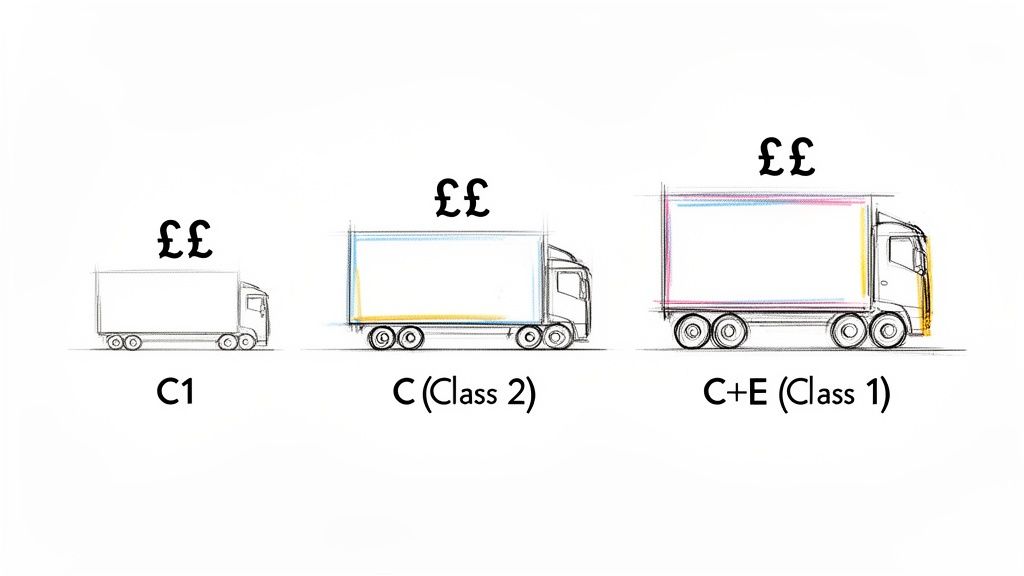
Next up is the Category C licence, often referred to as Class 2. This is arguably the most common HGV licence in the UK and qualifies you to drive any rigid vehicle over 3.5 tonnes. Think of the lorries you see every day making deliveries to supermarkets, construction sites, and distribution centres – that’s the domain of a Category C driver.
Because these vehicles are larger and carry more responsibility, the salary sees a significant jump. A newly qualified Category C driver can expect to earn between £28,000 and £33,000, with experienced drivers pushing towards £40,000 or more, depending on the role and location.
The versatility of this licence opens up a huge range of jobs across countless sectors. You can explore more about the specific qualifications required by reading our comprehensive guide on HGV licence types.
The C+E Licence: The Top Tier
At the pinnacle of HGV driving is the C+E licence, or Class 1. This is the qualification needed to drive the largest vehicles on UK roads: articulated lorries, or “artics,” with a trailer. These are the long-haul giants that form the backbone of national and international logistics, transporting huge quantities of goods from ports to distribution hubs.
Holding a C+E licence signals that you are a highly skilled professional capable of handling the most challenging vehicles. As a result, C+E drivers command the highest salaries in the industry.
Newly Qualified C+E Driver: Earnings typically start between £34,000 and £40,000.
Experienced C+E Driver: It’s common for experienced drivers to earn £45,000 to £55,000, with specialist roles and overtime pushing this figure even higher.
The demand for Class 1 drivers is consistently high, making it a secure and lucrative career path. The progression is clear: the bigger the lorry and the more complex the job, the greater the financial reward. Each step up the licensing ladder is a direct route to boosting your average HGV driver salary in the UK.
Salary Comparison by HGV Licence Type
To give you a clearer picture, let’s look at how the average pay stacks up across the main licence categories. This table provides a quick reference for the kind of earning potential each licence unlocks.
Licence Category (Class)
Vehicle Type
Average Hourly Rate
Average Annual Salary
C1
Rigid vehicles (3.5 – 7.5 tonnes)
£12 – £16
£24,000 – £34,000
Category C (Class 2)
Any rigid vehicle over 3.5 tonnes
£14 – £19
£28,000 – £40,000+
C+E (Class 1)
Articulated lorries with trailers over 750kg
£17 – £25+
£34,000 – £55,000+
As you can see, the jump from a C1 to a C+E licence can almost double your earning potential over the course of your career. This highlights just how valuable investing in your licence progression can be.
The Impact of Experience and Location on Your Pay
Holding the right licence is your ticket into the industry, but it’s experience and where you work that really puts you in the driver’s seat of your career. Just like any skilled trade, the more miles you clock and the trickier the situations you handle, the more you’re worth to an employer. At the same time, your postcode can have a massive impact on your payslip.
A newly qualified driver might start on a decent wage, but the real money comes after those first few years on the road. Similarly, working in a bustling logistics hub in the South East will almost certainly offer a better average HGV driver salary than a job in a quieter, more rural region. Let’s map out how these two critical factors shape your earning potential.
From New Driver to Seasoned Professional
Your career journey as an HGV driver is a clear path of progression, and your salary reflects this every step of the way. Employers place a high value on experience because it brings efficiency, reliability, and a road sense that you just can’t learn in a classroom.
A driver fresh from passing their test is still building confidence and learning the ropes of specific routes and delivery protocols. After a year or two, though, you are no longer seen as a rookie. You’ve proven you can handle the pressure, hit your deadlines, and operate safely on your own. This is usually when you’ll see the first real jump in your earnings.
As you get closer to the five or ten-year mark, you become a seriously sought-after professional. Your solid track record and deep industry knowledge mean you can command top-tier wages, especially if you hold a C+E licence.
Here’s how it typically breaks down:
0-2 Years’ Experience: This is your foundation-building period. The pay is competitive but sits at the lower end of the scale as you get your bearings. Expect to earn around £28,000 – £35,000.
2-5 Years’ Experience: You’re now a trusted and reliable driver. Your pay packet will grow as you take on more responsibility, with salaries often climbing to £35,000 – £45,000.
5+ Years’ Experience: As a seasoned expert, your earning potential is at its peak. Experienced Class 1 drivers can comfortably earn £45,000 – £55,000+, and specialist roles can push this figure even higher.
Where You Work Matters: Regional Pay Differences
Just like house prices, HGV driver salaries vary a lot across the country. The demand for drivers isn’t the same everywhere, and wages are often highest where the logistics industry is most concentrated. It’s a classic case of supply and demand pushing up local pay rates.
Areas with major ports, huge distribution centres, and dense populations create salary hotspots. If you’re based near one of these hubs, you’re in a much stronger position to negotiate a better wage.
UK Salary Hotspots
Certain regions consistently offer higher-than-average pay for HGV drivers simply because employers are fiercely competing for skilled professionals.
Key high-paying areas include:
The South East and London: Unsurprisingly, the capital and its surrounding counties lead the way. The high cost of living and a massive concentration of logistics operations mean salaries here are often the highest in the country.
The Midlands: Often called the “logistics golden triangle,” this area is the backbone of the UK’s distribution network. Companies here are always on the lookout for good drivers, which keeps wages competitive.
The North West: With major ports like Liverpool and a strong industrial base, this region also offers excellent earning opportunities for HGV drivers.
On the other hand, salaries might be slightly lower in more rural spots like the South West or parts of Wales, where there’s less competition. However, things like job satisfaction and a better work-life balance can often make these roles just as appealing. For those looking for opportunities further north, you can find out more about the specific market by checking out our information on HGV jobs in Scotland.
Decoding Your Payslip: Overtime, Bonuses, and Extras
That figure you see on an HGV job advert? Think of it as the starting line, not the finish. A driver’s annual income is rarely just a flat basic salary. The real story of what you can earn is hidden in the details of your payslip—the overtime, bonuses, and special allowances that can easily add thousands to your take-home pay each year.
Getting your head around these extras is crucial if you want to work out what your actual average HGV driver salary in the UK could be. Many drivers find that with a bit of flexibility and a willingness to pick up certain shifts, their final pay packet looks a lot healthier than they first expected.
These are not just perks; they are fair compensation for the demands of the job, whether that’s working unsociable hours, covering long distances, or keeping the country moving on a bank holiday. Let’s break down the common extras that build up your total earnings.
Beyond the Basic Rate: Overtime and Enhanced Pay
One of the quickest ways to boost your income is through overtime. The logistics industry never sleeps, and companies pay good premiums to drivers who keep their vehicles rolling around the clock.
This is where your flexibility pays off—literally. Most contracts are based on a standard week, maybe 40 to 48 hours. Anything you work over that is nearly always paid at a higher overtime rate.
Here are the most common enhanced pay structures you will see:
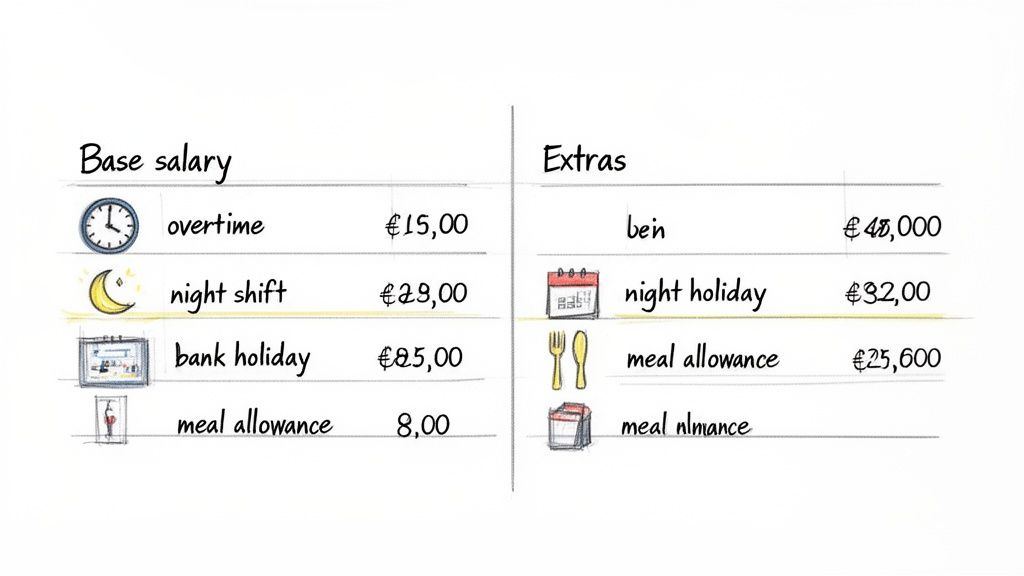
Overtime: Typically paid at “time-and-a-half,” which is 1.5x your normal hourly rate.
Night Shifts: Driving through the night almost always comes with a significant pay bump.
Weekend Work: Saturday and Sunday shifts will command a much better hourly rate than a standard weekday.
Bank Holidays: Working on a bank holiday can sometimes pay double your standard rate, making it a seriously lucrative option if you’re available.
For example, if your standard rate is £17 per hour, a time-and-a-half overtime rate bumps that up to £25.50 per hour. Just a few hours of that each week makes a massive difference to your monthly income.
Allowances and Bonuses That Add Up
On top of your hourly pay, many roles include allowances to cover the costs and hassle of life on the road. These are often tax-efficient, giving your net pay a welcome boost.
A classic example is the night out allowance (also called a “tramping” bonus). This is a fixed, often tax-free, payment for each night you have to sleep in your cab. Some companies also offer meal allowances to cover your food costs when you’re on a long run.
The driver shortage has also pushed many employers to offer some pretty hefty financial incentives. Research from 2024 shows that extras like overtime and allowances typically add between £5,000 and £10,000 to a driver’s annual salary. To get skilled drivers through the door, some businesses have even offered one-off signing bonuses ranging from £250 to over £17,000 in rare cases. You can read the full government research on HGV driver vacancies and pay for more detail.
A Real-World Example of Total Earnings
Let’s see how this all fits together for an experienced Class 1 driver working for a major supermarket.
Base Salary: The driver’s contract is for £42,000 based on a 45-hour week.
Weekend Shifts: They regularly work one day at the weekend, which comes with a £75 premium. Over a year, that adds up to £3,900.
Overtime: They average five hours of overtime a week at time-and-a-half. This brings in an extra £4,800 annually.
Performance Bonus: The company offers an annual bonus for good performance and safety, which earns this driver another £1,000.
When you add it all up, the driver’s total annual earnings come to £51,700—that’s nearly £10,000 more than their basic salary. It just goes to show that the advertised average HGV driver salary UK is often just the beginning, with plenty of opportunities to earn a lot more.
Strategies to Maximise Your HGV Driver Salary
Getting your HGV licence is the first big hurdle cleared, but turning that into a high-earning career is the real goal. While your pay will naturally climb with experience, a few proactive choices can seriously fast-track your journey to becoming a top earner.
The difference between an average and an exceptional HGV driver salary often comes down to these strategic moves. It’s about looking beyond the standard driving roles, spotting the opportunities others might miss, and making yourself more valuable.
Specialise to Supercharge Your Earnings
Think of your HGV licence as the foundation of a house. It’s solid, but to really build your value—and your salary—you need to add some extra floors. Specialist qualifications do just that, opening doors to niche, higher-paying roles that demand more skill and carry more responsibility.
Two of the most valuable tickets you can add to your name are:
ADR Certificate: This qualifies you to transport hazardous materials—think chemicals, flammable liquids, or gases. ADR drivers are always in demand and can command premium rates because of the high-stakes nature of their cargo. You can find out more by reading our guide on how to get an ADR licence.
HIAB Licence: A HIAB is a lorry-mounted crane, essential for loading and unloading heavy goods on construction sites and in logistics. Having a HIAB ticket makes you a multi-skilled operator, not just a driver, which almost always adds a healthy bump to your hourly rate.
Gaining these qualifications is a direct investment in your career. It proves you’re a professional who can handle complex work, and that’s always reflected in your payslip.
Make Smart Choices About Your Work Style
How and when you work can have just as big an impact on your salary as what you drive. It’s not for everyone, but being flexible and willing to take on less conventional work patterns is one of the quickest ways to boost your income. Employers will always pay a premium for drivers who keep their operations running 24/7.
A few strategic choices that can make a real difference include:
Embracing Night Shifts: As we have seen, night work often comes with enhanced pay, sometimes 20-25% higher than day shifts. Making nights a regular thing can add thousands to your annual income.
Considering ‘Tramping’: This means sleeping in your cab for one or more nights during the week. In return, you get a tax-free ‘night out’ allowance for each night away, which goes straight into your pocket.
Prioritising Weekend Work: With rates for weekend shifts often at time-and-a-half or even double-time, making yourself available on Saturdays and Sundays is a guaranteed way to maximise your earnings.
By combining a specialist skill with a flexible work pattern—for instance, an ADR-qualified driver working nights—you position yourself in the highest earning bracket of the industry.
Perfecting Your Job Search
Finally, the company you drive for matters. A lot. Not all employers offer the same packages, so a smart job search can uncover the most lucrative opportunities. Don’t just get drawn in by the headline salary; dig into the details of the benefits and extras.
When you’re on the hunt for your next role, focus on:
Companies with Great Benefits: Look for employers offering generous overtime rates, regular performance bonuses, and a clear path for pay rises.
Specialist Recruiters: HGV recruitment agencies often have access to the best jobs and can negotiate higher rates on your behalf. They know the market inside and out.
Reading the Fine Print: A slightly lower basic salary might be more than made up for by an excellent pension scheme, better allowances, or more guaranteed hours. Always look at the entire compensation package.
By actively managing your career, adding valuable skills, and being strategic in your job hunt, you can ensure your average HGV driver salary UK is anything but average.
The Future Outlook for HGV Driver Pay in the UK
Committing to a new career is a big decision, so it’s only natural to wonder if becoming an HGV driver is a smart long-term move. Looking at the current trends, all signs point to a definite yes. The forces shaping the UK’s logistics industry suggest that the high demand for skilled drivers—and the competitive pay that comes with it—is a trend that’s here to stay.
It all boils down to simple supply and demand, which continues to work in favour of qualified drivers. The UK has been grappling with a persistent driver shortage for years, a reality that naturally pushes wages up as companies compete to hire and keep the best people. Industry experts estimate the sector is still short of 30,000 to 45,000 drivers, ensuring anyone with the right licence will remain in high demand.
Economic Factors Fuelling Salary Growth
Beyond the driver shortage, several other economic factors are keeping the average HGV driver salary in the UK on an upward trajectory. With the rising cost of living, drivers rightly expect their pay to keep pace, and employers are responding with better rates to retain their workforce. This creates a really stable and predictable environment for career progression.
On top of that, our reliance on road freight is only getting stronger. Think about the boom in online shopping or the constant need to restock supermarket shelves—HGV drivers are the critical link that keeps the nation’s supply chain moving. This essential role provides a level of job security that’s hard to find in many other sectors today.
Investing in your HGV licence is not just about landing your next job. It’s about building a stable, well-paid, and in-demand career that will provide security for years to come.
A Career Built for Tomorrow
The message from the logistics market is crystal clear: the need for professional, reliable HGV drivers isn’t going anywhere. For any logistics company to succeed, they have to offer competitive pay, and this trend is set to continue. As technology advances and the economy shifts, the core, indispensable role of the driver remains.
For anyone thinking about getting into the profession, the future looks bright. The key factors keeping salaries healthy for the long term include:
Ongoing Driver Shortage: A fundamental lack of qualified drivers means companies have no choice but to offer attractive pay and benefits.
Essential Industry Status: As key workers, drivers perform a role that keeps the country running, guaranteeing consistent demand for their skills.
Economic Pressures: Inflation and the cost of living ensure that wages will remain a top priority for both drivers and employers.
Ultimately, choosing to train as an HGV driver is a forward-thinking decision, paving the way for a financially rewarding and secure career path.
Your Top Questions About HGV Driver Salaries
When you’re looking into a career as a lorry driver, pay is naturally a big question. It can be a confusing landscape, so let’s clear things up by answering some of the most common queries we hear from aspiring drivers.
What Is the Highest Salary an HGV Driver Can Earn in the UK?
The earning potential for the UK’s top HGV drivers is genuinely impressive. While the national average is strong, the most experienced and specialised Class 1 (C+E) drivers can comfortably earn well over £55,000 per year.
So, what does it take to reach that top bracket? It’s usually a combination of a few key factors:
Specialist Tickets: Having qualifications like an ADR certificate for hazardous goods or a HIAB licence for crane operation is a game-changer for your pay packet.
Time on the Tarmac: A decade or more behind the wheel makes you a highly valued professional, and employers will pay for that experience.
Smart Shift Patterns: Being willing to work nights, weekends, or ‘tramping’ (which involves nights away from home) will always boost your earnings thanks to better rates and allowances.
Location, Location, Location: As you would expect, salaries are often pushed higher in and around London, the South East, and other major logistics hubs where demand is fiercest.
Do Agency HGV Drivers Get Paid More?
This is a classic trade-off. Agency work can often pay a higher hourly rate than a permanent, salaried job, particularly for last-minute cover or during busy seasons like the run-up to Christmas. Companies will pay a premium for that flexibility.
The catch is that agency work doesn’t usually come with the perks of a permanent role, like guaranteed holiday pay, sick pay, or a company pension. For drivers who value flexibility and want to maximise their hourly income above all else, agency driving is a fantastic and lucrative option.
Which Companies Pay the Best HGV Driver Salaries?
As a rule of thumb, the biggest pay packets are found with large, household-name companies that run massive logistics operations. These are the businesses that compete tooth and nail for the best drivers, and they back it up with strong compensation packages.
Think about the major supermarket chains like Tesco and Aldi, huge logistics firms such as Gist and Wincanton, and specialist fuel delivery companies like Shell and BP. These are often cited as some of the top-paying employers, especially where the work requires extra skill and brings more responsibility.
Is Becoming an HGV Driver Still a Good Career Choice?
Without a doubt. The demand for qualified HGV drivers across the UK is sky-high, and there’s no sign of that changing anytime soon. This isn’t just a job; it’s a skilled trade.
The ongoing driver shortage means that anyone holding the right licence has incredible job security and real negotiating power when it comes to salary. In fact, the average HGV driver salary in the UK has climbed significantly in recent years, cementing its place as one of the most stable and financially rewarding career paths out there today.
Ready to get behind the wheel of a rewarding new career? At HGV Learning, we provide expert training programmes designed to get you fully qualified and into a high-paying job. Find out more about our courses and start your journey today. Visit us at https://hgvlearning.com.
Related Articles
09/03/2026
UK CPC Course Cost: A Complete 2026 Pricing Guide
When you're looking to get on the road professionally, one of the first questions on your mind is bound to be about the cost. In...