You’re on the motorway, the trailer is steady, and then the cab starts to drift. You correct it, the wheel sits slightly off centre, and the vanishing point still doesn’t feel right. That’s the sort of moment drivers notice first, but it’s rarely just a steering quirk. In HGV work, wheel alignment importance shows up as tyre scrub, extra fuel use, poorer handling, and avoidable downtime, long before a failure becomes obvious.
For fleet drivers and trainees, alignment isn’t a nice-to-have workshop job. It’s part of keeping a vehicle safe, legal, and economical on UK roads. A small geometry error can become a big cost problem, and on a heavy vehicle it can also affect control, driver confidence, and the systems that depend on correct suspension angles.
Introduction to Wheel Alignment Importance
A driver often spots the first clue in a simple way, the truck no longer tracks straight without a constant correction. On a busy dual carriageway, that can feel minor at first, but it usually means the steering and suspension angles are no longer working together properly. Once that happens, the vehicle starts asking more from the tyres, the fuel tank, and the driver’s attention.
That is why wheel alignment matters so much in professional transport. It is not about making the steering wheel look neat at the centre, it is about making sure the wheels point and roll where they should. For HGV operators, the result touches safety, compliance, and running cost at the same time.
The tricky part is that misalignment often hides in plain sight. By the time a vehicle feels obviously wrong, the tyres may already be wearing unevenly, and the driver may already be compensating more than they realise. UK guidance treats alignment as a recurring maintenance task for that reason, not a once-in-a-blue-moon fix.
Practical rule: if a vehicle starts to feel “normal but not quite right”, don’t wait for a louder warning. Check the geometry before the small drift turns into a bigger fault.
Fundamentals of Wheel Alignment
The three angles that matter
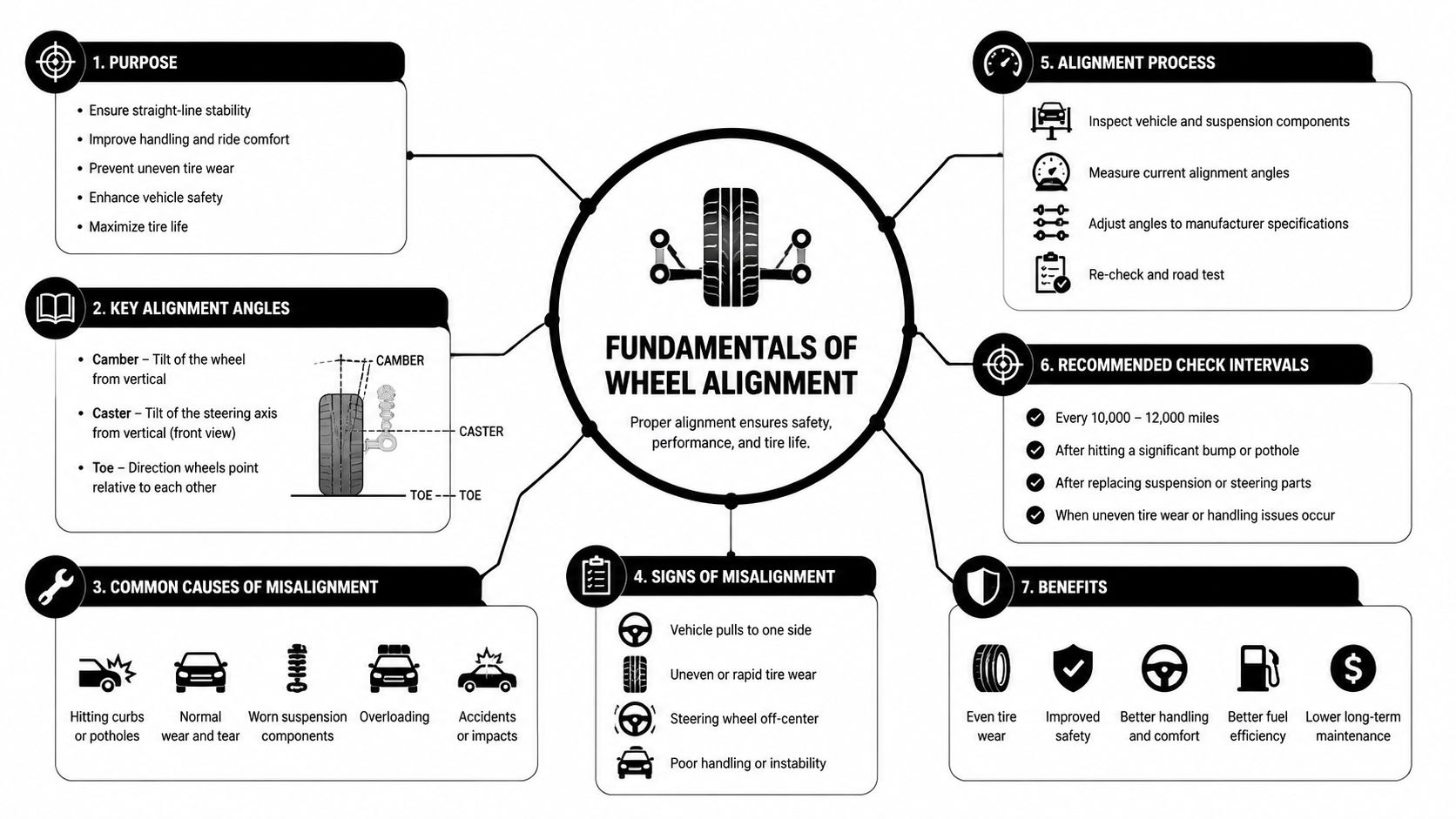
Wheel alignment comes down to three main angles, toe, camber, and caster. Toe is the direction the wheels point in relation to each other, camber is the inward or outward lean of the wheel, and caster affects how stable the steering feels as the vehicle moves forward. Together, they decide whether an HGV tracks cleanly or constantly fights itself.
A useful way to think about it is a shopping trolley with one wonky wheel. If one wheel points the wrong way, the trolley doesn’t glide, it scrubs sideways. An HGV does the same thing, only the scale is much larger, and the consequences are far more expensive.
Why heavy vehicles feel the difference faster
A commercial vehicle carries weight, spends long hours on the road, and works hard over mixed surfaces. That means any small geometry error gets amplified by mileage and load. The driver feels it as a tug on the steering wheel, a vague response when changing direction, or a vehicle that seems to wander when it should hold a line.
The useful bit for learners is this. Alignment is not a single measurement for curiosity, it is the setting that helps the tyres roll in the direction the steering asks for. When the angles are right, the truck feels calmer, and the driver doesn’t have to keep “correcting the correction”.
A straight-running vehicle should feel boring in the best possible way. If it keeps asking for attention, something in the geometry deserves a look.
Safety and Handling Benefits
A loaded truck that feels loose in a quick lane change is a warning sign, not a personality trait. If the wheels are out of alignment, the tyres can lose grip more easily, and the steering response can feel delayed or uneven when the driver needs precision most. That matters most during sudden obstacles, tight merge points, and wet-road corrections.
Correct alignment helps the vehicle answer the steering input the way the driver expects. It supports cornering stability and reduces the chance that one side of the vehicle is doing more work than the other. Pirelli UK notes that misalignment can cause uneven tyre wear and reduce grip, especially after tyre replacement, steering or suspension work, or a hard impact, while Snap-on UK highlights the link between alignment and ADAS calibration and vehicle safety systems, which is increasingly relevant on modern commercial vehicles. Pirelli UK wheel alignment guidance
That connection matters because driver training isn’t only about steering technique. It’s also about recognising when the vehicle’s setup is working against safe control. If a truck feels unstable after a pothole strike or repair work, the sensible response is to report it quickly rather than keep compensating on the road.
For drivers learning about stability systems, the relationship between chassis geometry and electronic control is worth understanding. Correct alignment supports the behaviour of the vehicle’s safety systems, and the principles sit closely alongside electronic stability control.
Impact on Tyre Life and Fuel Efficiency
Small angles, large operating costs
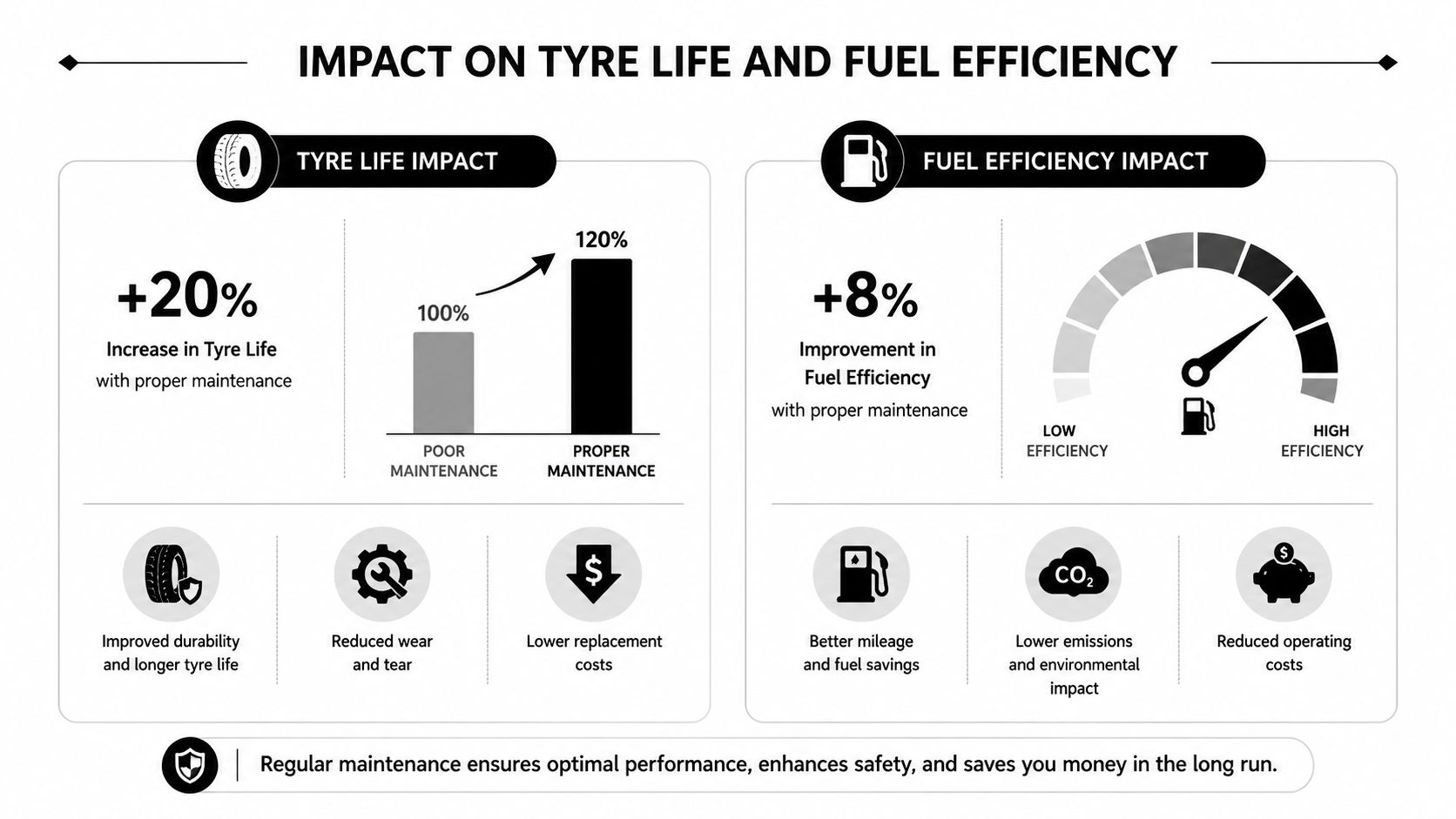
Tyres and fuel sit near the top of controllable running costs in commercial transport, so alignment errors hit where fleets already feel pressure. Transport Engineer reports that Tructyre found tyre life can be reduced by up to 50% with just a 0.5° misalignment, and that on a single axle a 1° misalignment could increase fuel consumption by as much as 5%. Transport Engineer wheel alignment feature
That is why the issue is more than workshop housekeeping. A truck that scrubs tyres faster needs earlier replacement, and a truck that wastes fuel becomes harder to manage across a fleet. The damage does not always look dramatic on day one, but it accumulates in the background, mile after mile.
Why prevention beats reaction
Some operators wait until the vehicle pulls or the tyres look obviously worn. That approach usually costs more, because by then the geometry problem has already done its work. Fleet thinking is different. It asks whether a small check now is cheaper than buying tyres early and paying for avoidable drag.
If you’re also planning practical spares management, a useful extra read is avoiding lost labour with a spare tyre, because roadside delays often turn a tyre issue into a labour and scheduling problem as well. It is worth noting that alignment protects more than tread depth; it protects vehicle availability.
HGV tyre management guidance fits neatly into that thinking, because tyre condition and alignment should always be judged together, not as separate jobs.
Cost control starts before the warning signs do. On HGVs, a small geometry drift can quietly turn into premature tyre replacement and higher fuel spend.
Legal and DVSA Compliance Requirements
Alignment belongs in the inspection routine
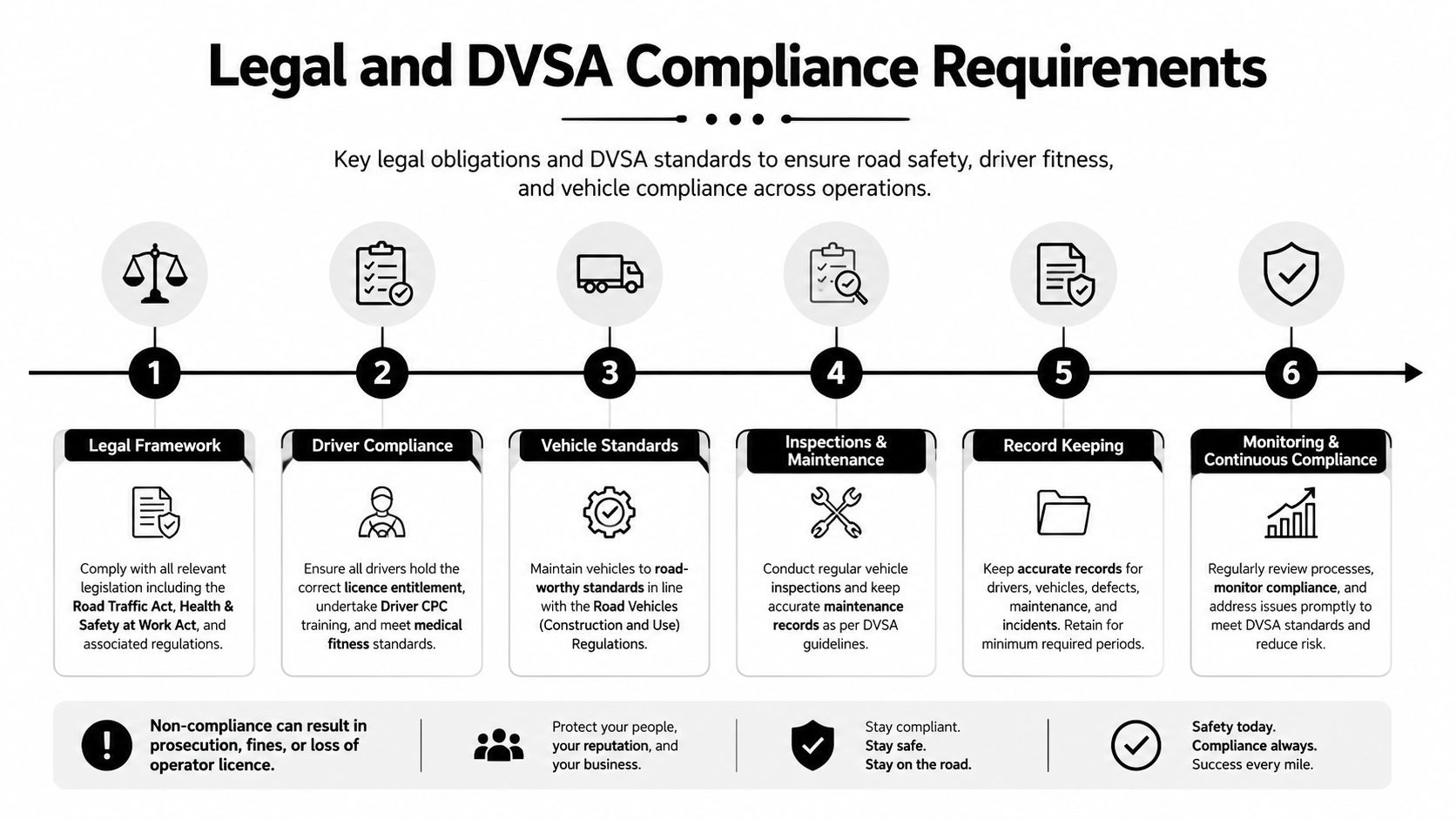
The Society of Operations Engineers recommends checking alignment at PDI, again at the first six-week inspection, and then at least annually before MOT submission, with more frequent checks for vehicles on mixed terrain. SOE wheel alignment guidance That schedule matters because compliance isn’t built from one big service, it’s built from repeatable checks.
For HGV drivers, that means alignment sits inside a wider roadworthiness mindset. If a vehicle has been damaged, used hard, or pushed through rough mixed surfaces, the geometry deserves attention sooner rather than later. A truck that fails to track properly may also raise questions in inspection and test settings because the problem can point to wear, impact damage, or neglected maintenance.
What drivers should keep in mind
A good driver does not need to measure suspension angles in the yard. What they do need is the discipline to report handling changes, kerb strikes, pothole impacts, and tyre wear patterns early. That report is part of the safety chain, and it helps the operator decide whether the vehicle needs workshop attention before the next planned check.
If you’re learning inspection habits, the roadworthiness routine is the right place to anchor this knowledge. HGV roadworthiness checks give the wider framework, and alignment fits naturally inside it.
Treat alignment as a scheduled safety item, not a reaction to a failed test or a driver complaint.
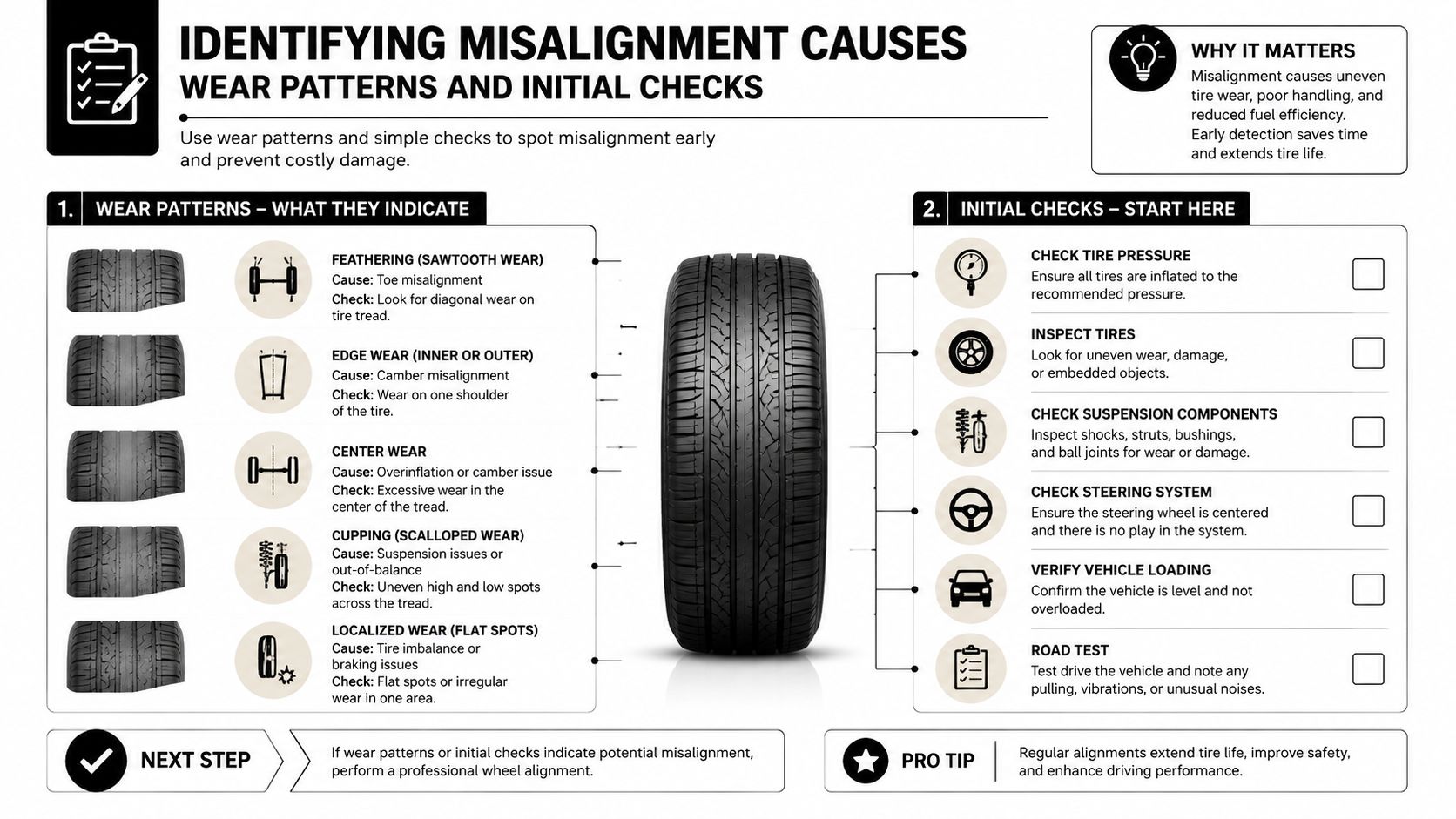
Identifying Misalignment Causes Wear Patterns and Initial Checks
A driver usually spots the symptom before the fault itself. The steering may feel slightly different, the truck may drift, or the tyres may wear in a pattern that does not match normal service life. Regular checks matter because misalignment does more than spoil a set of tyres, it also creates hidden operating costs, extra workshop time, and avoidable compliance risk for HGV operators.
Irregular wear, unstable handling, a harsher ride, or declining fuel economy can all point to geometry issues. Hankook Tyre UK alignment guidance recommends checking alignment during annual servicing, or sooner if the vehicle has hit a kerb, dropped into a pothole, or started showing clear changes in the way it drives.
What to look for on the tyres
Start with the tread and the shoulders. If one edge is wearing faster than the other, or the tread looks uneven across the tyre surface, the wheels may no longer be running where they should. Feathering, cupping, and edge wear are all signs that deserve attention, even when the vehicle still feels usable on the road.
A simple inspection routine helps:
Look at both front tyres together. Compare wear side to side, not just tyre to tyre.
Feel for scrub marks. Uneven scuffing can show that the wheel is dragging.
Check steering feedback. If the wheel feels off-centre, heavy, or slow to return, note it.
Listen on road changes. Pulling after a pothole, kerb contact, or suspension repair needs follow-up.
Report visible damage. A hard impact can disturb geometry even if the truck still seems roadworthy.
These checks fit naturally into driver training. A learner does not need workshop tools to spot the warning signs, only a calm habit of comparing what feels normal with what has changed. That habit protects tyres, but it also helps the operator catch a problem before it turns into wasted fuel, repeated repairs, or an inspection issue.
When to stop guessing
RAC says UK drivers can expect to pay around £90 for front-and-rear wheel realignment and recommends checks every 10,000 miles or two years, especially after tyre replacement, steering work, or a hard impact. RAC wheel alignment cost guide That makes early checks easier to justify than delayed repairs.
The important habit is not diagnosing perfectly at the roadside. It is recognising that the wear pattern is wrong and escalating it before the tyres, steering, and compliance record pay the price.
Professional Alignment Services and Training Responsibilities
A professional alignment check does more than “straighten the wheel”. It measures the angles on proper equipment, compares them against the vehicle’s correct settings, and adjusts the geometry so the steering and suspension work as a system. That’s why this job belongs in the workshop, not on guesswork in the yard.
Fleet specialists advise proactive alignment checks rather than waiting for symptoms, because high-mileage HGVs benefit most from routine inspections that prevent costly wear and fuel waste. Snap-on UK alignment and bottom line guidance That preventive mindset suits driver training too, because learners should be taught to notice the early clues and report them clearly.
What drivers and employers each own
Drivers own observation. They should notice pulling, steering drift, uneven wear, and changes after impacts or repairs. Employers own scheduling, because the workshop plan has to catch alignment drift before it turns into avoidable tyre replacement or an inspection problem.
A practical training approach is simple:
Teach the signs so drivers know what normal feels like.
Link the signs to action so they report issues without delay.
Build alignment into service planning so checks happen before the vehicle becomes costly to run.
Review impact after repairs so steering or suspension work doesn’t leave geometry unchecked.
HGV Learning also sits naturally in this space as a training coordinator, because alignment awareness works best when it is tied to licence progress, roadworthiness habits, and day-to-day fleet discipline.
A good fleet doesn’t wait for a tyre to tell the story. It trains drivers to spot the early chapter.
Conclusion and Next Steps
A tyre wear pattern, a steering pull, or a slight drift in the lane may seem minor on its own, but those are often the first signs that wheel alignment has moved out of line. On an HGV, that small change can ripple into longer stopping confidence, extra fuel use, quicker tyre wear, and a greater chance of inspection trouble if the vehicle is not kept within a proper maintenance routine. The hidden cost is not just the repair itself, it is the time lost, the tyres worn too early, and the pressure placed on an operator who has to keep a truck both roadworthy and productive.
For drivers, the next step is to build a simple habit. Pay attention to how the vehicle tracks on a straight road, notice any change after an impact or repair, watch for uneven wear across the tyres, and report steering feel that no longer seems normal. That is how a driver helps protect the fleet before a small alignment problem becomes a bigger workshop job.
For operators, the same principle applies at fleet level. Alignment checks should sit inside planned maintenance, and driver training should make it clear that early reporting is part of road safety, not a nuisance to the workshop. A driver who understands what misalignment feels like is more useful than one who waits for the tyres to show the problem. HGV Learning also has a place here, because training that links observation, reporting, and roadworthiness helps build the habits drivers need from the start.
Ultimately, alignment is not an optional extra, it is part of running a heavy vehicle safely, legally, and profitably.
If you’re ready to build these professional habits from the ground up, explore the driver training programmes available through HGV Learning.
What Age Can You Start HGV Driver Training? A 2026 UK Guide to Licence Age Requirements
If you're asking what age you can start HGV driver training, the honest answer depends on which licence you're after. A C1 licence, covering vehicles...