Peterborough has 269 open HGV driver jobs as of July 2026, and that makes it one of the strongest local markets in the country for qualified drivers. The opportunity for HGV driver jobs in Peterborough is real, but so are the filters, because local employers want drivers who can start safely, compliantly, and with minimal hand-holding.
That gap between headline demand and actual hireability is where most drivers get caught out. They see plenty of adverts, assume the market is wide open, then discover that depots care about recent commercial experience, clean enough licence history, valid CPC, a working Digi card, and sometimes a very specific type of driving background.
Peterborough rewards drivers who understand those details before they apply. It has big-name employers, steady agency demand, and a strong flow of Class 1 and Class 2 work. But the best jobs don’t usually go to the person who fires off the most applications. They go to the driver who matches the depot’s real operating needs.
Why Peterborough Is a Top Location for HGV Drivers
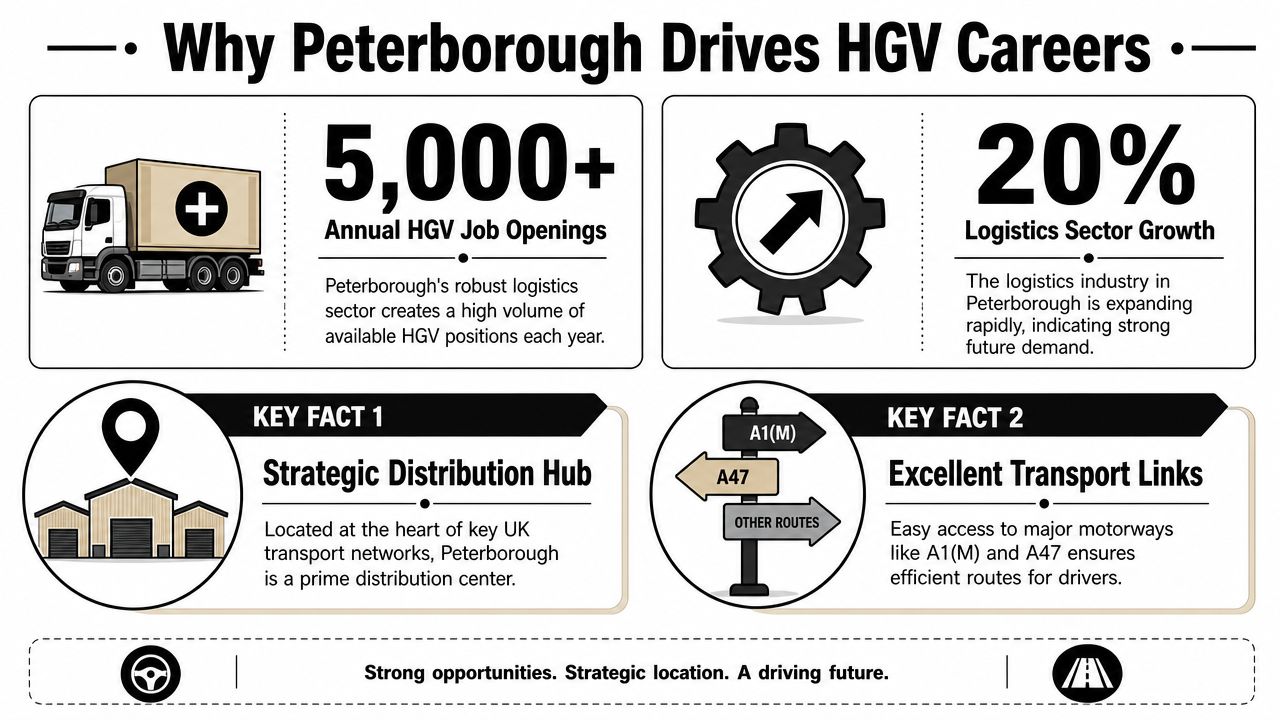
Peterborough stands out because the volume is hard to ignore. As of July 2026, there are 269 open HGV driver jobs specifically in Peterborough, a level of demand that puts the city firmly on the map for UK heavy goods recruitment, with major employers such as Royal Mail and Tesco helping drive that activity, according to Glassdoor’s Peterborough HGV driver listings.
That number matters for one simple reason. It tells you Peterborough isn’t a place where you wait around for the odd vacancy to appear. It operates like a live logistics market where depots, agencies, and national operators regularly need cover, trunking support, store deliveries, and rigid vehicle drivers.
The city works like a distribution base
Peterborough suits transport work because employers can run regional and wider network operations from it without awkward positioning. In practice, that creates a mix of work types rather than one narrow lane of driving jobs.
You’ll see this in the employers that come up again and again. Royal Mail and Tesco aren’t fringe names in the local market. They’re the kind of operators that shape shift patterns, assessment standards, and what agencies prioritise.
A healthy market also tends to create layers of opportunity:
Class 1 trunking roles often attract drivers who want cleaner depot-to-depot work.
Class 2 rigid work suits drivers who are comfortable with more physical or site-based delivery.
Agency shifts can help a relocating driver get local references and depot familiarity quickly.
Direct roles usually appeal to drivers who want fixed patterns and a steadier long-term arrangement.
Why demand stays practical, not just visible
A lot of places look busy on job boards but don’t convert well into real starts. Peterborough is different because the vacancy picture is backed up by multiple listing sources. In the same local market, Reed shows 67 live HGV jobs within a 10-mile radius, and Jobsite reports 73 live Class 1 Driver vacancies in the city, which supports the picture of sustained recruitment rather than a one-off spike, as noted in the earlier market data.
Practical rule: In Peterborough, job volume is an advantage only if your paperwork and recent experience are ready on the day a recruiter calls.
That point matters because logistics hiring moves fast. A depot manager doesn’t care that you’re “interested in Class 1 work next month” if they need a compliant driver for assessed shifts now. Peterborough gives drivers options, but local employers still hire to immediate operational need.
What this means for a new or relocating driver
If you’re moving into the area, Peterborough is one of the better places to land because there is enough recruitment activity to support different entry points. You might start through an agency, pick up local depot exposure, then move into a more stable direct role once you’ve proved yourself.
If you’re newly qualified, the city is still useful, but you need to be realistic. Opportunity exists. Easy access doesn’t. The market is strongest for drivers who already understand professional standards, can present their documents cleanly, and know the difference between being licensed and being employable.
What Peterborough Employers Really Want from HGV Drivers
Peterborough employers don’t just want a licence holder. They want a driver who can protect the operator’s licence, turn up on time, pass an assessment, and fit into a working shift plan without drama.
The pay reflects that. HGV driver roles in Peterborough offer £16 to £22.89 per hour, with specific Class 1 positions at Royal Mail paying £19.98 to £22.89 per hour, and those roles can include guaranteed minimum daily hours with shift patterns locked in after assessment, according to Pertemps’ Peterborough HGV Class 1 driver listing. That’s strong money for drivers who meet the bar.
Pay varies by vehicle, workload, and risk
Not all HGV work in Peterborough pays for the same reason. Some roles pay more because they need antisocial shift coverage. Some pay more because they need a cleaner compliance record. Others pay more because the work itself is specialised and unforgiving.
Here is the local picture in a simple format.
Job Type
Required Licence
Typical Hourly Pay
Key Local Employers
Class 1 trunking
Category C+E
£19.98 to £22.89
Royal Mail, Tesco
General HGV roles
Category C or C+E
£16 to £22.89
Agencies and local logistics employers
Class 1 roles within 10 miles
Category C+E
£15.62 to £21.00
Mixed local employers
Class 2 tipper work
Category C
Often structured as daily pay rather than standard hourly pay
Construction and aggregate-related operators
That table only tells part of the story. The primary differentiator is whether your background matches the work. A driver who’s spent time on clean RDC work may not be the first pick for tipper deliveries into demanding site environments. Equally, a capable tipper driver may need to adapt to a more process-heavy retail or mail operation.
The filters that knock people out
Many applications fail, as local employers often expect more than a valid entitlement on your licence.
For some Peterborough Class 1 roles, employers want:
A licence held for at least 2 years
No more than 5 penalty points
At least 180 days of driving experience within the last 2 years
A clear enough background to pass a CRB security check
No DD, DR, IN, or CD endorsements
Those requirements are spelled out in the Royal Mail-linked vacancy information in the Pertemps listing above. That’s not unusual for established operators. It shows how the local market separates “qualified” from “ready to deploy”.
Depot managers don’t usually reject drivers because they dislike them. They reject risk. If your paperwork raises questions, you move to the bottom of the pile.
What experienced recruiters look for first
In practice, recruiters in Peterborough often check the basics in a fixed order:
Licence category. Can you legally drive the unit they need covered?
CPC and Digi card. If either is missing or expired, the conversation stops.
Recency of work. Have you driven commercially lately enough to step in safely?
Penalty points and endorsements. Can the insurer and operator accept you?
Shift fit. Are you available for the pattern in the advert?
That last point gets overlooked. Some drivers chase the top rate without checking start times, weekend expectations, or whether the role is local to Peterborough itself rather than nearby depot work sold under a Peterborough label.
What works and what doesn’t
What works is a clean, factual application. List your licence categories, CPC status, Digi card, recent vehicle types, shift availability, and the sort of work you’ve done. If you’ve done trunking, store deliveries, shunting, tipper work, or palletised multi-drop, say so plainly.
What doesn’t work is fluff. “Hard-working team player” won’t rescue an application that doesn’t show recent Class 1 miles, suitable endorsements, or the right card status. Peterborough is busy enough that recruiters don’t need to guess what you can do.
Your Guide to HGV Licences for Peterborough Jobs
The right licence isn’t a box-ticking exercise. In Peterborough, it decides which part of the market you can access and how quickly recruiters take you seriously.
If you’re starting from scratch, think in terms of vehicle type and job outcome. Smaller commercial roles sit at one end. Rigid work sits in the middle. Artic work opens the widest set of higher-value heavy transport jobs.
Which licence matches which job
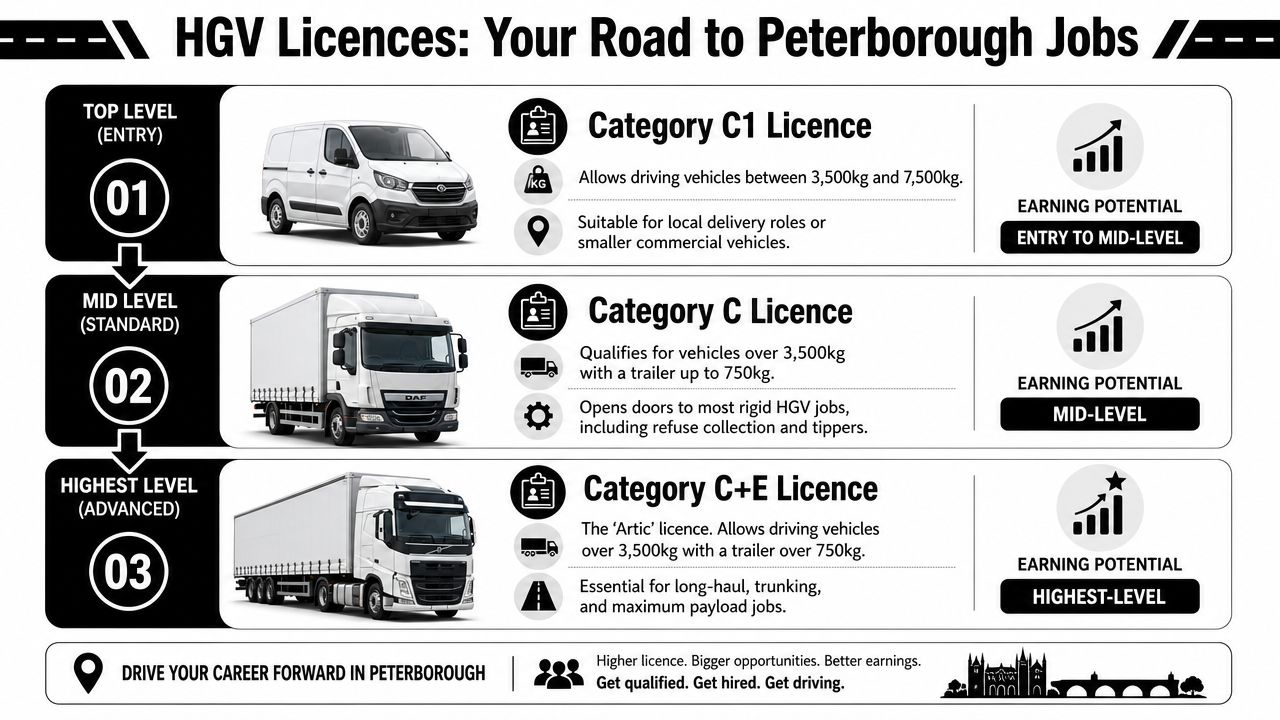
Category C1 suits lighter commercial work. It won’t put you into the mainstream artic market, but it can be a useful route if your immediate target is smaller vehicle work or a stepping-stone role.
Category C is the standard rigid licence. This is the ticket that gets you into many Class 2 roles, including work where access, tipping, reversing, and customer-site behaviour matter as much as road driving.
Category C+E is the big one for many Peterborough applicants. If you want the broadest access to trunking, depot-to-depot work, and artic roles with operators like Royal Mail or Tesco-linked supply chains, this is where the market opens up.
CPC and Digi card aren’t optional
In Peterborough, the standard hiring approach for HGV roles commonly requires at least 6 months of recent commercial driving experience plus valid CPC and Digi cards, according to Employ Recruitment’s Peterborough driver jobs guidance. That’s one of the clearest signals in the local market. Employers want drivers who can go straight onto compliant work.
A lot of new drivers focus on passing the practical test and then stall at the CPC stage. That’s a mistake. If your CPC isn’t complete, many employers won’t move forward.
For a clear breakdown of the paperwork and qualification pathway, this guide to the requirements for an HGV licence is worth reading before you book anything.
Choosing the smartest route
The smartest route depends on your target job, not your ego.
Go for Category C first if you want a practical entry into rigid work and local delivery operations.
Go straight to C+E if your aim is artic work and you want access to the widest part of the Peterborough market.
Add specialist tickets later if your chosen sector needs them. ADR, HIAB, and other extras make sense when they match the work you’re chasing.
The licence gets you through the first gate. Recent commercial use, CPC status, and the way you present your experience get you through the second one.
What catches drivers out
The most common mistake is training without a job target. Drivers pass, then realise local employers want recent experience they don’t yet have. The fix is to treat training and job search as one plan.
Build your route like this:
Choose the licence level based on the jobs you want in Peterborough.
Complete CPC properly so your application is legally and operationally viable.
Keep your documents organised because agencies ask fast.
Be flexible on first roles if you need that first block of recent commercial experience.
That approach won’t guarantee a job, but it gives you a realistic shot at entering the market instead of circling it.
How to Find and Apply for HGV Roles in Peterborough
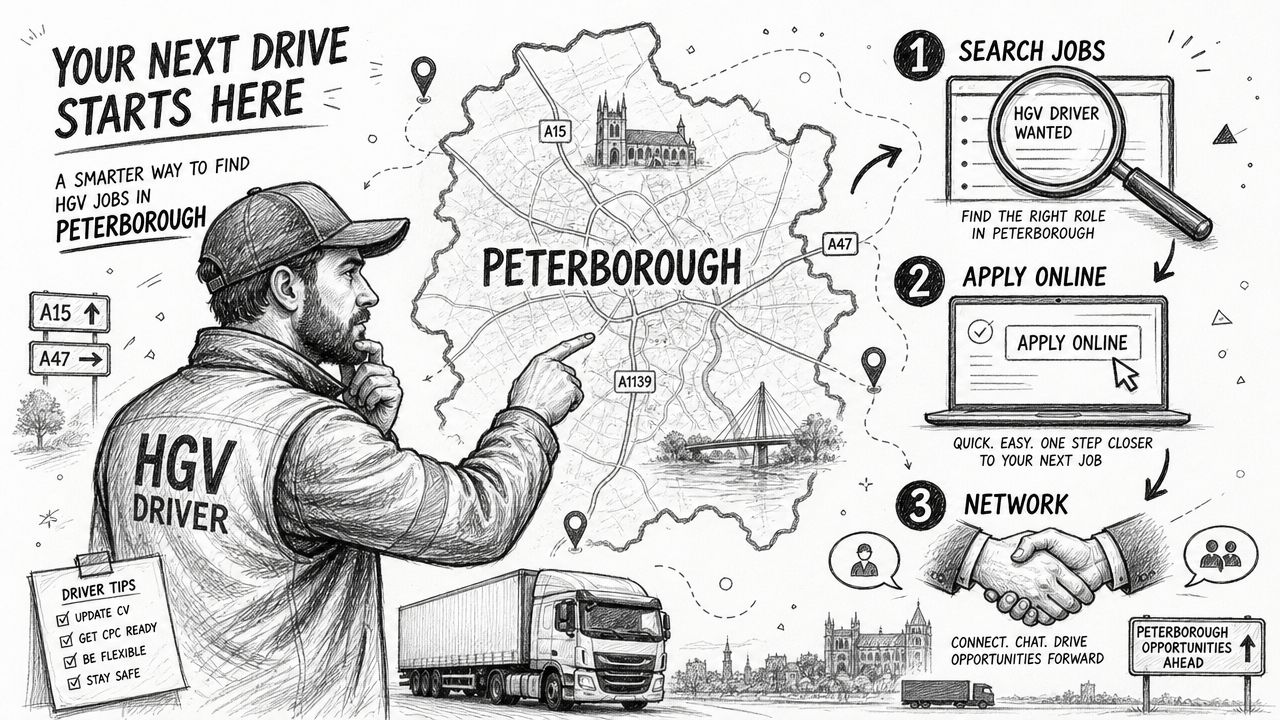
Finding HGV driver jobs in Peterborough isn’t hard. Finding the right ones, and applying in a way that gets callbacks, takes more care.
The local market has one recurring trap. Some adverts look like Peterborough jobs but are effectively tied to nearby depots or wider regional operations. If you don’t check the actual reporting location, route pattern, and shift start point, you can waste time applying for work that doesn’t fit your commute or your life.
Start with the real base location
Current listings often miss the fine print around local versus regional recruitment. Some Peterborough-facing adverts connect to depot-based roles in Raunds (Wellingborough), and some employers also place heavy emphasis on CPC card readiness and narrow eligibility details that experienced drivers still sometimes overlook, as highlighted by Lanes Group’s HGV driver careers information.
That matters because a good-looking advert can be a poor match if the depot start point adds too much unpaid travel, or if the role implicitly expects a certification or background you don’t hold.
Build a CV that answers recruiter questions fast
Your CV needs to work like an ops sheet, not a personal statement. A transport recruiter should be able to scan it and answer the key risk questions immediately.
Include these details near the top:
Licence categories held such as Category C or C+E
CPC status and whether your card is current
Digi card status
Recent commercial driving history with vehicle types and work type
Shift availability including nights, weekends, or ad hoc cover
Penalty points position if acceptable and relevant to declare
If a role values a clear recent-driving pattern, show that plainly. Don’t bury it in a paragraph.
Use agencies properly
Agencies matter in Peterborough because they often control access to the faster-moving shift pool. They can also get you assessed quickly if you fit a live requirement.
What works with agencies:
Answer the phone. Recruiters move on quickly if they can’t place you today.
Send documents in one clean batch. Licence, CPC, Digi card, proof of address, and work history should be easy to verify.
Be honest about experience. If you’ve never reversed onto a tight bay under pressure, don’t pretend you have.
Stay flexible early on. A less glamorous first assignment can lead to stronger local references.
If you want a wider view of nearby vacancies and how to judge them, this guide to lorry driver jobs near me is a useful practical starting point.
A short explainer can also help if you’re new to the process or coming back into the sector after time away.
Apply like a driver, not a job board user
Strong applications in Peterborough are targeted. Weak ones are sprayed across every listing with the same generic text.
A solid application usually does three things:
It names the vehicle class you’ve driven.
It shows recent, relevant work rather than old history padded out.
It confirms you’re available for the shift pattern advertised.
If the role is nights, say you can do nights. If the role is depot-to-depot, say you’ve done depot-to-depot. Recruiters shouldn’t have to infer the match.
That simple discipline beats volume. In this market, relevance wins.
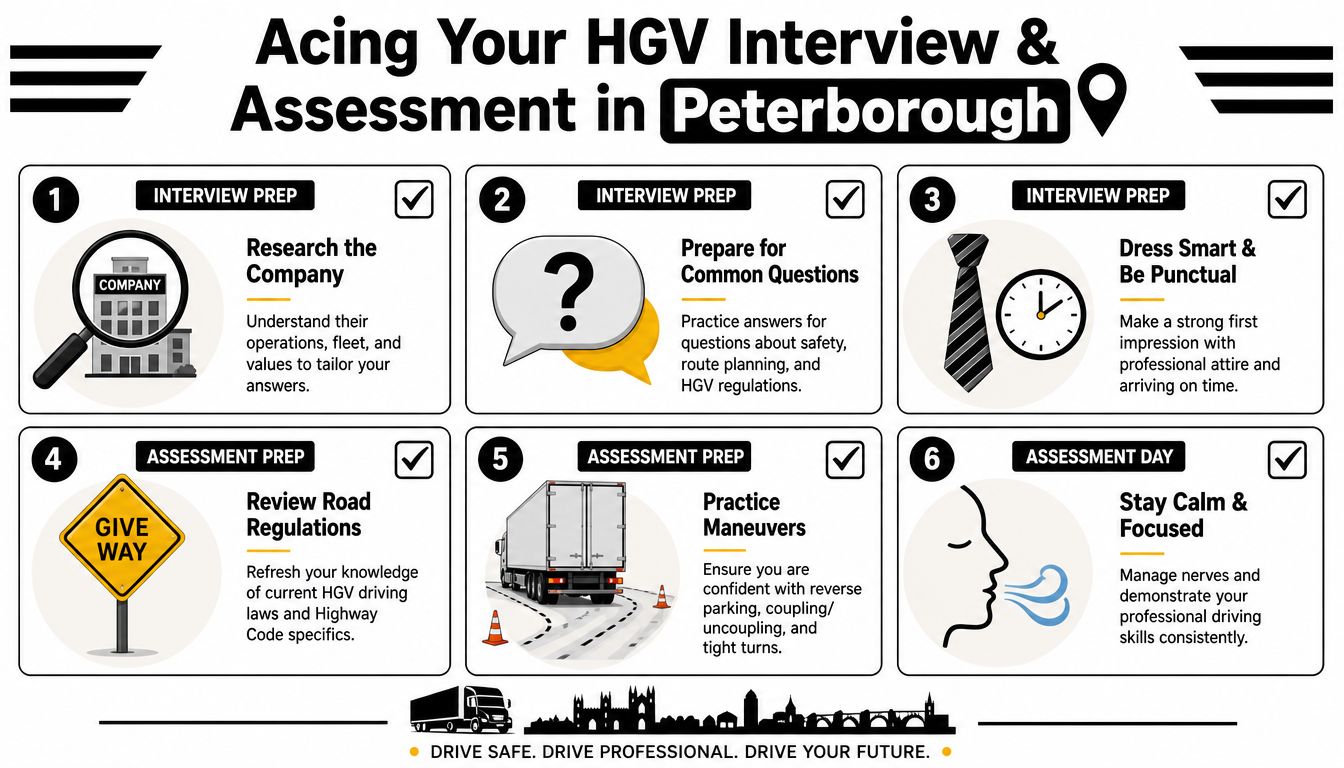
Passing the Interview and On-the-Road Assessment
The interview and assessment stage is where Peterborough employers decide whether you’re a safe bet or a future headache. Most failures don’t happen because the driver can’t physically move the vehicle. They happen because the driver looks casual about compliance, vehicle care, site behaviour, or basic professionalism.
Assessors want confidence, not swagger. They want a driver who can follow process without needing every instruction repeated. That matters even more in specialist Class 2 work, where the job can involve site conditions, material handling routines, and closer scrutiny of how you manage the vehicle.
What the interviewer is really checking
A transport interview often sounds simple, but it usually tests risk awareness. Expect questions around tachograph discipline, defect reporting, daily walk-round checks, reversing confidence, delivery paperwork, and how you handle delays or site issues.
The strongest answers are short and operational. Explain what you do, in what order, and why.
Good topics to prepare:
Vehicle checks and how you report defects
Tacho compliance and break awareness
Load security in the context of the work you’ve done
Customer-facing behaviour at delivery points
Incident reporting if something goes wrong
How to treat the driving assessment
An assessment isn’t just a driving test. It’s a working-day simulation. The assessor is watching how you approach the vehicle, how you check it, whether you mirror early, how you position on turns, and whether you stay composed under instruction.
For specialist local work, standards can be tighter than drivers expect. For example, Indeed listings for Peterborough Class 2 tipper roles show daily pay of £205 to £222 plus bonuses, with overtime rates of £21.50 for days and £26.88 for nights, but those roles also require 3 years of Class 2 experience and a proven track record on 32-ton tipper lorries for asphalt or gravel delivery. That’s a reminder that better-paid work often comes with a sharper assessment lens.
Practical ways to improve your odds
Before the day:
Read the job details again so you know what sort of operation you’re walking into.
Lay out your documents the night before.
Wear clean workwear or smart practical clothing. You need to look like someone who can represent the business properly.
Get there early enough to settle, not rush.
During the assessment:
Talk through checks when appropriate if the assessor invites it.
Take your time on manoeuvres rather than trying to look quick.
Use mirrors constantly and visibly.
Own small corrections calmly instead of panicking when something isn’t perfect.
Stay methodical. Most assessors would rather see a careful adjustment than a rushed mistake.
The attitude that gets remembered
Drivers often assume the best candidate is the quickest or most experienced. In reality, the memorable candidate is often the one who looks dependable.
That means you listen well, accept instruction, keep your answers clean, and don’t try to impress with war stories. Peterborough employers can teach site specifics. They can’t easily fix poor habits or a sloppy attitude.
Start Your Peterborough HGV Driving Career Today
Peterborough is one of those rare local markets where demand, employer quality, and earning potential line up well for drivers who are properly prepared. The opportunity is there, but it isn’t random. Drivers who know the local rules get traction faster.
The pay range alone makes the city worth serious attention. Within a 10-mile radius of Peterborough, Reed lists 67 live HGV driver jobs, with Class 1 hourly rates from £15.62 to £21.00 and an annual salary band of £36,690 to £44,720 across the sector, according to Reed’s Peterborough HGV jobs listings. That gives you a realistic sense of what the local market can offer once you’re in the right lane.
What to do next if you’re serious
If you’re new to the sector, focus on getting fully qualified and job-ready, not just test-ready. If you’re experienced and relocating, tighten up your CV, check depot locations carefully, and target roles that fit your background rather than applying blindly.
A sensible next move is to map your route in this order:
Choose the right licence level for the type of work you want.
Make sure your CPC and documents are current.
Prepare for assessments, not just interviews.
Target realistic first roles if you need recent local experience.
If you’re still weighing licence options or training routes, this guide to HGV driver training near me can help you narrow the practical next step.
The Peterborough advantage
The best thing about Peterborough isn’t just that there are jobs. It’s that there are enough different kinds of jobs for drivers to build a route into the market. Some will start with agency shifts. Some will move straight into direct employment. Some will use rigid work to build recent experience before stepping up to artic roles.
That flexibility is useful, but only if you treat your application like a professional file, not a hopeful punt. In this city, employers respond to drivers who look ready to work safely from day one.
If you’re ready to move towards a Peterborough driving role, HGV Learning can help you build the right route from licence choice through training, CPC preparation, practical test support, and job-focused guidance. Whether you’re starting from scratch or stepping up to a higher category, their team helps turn “I want HGV work” into a clear, workable plan.
What Age Can You Start HGV Driver Training? A 2026 UK Guide to Licence Age Requirements
If you're asking what age you can start HGV driver training, the honest answer depends on which licence you're after. A C1 licence, covering vehicles...