Sheffield isn’t a side market for HGV work. It’s one of the strongest local hiring pockets in the country right now. As of July 2026, there are 557 open HGV driver jobs in Sheffield according to Glassdoor’s Sheffield HGV listings. That number changes how you should think about the trade. This isn’t about chasing a few scattered vacancies. It’s about entering a market that already needs licence holders.
That matters if you’re weighing training costs, shift patterns, and whether the job move is worth it. In Sheffield, the better question isn’t “Are there jobs?” It’s “Which licence gets me into the right jobs, with the right pay, close enough to home to make the work sustainable?”
Individuals often lose time by doing things in the wrong order. They scroll job boards before sorting licences. They apply too early. They take a course without checking whether local employers want Class 1, Class 2, HIAB, or ADR. A better route is simple. Get clear on the Sheffield market first, match your training to that market, then present yourself like someone who’s ready for work from day one.
The Booming HGV Job Market in Sheffield
More than 500 open roles were already showing in Sheffield earlier in the article, and that level of demand matters for one reason. It gives you room to choose your route into the industry instead of forcing you into the first job that appears.
Sheffield stays busy because the work is varied and steady. One week a driver might be looking at store deliveries or pallet network runs. Another week the stronger options might be building materials, plant support, refuse, or depot-to-depot trunking. That spread is useful for new pass drivers because local employers are not all asking for the same background, the same licence class, or the same shift pattern.
The practical point is simple. Sheffield rewards drivers who train with a clear target.
A Category C licence fits a lot of local rigid work around multi-drop, municipal fleets, builders’ merchants, and construction support. A C+E licence usually gives wider access to trunking, RDC work, container movements, and the better-paid artic vacancies around South Yorkshire and the wider M1 corridor. If you add ADR, HIAB, or Moffett later, you are not just adding certificates. You are moving into a different part of the local market with different day rates, different physical demands, and often fewer direct competitors.
That trade-off matters. Class 2 can get you earning faster and often keeps you closer to home, but the work can be more physical and involve tighter urban access. Class 1 often pays more, but some employers still want reversing confidence, calm yard work, and flexibility on nights or early starts. Candidates who understand that before booking training make better decisions.
Why local fit matters
Sheffield employers usually hire for practical fit, not just a pass certificate. They look at whether you can handle industrial estates, customer-facing deliveries, early depot starts, and realistic commuting times from places like Rotherham, Chesterfield, Barnsley, or Doncaster. A licence gets you through the first gate. The right licence for the type of Sheffield work you want gets you much further.
That is why I tell candidates to stop treating “HGV driver jobs Sheffield” as one big category. It is several job types grouped under one search term.
Rigid roles suit many first jobs. They are common in local distribution, trade supply, waste, and support work where route discipline and site awareness matter.
Artic roles widen pay options. They often suit drivers targeting trunking, longer runs, nights out, or cleaner depot-based work with less handball.
Extra tickets shift employer interest. HIAB, ADR, and similar add-ons can matter more than another few months of general driving if you want construction or specialist fleet work.
If you are still weighing up the job properly, this guide on whether HGV driving is a good career gives a realistic view of the pay, lifestyle, and progression.
What works in Sheffield
The strongest candidates apply with a clear work preference and a licence plan that matches local demand. They know whether they want local days, night trunking, tramping, or physically active delivery work. They also know what they can realistically commute to every day, because a decent rate on paper soon loses its appeal if the start time and travel do not hold up week after week.
Applying blindly wastes time. Targeted applications, matched to licence level, shift availability, and the actual type of fleet, get better responses in this market.
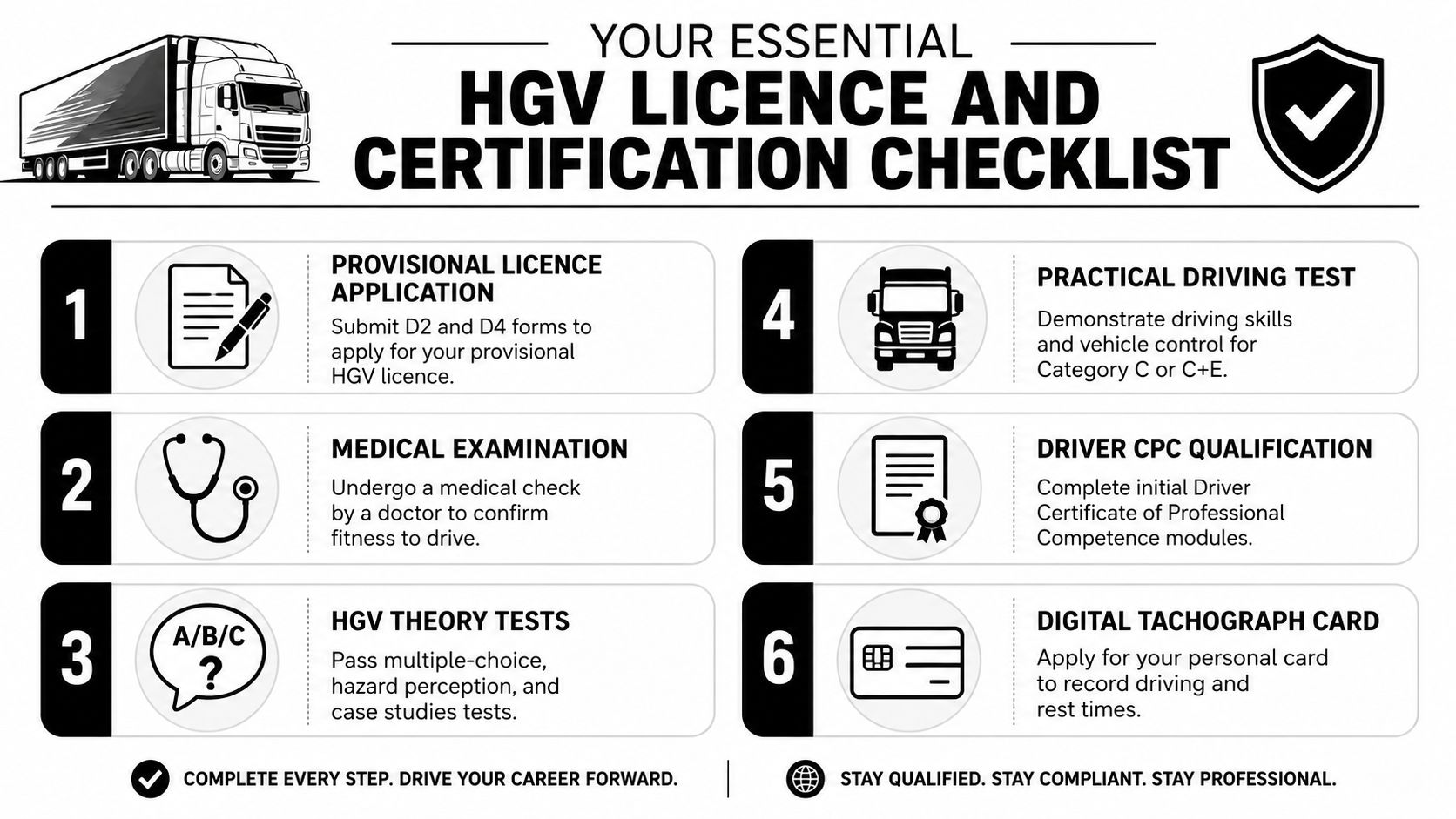
Your Essential HGV Licence and Certification Checklist
A lot of Sheffield applicants lose time before they even send a CV. The usual problem is simple. They book the wrong licence route, miss a document, or stop at the legal minimum when local employers are hiring for a broader brief.
Start with the correct licence class
The licence you choose shapes the jobs you can apply for and the rates you are likely to see around Sheffield, Rotherham, Doncaster, and the wider South Yorkshire patch.
Licence
Best fit
Typical use
C1
Smaller commercial vehicles
3.5 to 7.5 tonne work, including some ambulance roles
Category C
Rigid lorries
Class 2 distribution, local delivery, municipal and construction support
Category C+E
Articulated combinations
Class 1 trunking, tramping, depot-to-depot and long-distance haulage
For many new drivers, Category C gets you into work faster. It suits firms running local and regional rigid fleets, where route discipline, reversing, and dealing with mixed delivery points matter. Category C+E usually gives you a wider pay range and more options across trunking and depot work, but the training step is bigger and some first-time candidates do better by getting road experience first.
That choice depends on your target employer, not just your budget.
Keep the process tight. Employers want a driver who can start work without extra chasing.
Provisional entitlement in place early. Get this moving first, because everything else waits behind it.
Medical done without errors. Small paperwork mistakes here can delay training dates and test bookings.
Theory and case studies passed. These are part of the standard route and they matter more than many candidates expect.
Practical training booked in sequence. Good timing helps you keep test readiness without letting weeks drift by.
Driver CPC completed. A licence on its own does not make you work-ready for most employed driving roles.
Digital tachograph card ready to use. Some operators will not confirm a start date until they know you have it.
A licence makes you legal to drive. A complete file makes you easier to hire.
I tell candidates in Sheffield to treat this as a job-readiness pack, not a training checklist. If an employer likes your application on Monday, you want to be able to say you are ready to move, not still waiting on one missing card.
When specialist training is worth it
Extra tickets can help, but only if they match the type of fleet you want to join. I see candidates waste money by adding qualifications that sound good on paper and do very little for the roles they apply for.
As of July 2026, Indeed’s specialist HGV listings show hundreds of specialist HGV driver vacancies nationally. That gives useful context, but it does not tell you exactly what Sheffield employers will pay for HIAB, ADR, or other add-ons in any given week. Local adverts often bundle those roles into wider Class 1 or Class 2 searches, so the premium is not always obvious in the headline rate.
The practical gain is usually clearer than the exact wage bump. A specialist ticket can put you in a smaller candidate pool, which matters in a competitive Sheffield market.
Choose add-ons with a purpose:
ADR suits drivers who are comfortable with strict checks, paperwork, and hazardous goods procedures.
HIAB fits builders’ merchants, construction supply, and delivery work where crane use is part of the day, and our own Hiab training course covers exactly that.
Plant-related tickets such as telehandler training can help if you want work closer to construction operations than general haulage.
The best plan is the one that lines up with local demand and your preferred working day. If you want merchant work, HIAB makes sense. If you want tanker or hazardous loads, ADR makes sense. If you want depot trunking, neither may be the first thing to spend money on.
Finding the Best HGV Vacancies in Sheffield
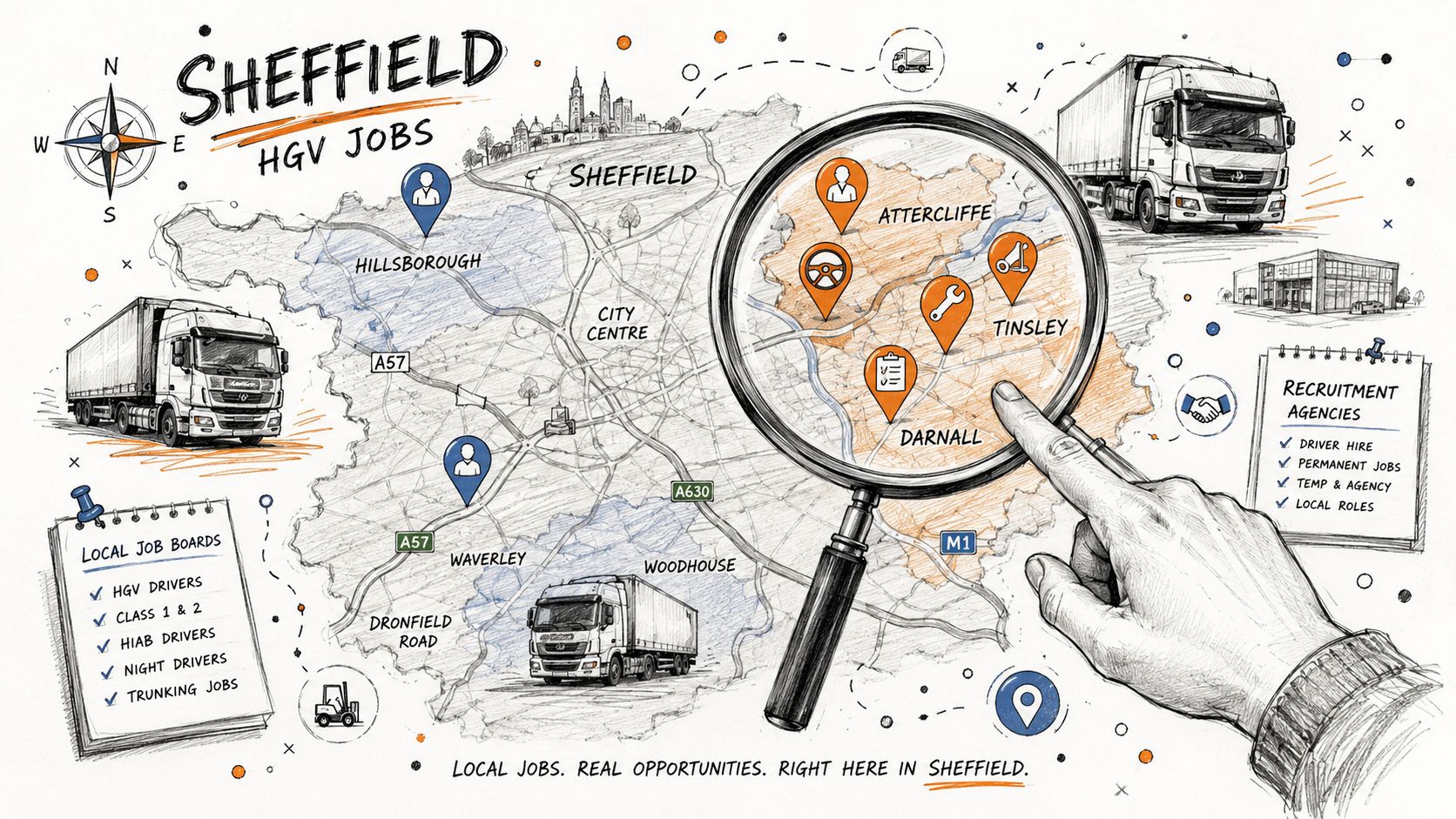
As of July 2026, the National Careers Service page discussing bootcamps and local HGV work referenced 202 HGV jobs in the S35 postcode area at that point in time. That number will move, but the lesson holds. In Sheffield, postcode matters almost as much as licence class.
Search by postcode, not just by city
A Sheffield advert can cover work north of the city, out towards Rotherham, or near the motorway links where many depots sit. If your start time is 04:00, an extra 25 minutes across the city is not a small detail. It affects sleep, fuel costs, and whether the job is sustainable after the first few weeks.
That is why postcode filtering works better than broad city searches. The National Careers Service touches on local access to work and guaranteed interviews through bootcamps, but drivers still need to check where the vehicle is based and how that fits their day. You can see that local angle in the National Careers Service discussion of bootcamps and local HGV work.
Where Sheffield drivers usually find the better openings
Use more than one route. The strongest candidates I work with do not rely on a single jobs board and hope for the best.
Recruitment agencies in South Yorkshire: Good for quick starts, holiday cover, weekend shifts, and getting experience with different operators.
Direct applications to local fleets: Better if you want a clearer induction, a regular vehicle, and a steadier weekly pattern.
Builders’ merchants and construction suppliers: Worth checking if you want Class 2 work, customer contact, or you already hold HIAB.
Distribution sites near major routes: Better suited to trunking, container work, nights, and depot-to-depot runs.
Search for the depot first, then the job title. That one habit saves drivers from applying for roles that look local on paper and turn into tiring cross-city starts.
If you want a better way to narrow vacancies by distance, route pattern, and depot base, this guide to lorry driver jobs near me is a useful filter.
What to check before you send an application
Adverts leave out the parts that decide whether a job suits you. A two-minute call often tells you more than the listing.
Where is the truck kept? Ask for the exact yard or depot, not the head office.
What is the actual sign-on time? Early starts can make a nearby role harder than a longer motorway run.
What type of work fills most of the week? Trunking, multidrop, store delivery, and site work all require a different pace.
Will they take newly qualified drivers? Some Sheffield firms will, but often only on selected contracts or after an assessment day.
How is pay structured? Check whether the quoted rate covers breaks, nights out, overtime thresholds, and weekend premiums.
A good vacancy is not just about the headline rate. It is about whether the route, start time, workload, and depot location fit real life in Sheffield.
One more point. If the employer uses online screening, write your application so both a recruiter and an applicant tracking system can read it properly. These ATS resume optimisation strategies explain how keyword matching works, which is useful if you are applying through larger logistics firms or national agencies with Sheffield contracts.
Crafting a CV That Gets You Shortlisted
Most HGV CVs fail because they read like generic warehouse or driving applications. Recruiters don’t need a personality essay. They need proof that you can turn up, stay compliant, protect the vehicle, and finish the shift without drama.
Put the right facts at the top
The top third of your CV should do the heavy lifting. Include your licence category, CPC status, digital tachograph card, location, and any specialist tickets. If you’ve got C1, Category C, C+E, ADR, or HIAB, don’t bury them halfway down the page.
A Sheffield transport manager scanning applications is usually looking for fit first. They want to know whether you can legally and practically do the role. Generic lines like “hard-working team player” don’t answer that.
Try this structure:
Profile: One short paragraph focused on licence status, vehicle type, and reliability.
Licences and compliance: Clear, easy-to-scan list.
Driving or related work history: Reverse chronological, with plain language.
Education and training: Keep it brief and relevant.
Write for both people and screening systems
A lot of firms now use software to sort applications before a human sees them. That doesn’t mean stuffing keywords into every line. It means using the exact terms employers search for, such as Class 1, Class 2, Driver CPC, digital tachograph card, multidrop, tramping, or HIAB when they apply.
If you want a solid external reference for how those screening systems work, these ATS resume optimisation strategies are useful because they focus on clarity, matching job language, and formatting that software can read.
Keep your CV to one page if you can. Two pages are fine if you’ve got real driving history. Three pages usually tells the employer you can’t prioritise.
What recruiters trust
Recruiters believe specifics. They trust “completed daily walk-round checks and defect reporting” more than “excellent attention to detail”. They trust “local Class 2 delivery work with early starts” more than “works well under pressure”.
If you’re newly qualified, don’t pretend to be experienced. That backfires. Instead, lean on the qualities that matter in transport. Clean presentation, punctuality, safe attitude, readiness for assessment, and a clear licence record all carry weight when they’re stated plainly.
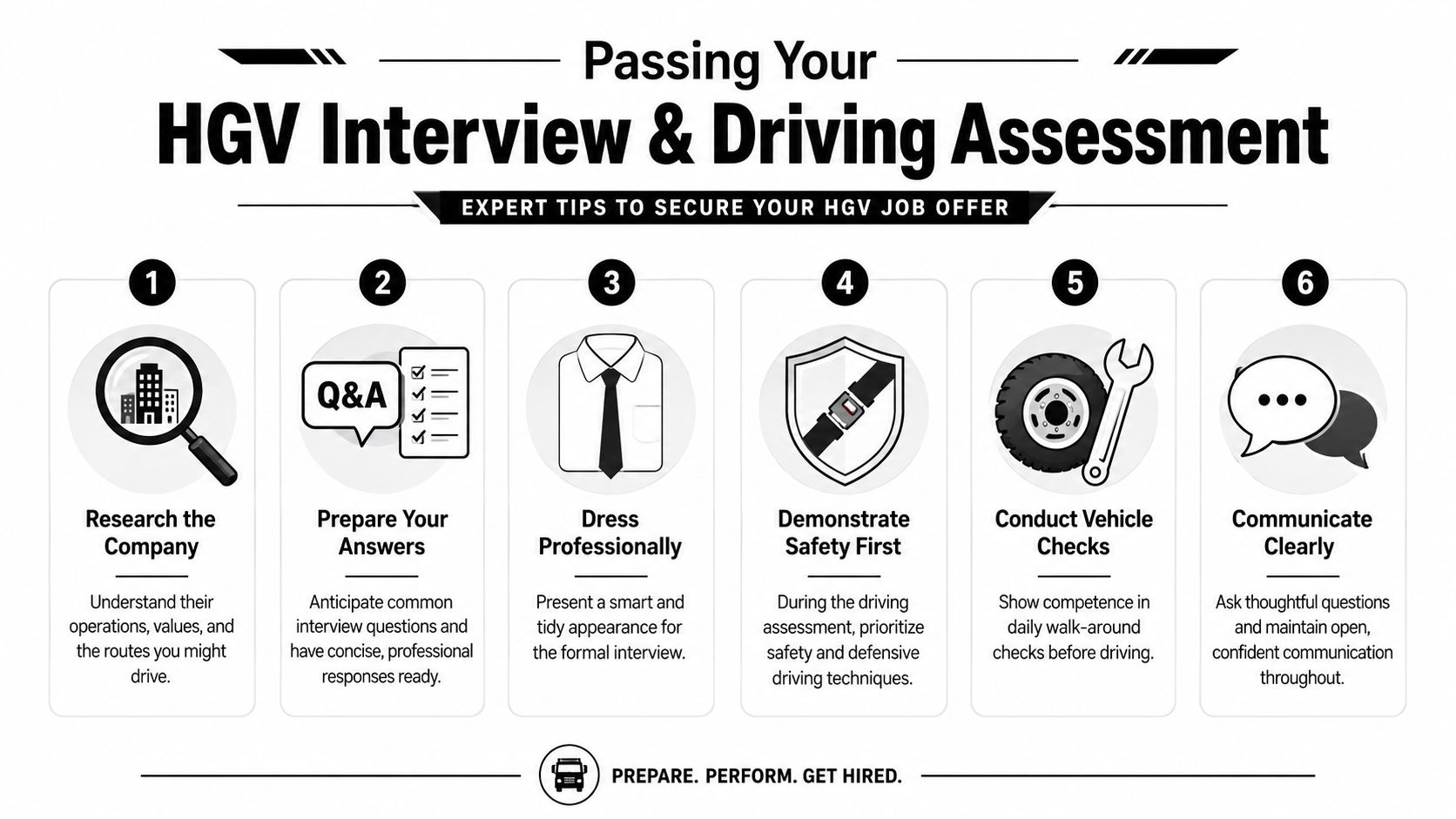
Passing the Interview and Driving Assessment
A high proportion of rejected drivers are ruled out at interview or assessment, not because they cannot drive, but because they look risky on compliance. In Sheffield, where many operators need people who can step into depot work, supermarket contracts, pallet networks, or trunking shifts with minimal delay, that matters a lot.
Employers are judging more than basic vehicle control. They are asking themselves a simple question. Can this driver protect our O-licence, keep to site rules, and represent the business properly on a live job?
That is why newly qualified drivers sometimes get hired over drivers with more miles. A calm answer, a safe attitude, and clean tachograph habits can outweigh years of poor discipline.
What employers want to hear in interview
Good interview answers are plain, specific, and believable. Sheffield transport managers usually prefer a driver who explains their process clearly over someone who talks big and stays vague.
Expect questions on:
Drivers’ hours and Working Time rules: Show that you know where the limit is, when to stop, and when to ask for guidance.
Tachograph use: Be ready to explain manual entries, mode changes, breaks, and what you would do if you spotted an error.
Site delays and missed slots: Say how you would report the issue early so the office can react.
Customer contact: Keep your answer steady and professional. Firms remember complaints.
Shift pattern fit: If a Sheffield role involves nights, weekends, or tramping, answer truthfully. The wrong fit wastes everybody’s time.
One strong answer beats five polished clichés.
The assessment mistakes that cost people jobs
The failed assessments I see tend to come from hesitation, not recklessness. Candidates know the basics, then go quiet when asked about tachographs, bridge heights, reversing control, or defect reporting.
If a company runs a busy fleet, they do not want to teach the same compliance point twice. They want proof that you will follow procedure every shift. That includes understanding how vehicle condition affects road safety and uptime. Even a basic awareness of trailer maintenance helps you speak more confidently about defects, tyre issues, lights, brake lines, and reporting standards.
Use this checklist before and during the assessment:
Check area
What good looks like
What fails candidates
Tachograph use
Correct entries, calm answers, no guessing
Wrong mode selection, confusion over breaks, vague explanations
Reversing and control
Slow, planned movements and proper observations
Rushing, sharp corrections, poor mirror use
Walk-round discussion
Clear defect awareness and sensible reporting steps
Missing safety-critical items or treating defects casually
Road behaviour
Good spacing, early planning, legal speed, steady judgement
Late lane choices, poor signs of anticipation, clipping kerbs
If you do not know a detail, say how you would check it before moving the vehicle. That sounds safer than bluffing.
How to prepare properly
Treat the interview and assessment like a working shift. Read the advert again on the morning, check the start time, take every document requested, and know what kind of job you are being assessed for. A Class 1 trunking role around Sheffield is judged differently from a Class 2 multidrop job into tight city sites.
Practice speaking out loud before the day. Explain your walk-round routine, your tachograph steps, and what you would do with a late delivery, a damaged trailer, or a drivers’ hours problem. If your answer sounds clear in a kitchen at home, it will usually sound clear in front of a transport manager.
Turn up early. Wear clean workwear or tidy interview clothes. Bring your licence, CPC, tachograph card, and any recent driving references if you have them.
That standard still gets people hired.
How HGV Learning Accelerates Your Job Placement
Sheffield operators hire quickly when a candidate is licence-ready, organised, and realistic about the work. The delay usually is not the driving. It is the gap between passing, sorting documents, and applying for the right jobs at the right time.
Why structure matters
In Sheffield, employers often want drivers who can step into work without a long settling-in period. That means licence category completed, Driver CPC in order, tachograph card ready, and a clear idea of whether you suit Class 1 trunking, Class 2 multidrop, or weekend relief work. National requirements get you legal. Local expectations get you shortlisted.
That matters for pay as well. Better-paying Sheffield roles usually go to drivers who are available quickly, understand shift patterns, and can show they will handle compliance properly from day one. I have seen candidates miss decent work because one document was late or they applied too broadly instead of targeting the jobs that matched their licence and experience.
A joined-up process fixes that. It keeps training, paperwork, and job search moving in the same direction.
Support that helps after the pass
Good support does not stop once the test is done. New drivers often need help presenting their qualifications properly, understanding what local firms will ask in screening calls, and avoiding applications that waste time.
That is where HGV Learning can shorten the route into work. The aim is simple. Get the training completed, keep the admin on track, and help candidates apply for roles they can win.
Good preparation also builds habits that matter once you start earning. Operators in and around Sheffield pay attention to defect reporting, vehicle sympathy, and how seriously a driver takes roadworthiness. For drivers who want to understand the maintenance side better, this practical overview of trailer maintenance is a useful companion because it shows how operators think about roadworthiness and downtime.
A practical pathway usually includes:
Medical and licence planning: So the application starts cleanly and avoidable delays are dealt with early.
Theory support with progress checks: So revision stays on schedule and test dates are not pushed back through lack of preparation.
Practical training with local access in mind: So candidates can train, test, and stay available for Sheffield vacancies.
Recruitment guidance: So applications match the roles being filled locally, rather than being sent out at random.
What candidates gain from that approach
The most significant gain is keeping momentum. Candidates lose confidence when one stage finishes and nothing happens for two or three weeks. A steady process keeps the next step clear, whether that is booking training, checking documents, refining a CV, or applying for live vacancies.
For Sheffield candidates, that makes a real difference because the local market includes a mix of depot work, supermarket trunking, pallet network deliveries, and general haulage. Those jobs do not all suit the same person. Someone chasing home-daily Class 2 work needs a different plan from someone willing to tramp for stronger rates. HGV Learning helps narrow that choice earlier, which saves time and leads to better applications.
If you want help turning training into real work, HGV Learning offers a practical route from medicals and theory prep through to licence acquisition, recruitment guidance, and local job-matching support. That can make the jump into HGV driver jobs in Sheffield far more manageable, especially if you want a clear plan rather than trial and error.
What Age Can You Start HGV Driver Training? A 2026 UK Guide to Licence Age Requirements
If you're asking what age you can start HGV driver training, the honest answer depends on which licence you're after. A C1 licence, covering vehicles...