You might be looking at ADR training in Scotland for one of two reasons. You want access to better driving work, or your employer has told you that certain loads are off limits until you hold the right qualification. Both are common starting points.
ADR can feel more complicated than an ordinary training course because it sits between law, safety, exams, and administration. It affects what you're allowed to carry, which course route you should book, and how quickly you can move into specialist work. In Scotland, there's also an extra layer that catches people out. The qualification is UK-wide, but the administration route in Scotland has its own moving parts.
Starting Your ADR Journey in Scotland
A lot of drivers first hear about ADR when a job advert mentions fuel, chemicals, gases, paint, waste, cleaning products, or site deliveries that need a hazardous goods qualification. At that point, the main question isn't academic. It's practical. What do I need, who runs it, and how do I get through it without wasting time or money?
That's where ADR training Scotland differs from the vague advice you often see online. You don't just need a course. You need the right course for the type of load you'll carry, the right training centre, and a clear idea of how the Scottish process works after the classroom part ends.
Why drivers go for ADR
Some drivers take ADR because a current employer needs more flexibility in the fleet. Others use it to widen the kind of work they can apply for. Construction, utilities, fuel distribution, industrial supply, and specialist logistics all rely on drivers who understand how to move dangerous goods safely and legally.
ADR also changes how employers look at you. It shows you can work within a tighter compliance framework, follow documented procedures, and handle higher-responsibility loads.
ADR isn't just another badge on your licence file. It tells an employer you can operate in work where mistakes carry bigger consequences.
There's also a wider professional point here. Drivers increasingly need to explain themselves clearly, follow procedure, and deal calmly with inspections, site rules, and customers. If you want to sharpen that side of your working life as well, resources such as Carlos Alba Media training are useful for building confidence in clear communication under pressure.
What usually confuses new candidates
Most confusion comes from three areas:
Course choice: Drivers often aren't sure whether they need packages, tanks, or both.
Scottish administration: Many people don't know who handles exams and who issues the card.
Long-term planning: Some book the cheapest-looking course first, then realise later it doesn't match the work they want.
If you get those three points right at the start, the whole process becomes much easier.
Understanding ADR Hazardous Goods Regulations
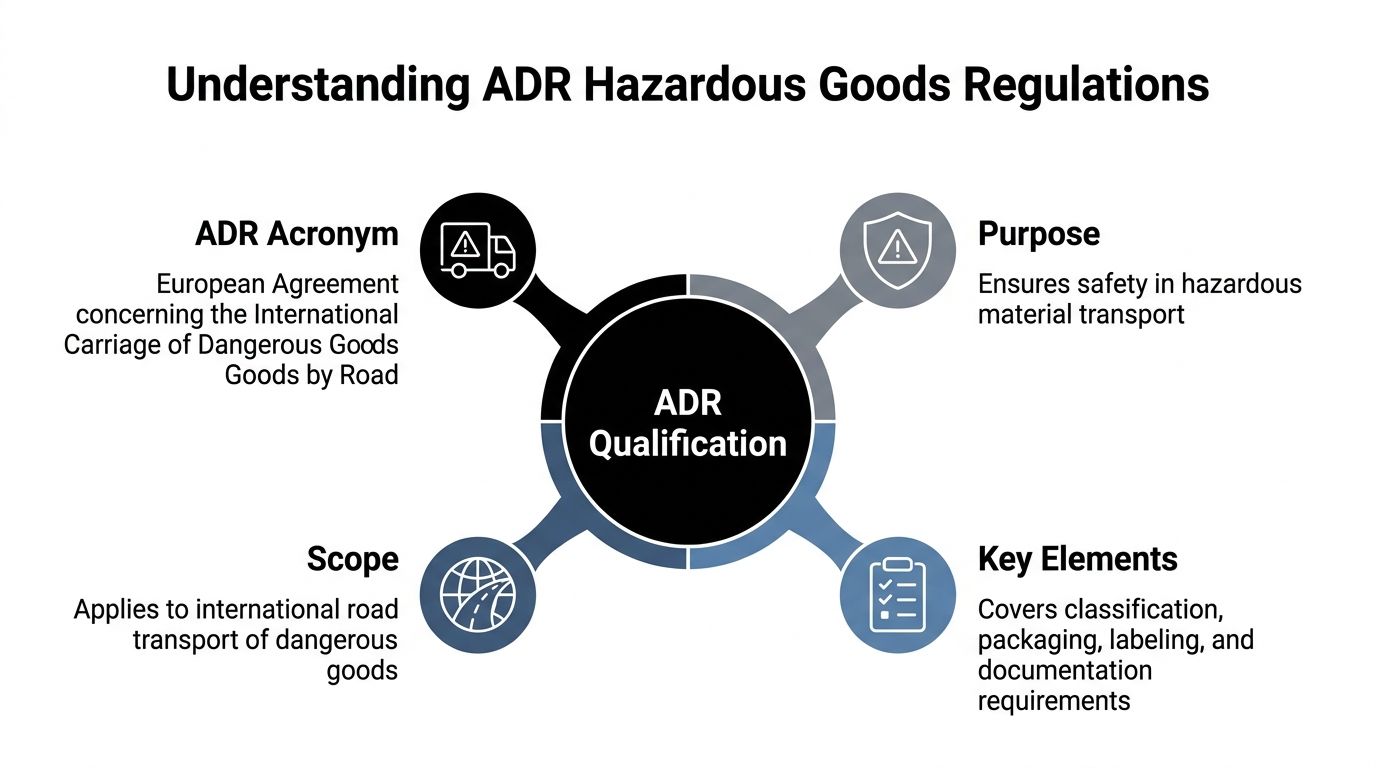
ADR is the rule set for carrying dangerous goods by road. The easiest way to think about it is as a specialist driving qualification for sensitive cargo. Your HGV entitlement lets you drive the vehicle. ADR decides whether you're legally trained to carry certain hazardous loads.
That matters because the law isn't interested in whether a load “seems harmless enough”. It focuses on risk, classification, packaging, handling, and what happens if something goes wrong on the road, at a depot, or on a customer site.
What ADR covers in practice
ADR deals with more than driving. It sits around the full transport task. That includes how goods are identified, how they're packed, what marks and labels are needed, and what documentation must travel with them.
If you want a plain-English primer before getting into the Scottish route, this guide to what an ADR licence is gives a useful starting point.
Who needs the certificate in Scotland
In Scotland, drivers carrying dangerous goods in tanks or packages must hold an ADR vocational training certificate, and that certificate stays valid for 5 years before renewal is required. Initial candidates also sit 6 multiple-choice examinations, and the qualification is administered through the Scottish Qualifications Authority as the appointed agent for the Department for Transport, as outlined by Pro Training Services on ADR dangerous goods training.
That single fact clears up several common misunderstandings. First, ADR isn't an optional extra if your work falls within scope. Second, the certificate doesn't last indefinitely. Third, Scotland has its own administrative handling through SQA, which matters later when you're waiting for paperwork or checking exam processing.
Why the rules are so detailed
Dangerous goods transport only works when everyone in the chain follows the same language and standards. A driver, loader, traffic office, and enforcement officer all need to understand the same hazard information. ADR creates that common framework.
Practical rule: If a job involves dangerous goods, don't assume your licence category is enough. The vehicle entitlement and the hazardous goods qualification do different jobs.
Decoding the ADR Course Structure
Most first-time candidates expect one generic ADR course. In reality, the course is built in layers. You take the parts that match the work you'll do.
The core idea is simple. Everyone starts with the base knowledge, then adds the specialism that fits the load type.
The modules you're likely to meet
The mandatory foundation is usually called the Core module. That's where you learn the legal framework, driver responsibilities, hazard awareness, documentation basics, emergency action, and general safe practice.
After that, the course usually branches by transport type and goods class. The two route questions most drivers face are straightforward:
Are you carrying packaged goods, such as drums, boxes, cans, or sacks?
Are you carrying tank loads, where the cargo sits in a tanker or tank container?
Here's a simple view of the course structure.
Module
What It Covers
Who Needs It
Core
General ADR rules, safety duties, emergency awareness, legal responsibilities
Everyone taking ADR
Packages
Dangerous goods carried in packages such as boxes, drums, and bags
Drivers moving packaged hazardous goods
Tankers
Additional rules for carrying dangerous goods in tanks or tank containers
Drivers transporting bulk liquids or similar tank loads
Class training
The hazard classes relevant to the goods being carried
Drivers whose jobs involve those specific classes
The dangerous goods classes
You'll also hear trainers talk about the classes of dangerous goods. These are the hazard categories used within ADR. Drivers don't need to become chemists, but they do need to know which classes relate to their work.
The classes are:
Class 1 explosives
Class 2 gases
Class 3 flammable liquids
Class 4 flammable solids
Class 5 oxidising substances and organic peroxides
Class 6 toxic and infectious substances
Class 7 radioactive material
Class 8 corrosive substances
Class 9 miscellaneous dangerous substances and articles
A fuel tanker driver won't book in the same way as someone delivering packaged paint or industrial cleaning products. That's why course matching matters. If you choose too narrow a route, you may stay compliant for one job but miss out on others.
How the training day is controlled
ADR course delivery isn't left to each provider's personal style. Training providers must follow an approved programme. In Scotland, each training day is capped at 9 hours, with no more than 8 teaching units of 45 minutes, and there must be a break of at least 10 minutes every 90 minutes, according to the government guidance on running dangerous goods ADR driver training courses.
That structure matters more than people think. It means a provider can't cram everything into an overly long day and call it efficient. It also gives you a clearer idea of what the week will feel like. It's focused, but it's regulated.
Why the structure helps you
A tightly controlled day protects quality. Dangerous goods training shouldn't depend on whether one centre is strict and another is casual. Standardised delivery reduces the chance of gaps in teaching, rushed practical work, or poor exam preparation.
It also helps you plan around work.
If you're fitting ADR around shifts, ask how the centre schedules modules across the approved training day. The timetable affects fatigue, travel, and how well you retain the material.
Another point new drivers often miss is the practical element. This isn't all classroom theory. Approved delivery includes practical exercises such as emergency first aid and fire extinguishers. That's deliberate. ADR is about what you do if something goes wrong, not just what you can remember on a test paper.
Preparing for Your ADR Training Course
Good preparation makes ADR feel far less intimidating. Most candidates don't struggle because the subject is impossible. They struggle because they arrive cold, tired, or unsure what they've booked.
A week before the course, focus on familiarity rather than cramming. You want to recognise the language, follow the trainer more easily, and keep your concentration for the parts that are new.
What to sort before day one
Use a practical checklist:
Confirm your booking details: Check the location, start time, and the modules you're enrolled on.
Bring the right documents: Make sure your driving licence and any booking paperwork are ready the night before.
Review basic hazard language: Look over common warning diamonds, loading terms, and emergency wording so the classroom content feels less foreign.
Plan your travel properly: Late arrival on an intensive course creates stress for the whole day.
Sleep properly before the first session: These courses involve sustained concentration.
The practical sessions often worry people more than the exams. In reality, they're there to build safe routine. You'll be shown what matters in an emergency, how to respond calmly, and how specific equipment is used.
Don't turn it into a performance in your head. Listen, ask questions, and treat the practical parts as rehearsal for real work situations.
Turn up ready to learn, not ready to prove you already know it all. The drivers who do best are usually the ones who stay coachable.
A better mindset for the exams
Initial ADR includes multiple-choice exams. That means accuracy matters, but so does reading the question carefully. Many wrong answers come from rushing rather than not knowing the topic.
If you've ever sat Driver CPC classroom work, the rhythm won't feel completely alien. The difference is that ADR content is narrower, more regulated, and tied directly to a legal permission to carry certain goods. That's why steady attention matters.
Booking Your Course and Getting Certified
Booking ADR in Scotland should be simple, but the administration can feel oddly opaque if no one explains who handles what. Drivers often assume the centre, DVSA, and the body that issues the certificate are all the same thing. They aren't.
The cleanest way to think about it is this. One part of the system controls approved training centres and course management. Another part handles the Scottish exam and certificate side.
The booking path in plain English
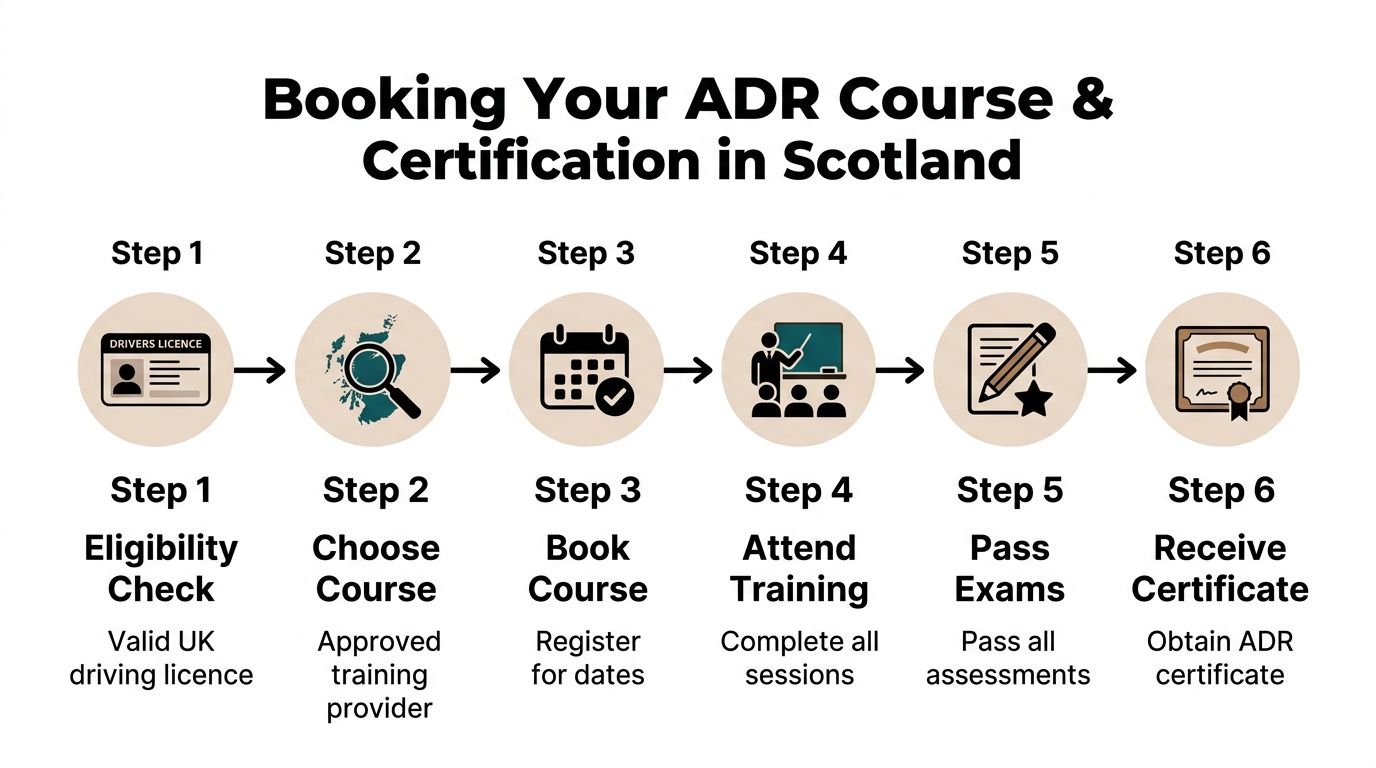
Most candidates move through the same basic journey:
Check eligibility You'll normally need a valid UK driving licence and a clear idea of what ADR route matches the work you want.
Choose an approved provider Don't book on price alone. Ask what modules are included, whether the centre regularly trains drivers for your type of work, and how they handle the paperwork after the course.
Register for dates that fit your work life This sounds obvious, but ADR isn't something you want to do while half-committed between shifts and phone calls.
Attend every required part of the programme Because delivery is regulated, missing sections creates problems.
Sit and pass the assessments Your certificate depends on passing the required exams for your chosen route.
The Scotland-specific admin point most guides skip
In Scotland, the compliance pathway involves multiple agencies. DVSA manages the approval and updates for training centres, while Qualifications Scotland through SQA provides login access and support for Scottish providers, manages the examination process, and issues the final certificate, as set out in the government guidance on managing dangerous goods ADR driver training centres and courses.
That distinction matters if you're an employer booking for staff, or a driver trying to understand where delays happen. If a course centre is approved, that doesn't mean the centre itself is the body issuing your card. Different parts of the chain handle different tasks.
What to ask before you pay
A sensible booking call should cover more than availability. Ask:
Which modules are included: Make sure the course matches packages, tanks, or any relevant classes for your work.
Who handles the paperwork after the exams: A good provider should explain the next step clearly.
What happens if details change: Name changes, licence updates, or admin errors are much easier to sort when you know the process.
How certificate timing is explained: At least one Scottish training source notes there can be a delay between course completion and receiving the certificate, so it's worth asking about expectations before booking.
If you want a route that combines course coordination with support around paperwork and local training arrangements, HGV Learning's online ADR training information outlines one such option.
The most common booking mistake is choosing a course because it's nearby, then finding out later it doesn't cover the work you actually want to do.
ADR Renewal and Maximising Career Value
An ADR card has compliance value on day one, but its real value shows over time. It can widen the type of work you're eligible for, help you plan training more efficiently, and stop you getting caught out later by an expired qualification.
Think beyond the first pass
A lot of drivers focus so hard on getting the initial qualification that they never build a renewal plan. That's a mistake. ADR has a fixed life cycle, so it makes sense to treat it like any other professional asset. Keep a record of when yours expires, and don't wait until work is already affected before looking at refresher options.
This is also where course choice starts to look different. The cheapest route today isn't always the best value if it limits the work you can do or forces another course sooner than expected.
The CPC value is part of the calculation
ADR training can also support your wider compliance workload. Scottish providers show that a 5-day initial course can count for up to 28 CPC hours, while refresher courses can provide 14 hours, as noted by GRT Consultants on ADR training courses.
That matters because most drivers aren't just trying to “get ADR done”. They're trying to stay legal, keep earning, and avoid duplicate training time. If one course helps with ADR and Driver CPC at the same time, that changes the cost-benefit calculation.
How to judge whether ADR is worth it
Look at ADR in three ways:
Job access: It can open work that non-ADR drivers can't take.
Training efficiency: CPC hours can make the time investment more useful.
Some drivers need tanker work. Others only need packages. Some employers want broad flexibility across the fleet, while others need one narrow capability. The smart move is to match the qualification to the likely work, not to the course title that sounds most complete.
Here's a useful video introduction before you decide how ADR fits your longer-term plan.
A practical way to plan renewal
Set a reminder well in advance of expiry and review three things:
Your current job: Are you using all the modules you hold?
Your next role: Do you need to add or maintain a broader route?
Your CPC schedule: Can your ADR timing help you avoid separate training days later?
The best time to think about ADR renewal is when your card still has plenty of life left. That gives you options instead of urgency.
Frequently Asked Questions About ADR Training
Can I do ADR training online
Some theory support may be available remotely depending on the provider, but ADR isn't just a screen-based subject. Practical elements and formal assessment requirements mean you should expect at least part of the process to involve structured attendance.
If a provider offers an online option, ask exactly which parts are remote and which parts still require in-person attendance.
What if I fail one exam module
Failing one module doesn't automatically mean the whole effort is wasted. What happens next depends on the module and the provider's process. The key thing is to ask straight away what your resit route looks like and whether you need revision support before trying again.
Can I start work as soon as I pass
That depends on the employer and on when your certificate is issued. In Scotland, the administration chain can create a gap between finishing the course and receiving the physical card. If you're moving into a new role, tell the employer that early so they understand the timing.
Who should I contact if I'm confused about the Scottish process
Start with the training provider you're booking through and ask them to explain who handles centre approval, who handles exams, and who issues the certificate. If they can't explain that clearly, keep looking.
How do employers make this easier for drivers
The smoother employers usually do three things well. They book the right module combination, they leave enough time for certification to be processed, and they don't assume every ADR course is interchangeable. That avoids rebooking, missed start dates, and drivers turning up qualified for the wrong type of load.
If you want help arranging ADR training in Scotland without piecing together every step yourself, HGV Learning coordinates training, paperwork support, and local course arrangements for drivers working toward specialist qualifications.
What Age Can You Start HGV Driver Training? A 2026 UK Guide to Licence Age Requirements
If you're asking what age you can start HGV driver training, the honest answer depends on which licence you're after. A C1 licence, covering vehicles...