You're probably here because you typed something like “ADR driver salary UK” into Google and got a mess of answers.
One page shows a fairly ordinary wage. Another suggests strong specialist pay. Then a live job advert hints at much more, but only if you work nights, handle tanker work, or take on a tougher shift pattern. That leaves a lot of drivers asking the same question: what does an ADR driver earn?
The honest answer is that there isn't one useful national number. ADR pay depends on what you carry, what you drive, when you work, and how the job is structured. If you understand those parts, you can estimate your own earning potential far more accurately than any headline “average” ever will.
The Problem with Average ADR Driver Salaries
The biggest mistake people make is trusting a single average figure.
That sounds sensible at first. If you're comparing careers, you want a quick benchmark. The trouble is that ADR driving isn't one job. It's a group of jobs with very different levels of responsibility, vehicle type, risk, and working pattern.
A general ADR role on standard daytime work can sit in a completely different pay bracket from tanker fuel delivery on nights. Yet both may be labelled “ADR driver”.
Why the online figures look contradictory
UK job boards show just how wide the gap is. Totaljobs lists an average ADR Driver salary of £26,405, while Reed shows a UK average of £36,820, and individual live ads can show annualised pay such as £57,720 according to Reed's ADR salary market overview.
That isn't proof that one website is wrong. It shows that the search term is too broad.
If you're comparing ADR work with general haulage, it also helps to look at the wider HGV market first. A broad guide to average HGV driver salary in the UK gives useful context, but ADR needs a more detailed lens.
Practical rule: If a salary page gives one flat number for all ADR work, treat it as a rough starting point, not a decision-making figure.
What actually matters more than the average
When drivers ask me about pay, I usually narrow it down to four questions:
What vehicle are you driving. Class 2 rigid work and Class 1 artic work don't usually pay the same.
What cargo are you carrying. Packaged dangerous goods and tanker liquids are different jobs.
What shift are you doing. Nights, weekends, and bank holiday patterns often change the pay more than the ADR card itself.
How is the job paid. Basic rate, guaranteed hours, bonuses, and overtime all affect the final number.
That's why average figures often mislead new entrants. They blend together low-complexity ADR roles and harder specialist work, then present the result as if it applies equally to everyone.
So instead of chasing one number, it makes more sense to build a simple personal estimate. Start with your licence level. Add the load type. Add the shift pattern. Then look at the employment model. That's how you get close to what you could realistically earn.
What UK ADR Drivers Can Realistically Earn in 2026
A better way to think about ADR pay is by role, not by headline average.
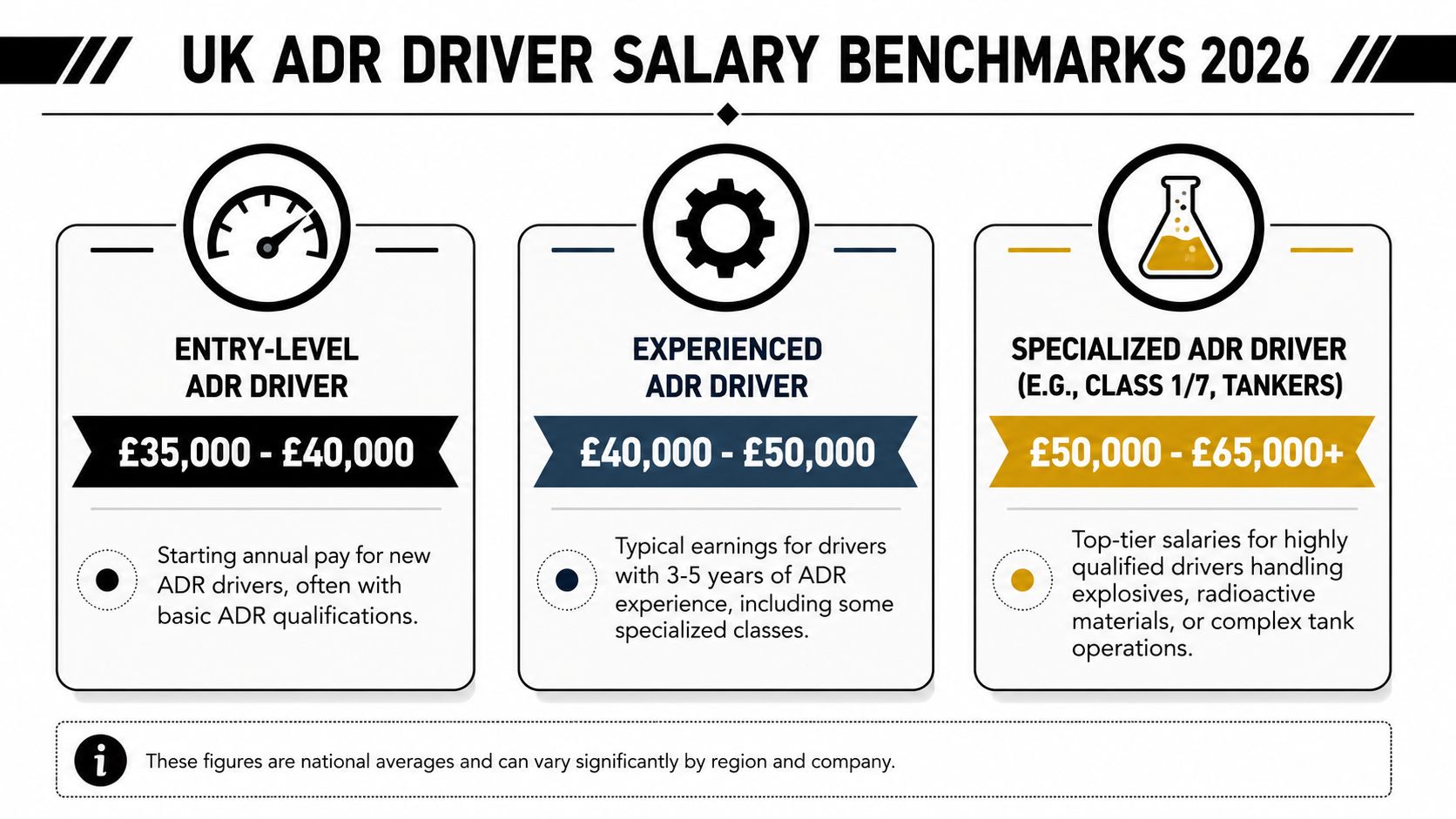
The general market data already shows a wage spread. Totaljobs reports an average ADR Driver salary of £26,405, with a band from £24,448 to £31,786. More specialised roles sit higher. Glassdoor lists an average of £35,590 for an ADR Tanker Driver in the UK, while specialist figures cited alongside this market view put Class 1 ADR drivers at about £38,904 and Class 2 ADR drivers at about £30,623 in Totaljobs' ADR driver salary data.
Those figures make more sense when you link them to the work itself. A Class 2 ADR job may involve rigid vehicle deliveries, more urban work, and shorter runs. A Class 1 ADR role often brings artic work, heavier compliance responsibility, and more route complexity. Tanker roles add another layer again, because liquid movement, delivery procedures, and site rules demand more skill and concentration.
A practical salary framework
Use the table below as a guide to role type rather than a promise of exact earnings.
Driver Role
Typical Annual Salary Range (PAYE)
General ADR Driver
£24,448 to £31,786
Class 2 ADR Driver
About £30,623
ADR Tanker Driver
About £35,590
Class 1 ADR Driver
About £38,904
Why specialism changes the number
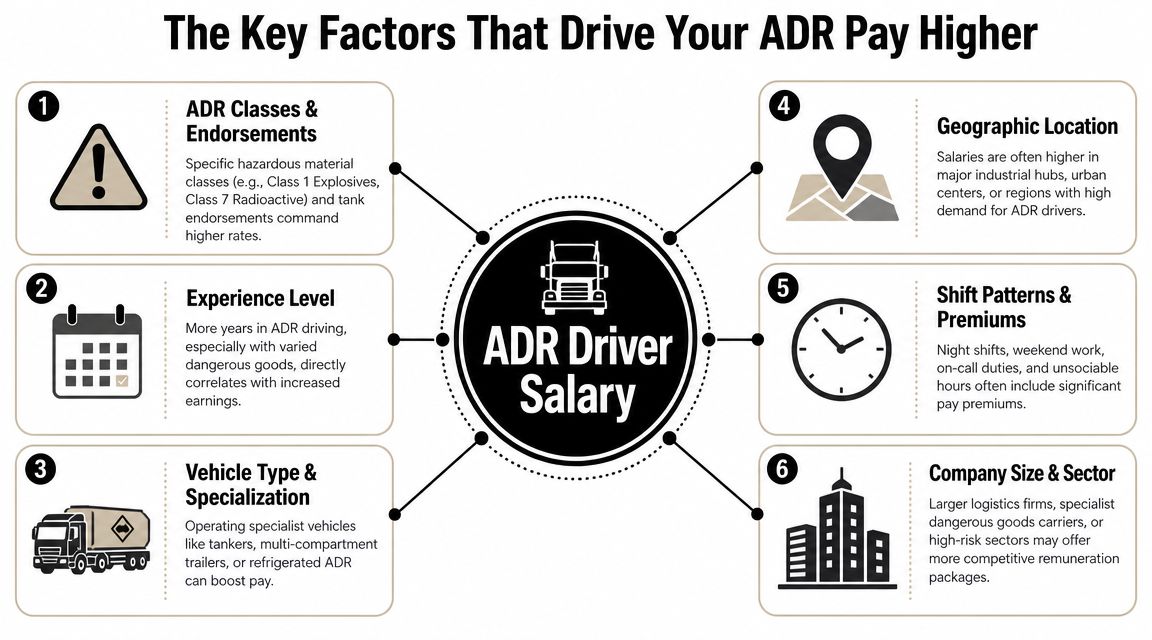
The pay difference isn't random. Employers usually pay more where the work includes one or more of these:
Higher licence level. C+E widens the type of work you can take.
Tanker handling. Loading, discharge procedures, and product control raise the skill requirement.
Risk and liability. Hazardous loads bring tighter rules and less room for error.
Operational difficulty. Complex routes, restricted sites, and time-critical work can all push pay upwards.
A driver trying to estimate annual income should also separate base salary from actual yearly earnings. That matters because some jobs are sold on guaranteed minimums, premium shifts, or long regular hours rather than a high day rate alone.
If you're trying to compare salary offers properly, the budgeting side matters too. A guide on determining your Canadian income is aimed at a different country, but the principle is useful anywhere: break gross pay into a structure you can compare line by line, rather than relying on one headline figure.
The strongest earning potential usually comes from combining ADR with Class 1 entitlement or tanker experience, not from holding the ADR certificate on its own.
That's the key point many salary pages skip. ADR opens the door. The better-paid roles usually come when ADR sits alongside the right vehicle category and the right kind of work.
The Key Factors That Drive Your Pay Higher
If you want to raise your ADR earning potential, think in terms of pay levers.
Some levers are about qualifications. Others are about the shape of the job. Many drivers focus only on passing ADR and then wonder why one advert pays modestly while another pays far more. The answer is usually in the details around the role.
Shift pattern changes the real income
Some of the strongest advertised ADR pay comes from the hours, not just the qualification. Indeed-listed UK ADR vacancies commonly show £15.00 to £22.50 per hour for Class 2 tanker fuel delivery roles, and a specialist HGV salary guide cited in that market view says tanker or ADR drivers can start around £32,000 and rise to £42,000+, with some positions going beyond £60,000 when nights and overtime are included, based on current ADR job listings on Indeed UK.
That tells you something important. Two drivers can both hold ADR and earn very different annual sums because one works daytime distribution and the other covers nights with regular overtime.
Look closely at:
Night work. Often carries a premium.
Weekend shifts. Frequently paid at a higher rate.
Bank holiday cover. Can lift annual earnings if it's built into the rota.
Guaranteed overtime. Makes a big difference to yearly income.
Vehicle and cargo type matter
A rigid delivering packaged dangerous goods is one thing. A tanker running fuel or chemicals is another.
The more specialist the operation, the more likely the rate reflects:
Extra compliance checks
Stricter loading and unloading procedures
Higher consequence if something goes wrong
Fewer drivers who are both qualified and experienced
That's why tanker work often sits in a stronger pay bracket than more routine ADR delivery work.
Added qualifications can make you more useful
The best-paid drivers aren't always the ones with the most certificates. They're usually the ones whose qualifications match hard-to-fill jobs.
A useful next step is understanding what sits inside ADR specialism itself. This guide to ADR specialist certification explains how endorsements and specialist training affect the kind of work you can take on.
A higher-paying ADR role usually combines three things: a harder vehicle, a tougher shift, and a load type that fewer drivers want or can legally carry.
Experience still counts
Experience is often the tie-breaker between two qualified drivers.
If an employer needs someone to work independently on a sensitive route, manage delivery paperwork properly, and deal with site procedures without constant support, they'll usually favour the driver who has already done similar work. That doesn't always mean decades in the seat. It means relevant, recent, specialist experience.
If you're planning your route up the pay ladder, focus less on “getting any ADR job” and more on getting the right first ADR job. The first role often shapes what doors open next.
Employed PAYE vs Agency vs Self-Employed Rates
The pay model changes how attractive a job really is.
A permanent PAYE role can look lower on paper but offer better overall value once you factor in holiday pay, pension contributions, and predictable work. Agency shifts can show a stronger headline rate, but the pattern may be less stable. Self-employed arrangements can look flexible, yet they bring admin and risk.
PAYE employment
PAYE suits drivers who want consistency.
The usual strengths are:
Regular pay with fewer gaps between shifts
Paid holiday
Sick pay or company policy support
Pension contributions
Clearer long-term progression
The downside is that the advertised rate may look less exciting than agency work. But a lower headline number can still be the better package if the rota is solid and the extras are built in.
Agency work
Agency ADR work can work well for drivers who want flexibility or who are testing different sectors.
Common benefits include:
Choice of assignments
Access to short-notice premium shifts
Useful route into specialist employers
Potentially stronger hourly rates in busy periods
The trade-off is uncertainty. One week may be full. The next may not. You also need to read the pay terms carefully, especially where umbrella arrangements are involved. If you're weighing up agency options, this overview of new PAYE rules for supply chains is worth reading because it explains how labour-supply arrangements can affect what drivers receive.
Self-employed or limited company work
Some drivers prefer to operate with more independence. That can suit experienced people who understand invoicing, tax planning, downtime risk, and contract gaps.
The appeal is usually:
Control over bookings
Potential flexibility
Commercial independence
The cost is administrative effort. You need to manage your own records, account for unpaid time, and price your work properly. If you only compare the gross day rate, you can easily overestimate what you're really taking home.
Don't compare jobs on rate alone. Compare them on rate, stability, benefits, and how often you'll actually work.
A simple rule helps here. If two roles look close, write down what happens during holidays, sickness, quiet periods, and cancelled shifts. The role with the lower headline may still leave you better off across the year.
How to Actively Increase Your ADR Driver Salary
Drivers often treat pay as something the market gives them. In reality, you can shape it.
The strongest increases usually come from stacking the right choices in the right order. You don't need to do everything at once. You do need to be deliberate.
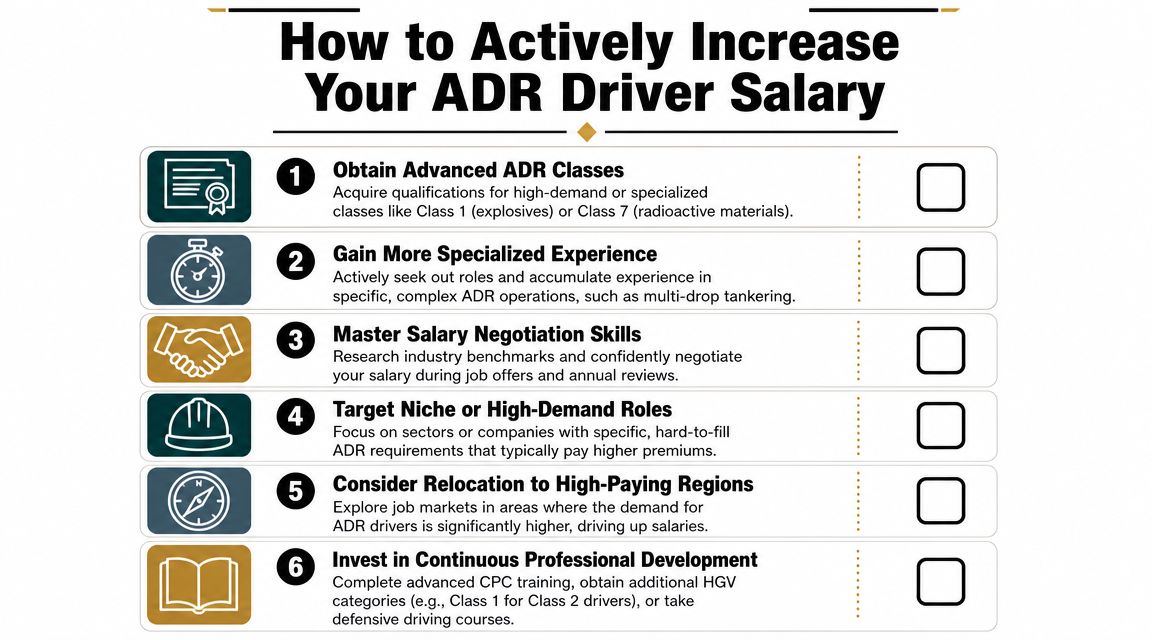
Step one: move towards specialist work
If your current ADR role is broad and basic, the next gain often comes from becoming more specific.
That can mean:
moving from packaged goods to tanker-related work
seeking roles with tougher delivery procedures
building experience with employers who handle stricter site controls
Specialist experience gives you a better advantage than generic experience.
Step two: upgrade the licence if needed
If you hold Class 2 and want access to stronger-paying ADR work, a move to Class 1 C+E can matter. Many of the better-paid roles expect more than an ADR card. They expect artic competence too.
For drivers who still need the ADR side, online ADR training is one route to understand how the qualification works and what options fit your goals. Providers such as HGV Learning coordinate ADR, HGV licence progression, and related training so drivers can build a more targeted qualification path.
Step three: learn to read job adverts properly
A lot of drivers look only at the annual salary number. Read the full ad instead.
Check for:
Shift pattern
Guaranteed hours
Basic rate versus premium rate
Type of cargo
Vehicle type
Whether overtime is routine or occasional
A role with a modest-looking base can beat a flashy advert if the hours are dependable and the work attracts regular premiums.
Here's a useful explainer on the day-to-day side of the job:
Step four: present yourself for specialist vacancies
Your CV needs to show more than “ADR qualified”.
Employers usually want to see:
vehicle categories held
ADR modules completed
tanker exposure if any
shift flexibility
industries served
safety and compliance reliability
If you're applying into larger operators with software-led screening, this 2026 resume action plan for ATS is useful for tightening how your experience appears before a recruiter even reads it.
Ask yourself one question before applying: “Does this advert reward the kind of difficulty I'm willing and qualified to take on?”
Step five: negotiate with evidence
Negotiation goes better when you can explain your value clearly.
Don't just say you want more money. Tie your request to facts about your role:
specialist loads you can carry
unsocial shifts you're willing to cover
C+E entitlement
clean compliance record
previous similar work
That approach is much stronger than asking for a pay rise because another advert looks higher.
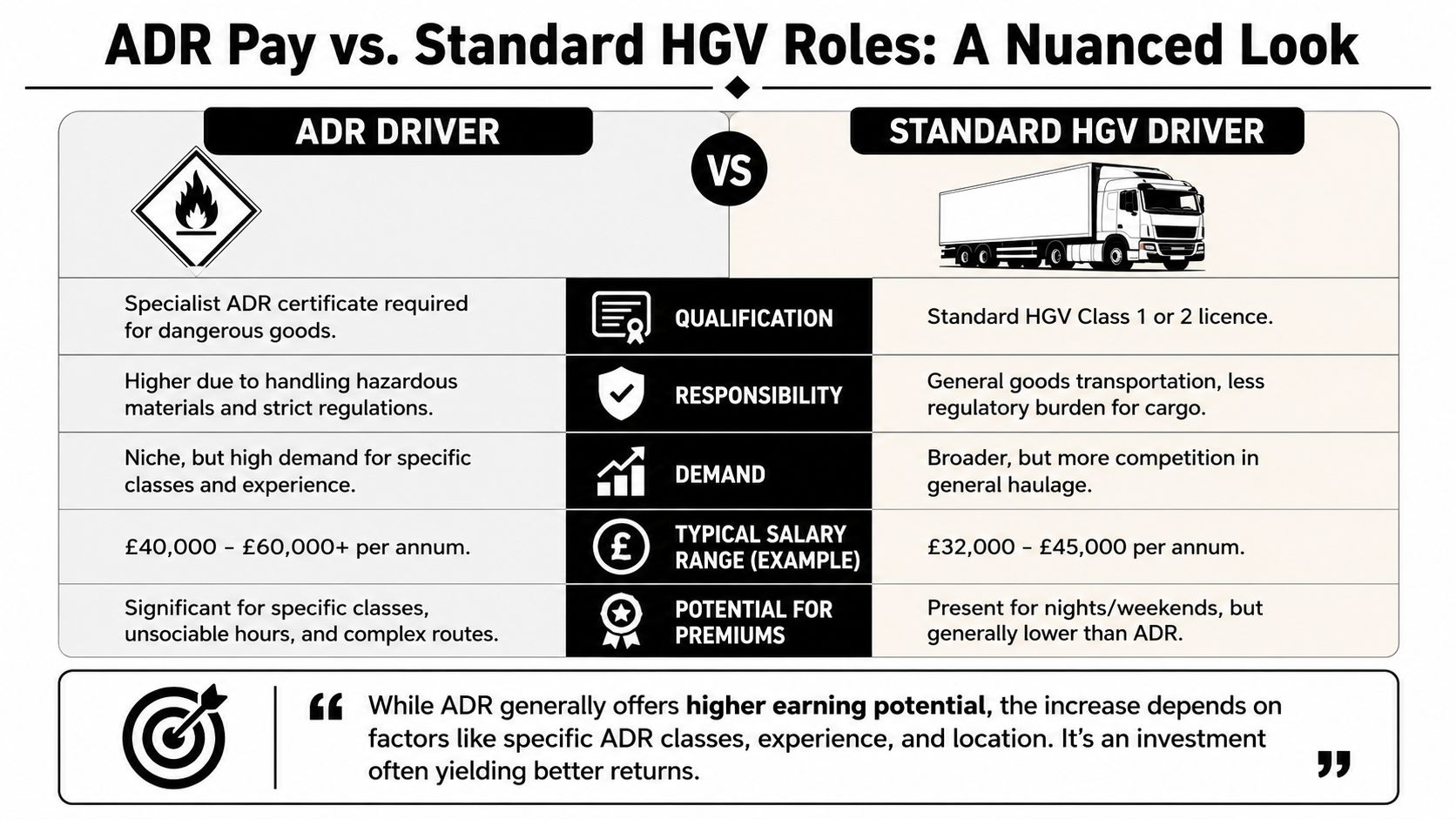
ADR Pay vs Standard HGV Roles A Nuanced Look
Many people assume ADR always pays more than standard HGV work. It doesn't always, at least not in the basic hourly rate.
That surprises some new drivers, but it makes sense once you separate qualification premium from working pattern premium.
Where ADR does pull ahead
ADR often becomes financially stronger when the role includes specialist cargo, nights, weekends, difficult routes, or tanker work. That's where the qualification combines with harder operating conditions.
Without those extras, the gap may be narrower than drivers expect. Indeed data shows ADR Network truck-driver pay in England averaging £20.14 per hour overall, with £21.03 per hour on the ADR Network employer page, while a separate ADR job listing shows only £14.70 per hour basic with premiums added later in Indeed's ADR Network salary information.
What this means in practice
A standard Class 1 trunking role with reliable hours can be financially competitive with a lower-complexity ADR role.
An ADR role tends to justify the retraining cost best when one or more of these apply:
You're targeting tanker or specialist hazardous loads
You're open to nights or premium shifts
You want niche work with fewer qualified competitors
You plan to combine ADR with C+E and relevant experience
A driver comparing options should ask a sharper question than “Does ADR pay more?” The better question is “Which ADR roles pay enough more to justify the extra responsibility and training?”
ADR can increase earning potential. It doesn't automatically guarantee a big uplift unless the job itself is built around specialist work or premium hours.
That's the honest view. For some drivers, standard HGV work remains the better fit. For others, ADR is the route into a smaller pool of better-paid roles. The difference sits in the detail.
Your Pathway to a Top-Tier Driving Career
High ADR earnings usually come from a sequence of sensible moves, not one big leap.
First, get the right licence level for the work you want. Then add the ADR qualification that opens specialist doors. After that, build experience in roles that employers find harder to fill, especially where the work is more complex, more regulated, or less sociable. That's how drivers move from broad averages to stronger personal earning potential.
The drivers who do best rarely chase every vacancy. They choose a lane. That might be tanker work, premium-shift fuel delivery, artic-based ADR roles, or a wider skill set that includes extra plant or lifting qualifications. The common thread is relevance. Each qualification should make you more useful for a better-paid type of work.
If you're planning that route, think in stages:
A clear progression route
Start with the base licence you need Category C gets you into rigid work. C+E opens more specialist and artic-based opportunities.
Add ADR with the right focus The certificate matters most when it matches the loads and employers you want to work with.
Broaden your value HIAB, tanker-related experience, or other specialist tickets can make you easier to place into stronger-paying roles.
Build a track record Reliable compliance, good site conduct, and relevant experience improve your options over time.
Training choices matter. A structured route that includes licence progression, ADR training, and added specialist skills gives drivers a clearer path into the kinds of jobs that sit above the generic market average.
If you want a practical route into higher-value driving work, HGV Learning can help you map the next step, whether that's gaining your first HGV licence, upgrading to C+E, adding ADR, or widening your options with HIAB and related training.
Related Articles
HIAB Training Prices Scotland 2026: Your Complete Guide
A typical novice HIAB course in Scotland usually sits between £600 and £900. Prices look confusing at first, but they make more sense once you...
You're probably looking at Northampton's roads and industrial estates and thinking the same thing a lot of people think. There are lorries everywhere. The work...