The Hazard Perception Test (HPT) is a crucial part of your overall HGV theory test. It’s an interactive video challenge that’s all about spotting developing hazards on the road: those situations that would force a driver to suddenly brake, swerve, or stop. For any professional HGV driver, this skill isn’t just important; it’s essential.
Decoding the Hazard Perception Test
Forget a standard question-and-answer format. The Hazard Perception Test puts you right into the driver’s seat using video clips to simulate real-world driving. The real challenge? It tests your ability to spot trouble before it fully happens.
Think of a seasoned goalkeeper facing a penalty kick. A great keeper doesn’t just react when the ball is already flying towards them; they read the striker’s body language and anticipate the shot a split second before it’s taken. That tiny head start makes all the difference. For an HGV driver, that same predictive skill is just as vital.
Why Is It So Important for HGV Drivers?
Let’s face it, handling a massive, heavy vehicle brings a huge amount of responsibility. An HGV has much longer stopping distances and far bigger blind spots than a car, which makes spotting danger early an essential safety skill. This test isn’t just another hoop to jump through; it’s a real measure of your readiness for the unique challenges of driving a heavy goods vehicle.
The test focuses on developing hazards, which are different from potential hazards. Here’s a simple way to think about it:
Potential Hazard: A group of children playing football in a park right next to the road.
Developing Hazard: One of those children suddenly sprints after the ball as it rolls into the street.
Your job is to click the mouse the very moment that situation shifts from a potential risk to a genuine, developing hazard that demands a reaction. A good way to understand this is through the principles of designing learning experiences, which focus on preparing people for real-world situations, not just theory.
The core purpose of the test is to ensure professional drivers possess the proactive mindset needed to prevent incidents. It’s about seeing the story unfold on the road and predicting the ending before it happens.
What to Expect on Test Day
The hazard perception section comes right after the multiple-choice questions in your theory test. You’ll watch a series of video clips from a driver’s point of view, and each one will contain at least one developing hazard. Your score is based on how quickly you click your mouse once that hazard starts to unfold.
It’s this proactive approach that separates a good driver from a great one. Getting your head around that core principle is your first step towards passing. For a full breakdown of the entire exam, check out our dedicated guide on the complete theory test for an HGV licence. Mastering this test is an achievable skill that translates directly to safer, more confident driving and lays the groundwork for a long and successful career.
How the Hazard Perception Test Works
So, what exactly happens when you sit down for the hazard perception test? Let’s pull back the curtain and walk through it step-by-step. The best way to get your head around it is to understand the mechanics, because this part of the theory test isn’t about memorising rules: it’s about how sharp your eyes are and how quickly you can react.
After a short video explains what to do, the real test begins. You’ll be shown 19 video clips made with computer-generated imagery (CGI). Each one puts you in the driver’s seat, showing you a typical road scene. You could be navigating a busy city centre one minute and a quiet country lane the next.
Spotting the Developing Hazards
Here’s the detail that really matters. Out of those 19 clips, 18 will feature just one “developing hazard,” but there’s one clip designed to keep you on your toes which will have two. The key is knowing the difference between something that could be a problem (a potential hazard) and something that is becoming a problem (a developing hazard).
Think of it this way:
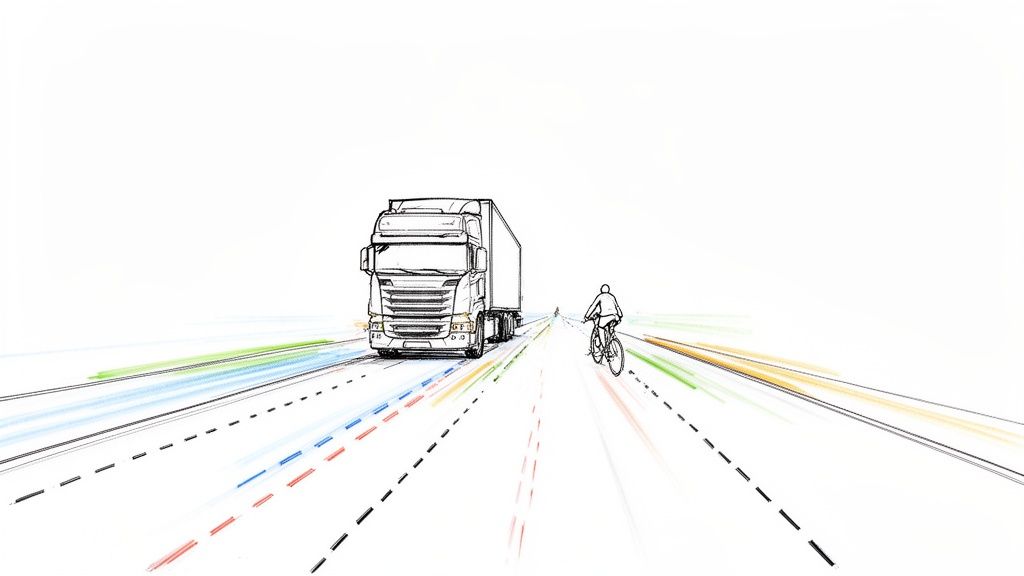
Potential Hazard: A cyclist is riding steadily along the side of the road ahead of you. They’re something to watch, but not an immediate issue.
Developing Hazard: That same cyclist suddenly glances over their shoulder and starts to wobble or signal a turn right into your path. Now you need to act.
Your job is to click the mouse the very moment you spot that switch from a simple risk to an active, developing situation.
Understanding the Scoring Window
The scoring is all about rewarding quick thinking. As soon as a potential hazard starts to become a real one, a “scoring window” opens.
The faster you click once this window opens, the higher you score. You can get a maximum of five points for clicking immediately, but this drops all the way down to one point if you’re too slow. Click after the window closes, and you get nothing for that hazard.
This system is designed to mirror real-life driving. It’s not enough to just see a problem; you have to see it early enough to brake or steer away safely. This is a vital skill for any HGV driver, and the test format has proven its worth. Since being introduced in 2002, studies have linked it to an 11% reduction in certain collisions involving new drivers.
The numbers show that passing is well within reach. Between April 2022 and March 2023, there were 71,426 LGV hazard perception tests taken in Great Britain, with a solid pass rate of 81.5%. You can dig into the official numbers and learn more about driver testing statistics on GOV.UK.
Avoiding the Zero-Score Traps
While clicking early is good, the system is smart enough to spot anyone trying to cheat. Clicking too early, before the hazard even starts to develop, will get you zero points. But there’s a bigger trap to avoid.
The software is programmed to detect erratic clicking. If you start clicking too often or in a rhythmic pattern, just hoping to get lucky, a warning will pop up. Do this, and you’ll score a big fat zero for the entire clip, even if you did spot the hazard correctly. The takeaway? Be deliberate. Click a few times as a situation unfolds, but don’t just spam the mouse button.
Understanding the Scoring System and Pass Mark
Figuring out the scoring for the Hazard Perception Test (HPT) can feel a bit like cracking a code, but it’s actually quite straightforward once you get the hang of it. The whole system is designed to reward the quick, sharp thinking that professional HGV drivers rely on every single day.
For HGV and LGV drivers, the test consists of 19 video clips that contain a total of 20 scorable hazards. Each hazard is worth a maximum of five points, so the highest possible score you can get is 100. To pass this part of the theory test, you’ll need to score at least 67.
How You Earn Points
Think of each hazard’s scoring like a timing bonus. As a situation on the road starts to shift from a potential hazard to a developing one, like a car indicating to pull out, a “scoring window” opens.
Click Immediately: If you click the mouse the moment this window opens, you get the full five points.
Click a Little Later: The longer you hesitate, the fewer points you get. The score drops from four, to three, to two, and finally down to just one.
Click Too Late: If you click after the hazard has passed or the scoring window has closed, you’ll get zero points for it.
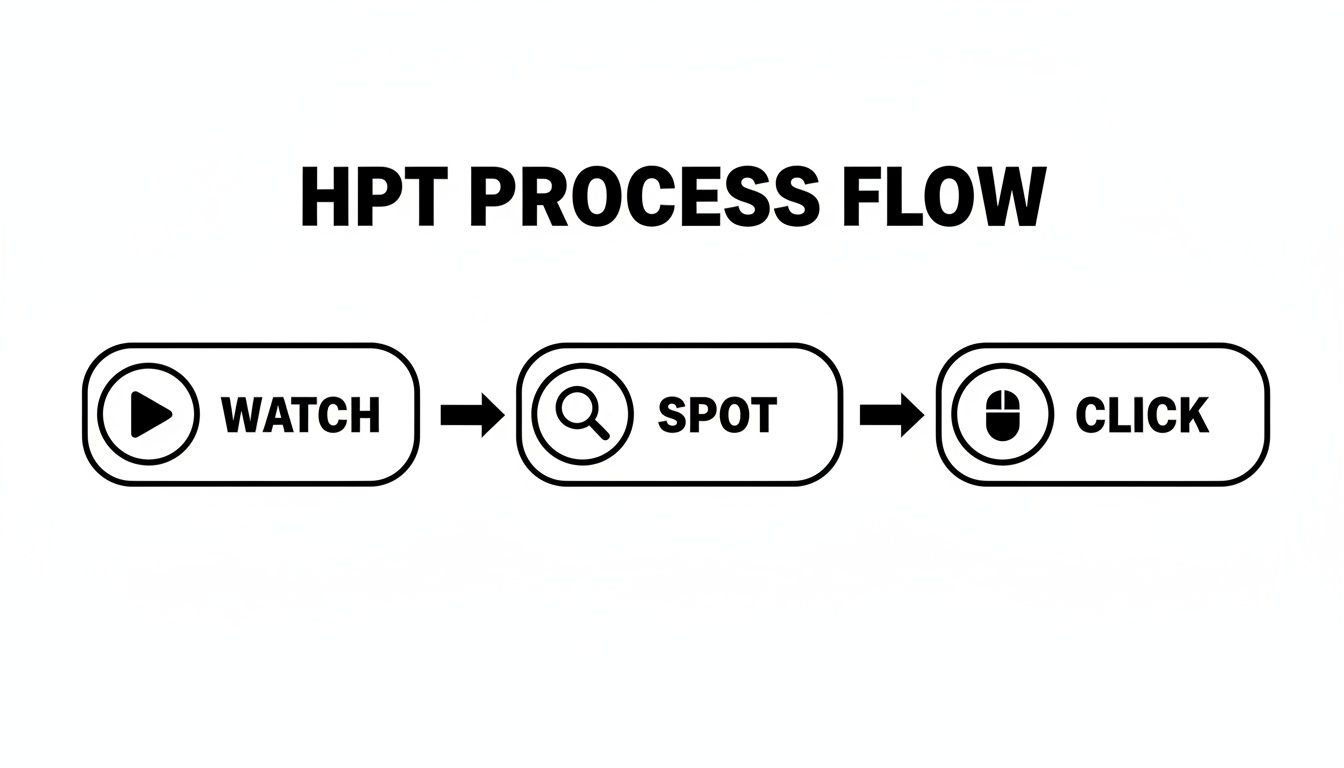
This simple process shows the core actions you need to take.
The test really boils down to three key actions: watch, spot, and click. It’s all about connecting your observation with a timely reaction.
To give you a clearer picture, here’s a quick breakdown of how the scoring and pass marks work for the HGV test.
HGV Hazard Perception Scoring Breakdown
Metric
Details for HGV/LGV Test
Total Clips
19 video clips
Total Hazards
20 scorable hazards (one clip contains two)
Max Score per Hazard
5 points
Total Possible Score
100 points
Pass Mark
67 out of 100
Penalty for Cheating
Zero points for the entire clip
This table highlights the key numbers you need to remember. Scoring a 67 is very achievable, but you need to be mindful of how you can lose points, especially with the cheat detection system.
The Cheat Detection System
Now, here’s the crucial bit. The system is smart, and it’s built to stop people from just clicking wildly and hoping for the best.
If you click too many times in a short space of time or click in a repetitive, rhythmic pattern, the software will flag it as cheating. If that happens, a warning message will pop up at the end of the clip.
The penalty is harsh: you will automatically score zero for that entire video clip, even if you spotted the hazard perfectly. This rule really drives home the need to click with intention, not panic.
Best Practices for Clicking
So, what’s the right way to click without getting flagged? The aim is to show the system you’ve recognised a developing hazard and are actively tracking it.
Here’s a simple guide to follow:
DO:
Click Deliberately: Click once as soon as you see a potential hazard start to develop.
Add a Couple More Clicks: As the situation becomes more serious, it’s a good idea to click another two or three times. This shows you’re monitoring it without going overboard.
Stay Focused: Trust what you see. Your clicks should be a direct, measured response to the events unfolding on the screen.
DON’T:
Don’t Click Randomly: Avoid clicking on empty parts of the road where nothing is happening.
Don’t Click in a Pattern: Never fall into a steady rhythm (like click-click-click-click), as that’s a dead giveaway to the system.
Don’t Spam the Mouse: Anything more than five or six clicks for a single hazard is probably too much and risks getting you a zero.
At the end of the day, the scoring system isn’t just about passing a test. It’s designed to reward the exact skills a professional HGV driver needs: calm observation, early recognition, and decisive action. Getting this right won’t just get you a pass mark; it will make you a much safer driver on the road.
Common Hazards and Test Pitfalls to Avoid
Knowing what you’re looking for is half the battle in the Hazard Perception Test. The CGI clips are designed to feel like real driving, so the hazards you’ll face mirror the challenges you’d see on any given day. If you can learn the common themes, you can train your eyes to spot trouble before it properly kicks off.
The scenarios are deliberately mixed to test your awareness in all sorts of situations. One minute you could be on a dual carriageway, the next you’re navigating a tight residential street. To really get the hang of it, it helps to understand the wider road safety principles that form the foundation of safe driving and hazard identification.
Let’s break down the most common types of hazards you’ll see and the critical mistakes that catch so many people out.
Recognising Key Hazard Categories
While every video clip is unique, the hazards tend to fall into a few key categories. Get familiar with these, and you’ll be much better at predicting what might happen next.
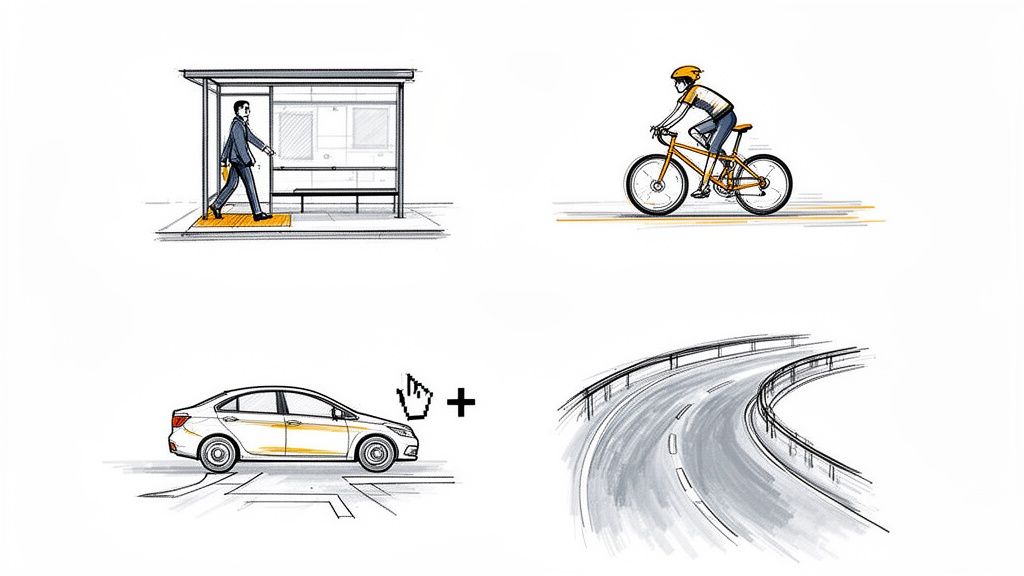
1. Vulnerable Road Users This is a huge focus of the test because they represent a major real-world risk. Keep a sharp eye out for:
Pedestrians: A child running out after a ball, an adult stepping out from between parked cars, or someone at a junction not paying attention.
Cyclists: A cyclist suddenly swerving to dodge a pothole, signalling to turn across your path, or having a wobble as they look over their shoulder.
Motorcyclists: These can be tricky to spot, especially when they’re emerging from junctions or filtering through traffic.
2. Other Vehicles The actions of other drivers are probably the biggest source of developing hazards. You need to be watching for:
Junctions and Side Roads: Cars, vans, or lorries pulling out from a side road, assuming the way is clear when it isn’t.
Sudden Braking: The vehicle ahead slamming on its brakes for a reason you can’t yet see, like a hazard further up the road.
Lane Changes: A car drifting into your lane without indicating or signalling at the very last second.
Overtaking: An oncoming vehicle pulling out to overtake, putting them on a collision course with you.
3. Changing Road and Weather Conditions The environment itself can throw hazards your way. You should be looking for clues like:
Sharp Bends or Hidden Dips: These can easily hide oncoming traffic or other obstacles until the last moment.
Weather Effects: Heavy rain or fog causing poor visibility is a hazard in itself, as are wet and icy roads.
Roadworks: Signs for roadworks are a clear signal that you can expect narrowed lanes or slow-moving machinery ahead.
Avoiding Common Test Traps
Spotting the hazard is one thing; reacting correctly is what actually gets you the points. A lot of candidates know the theory inside out but still fall for simple traps on the day.
The most common mistake isn’t failing to see the hazard; it’s reacting incorrectly. The two biggest pitfalls are clicking too much out of panic or clicking too late out of hesitation.
Let’s look at why people do this and how you can steer clear of these traps.
The “Click-Happy” Candidate This is the person who clicks at absolutely everything that moves. They see a pedestrian on the pavement: click. A car waiting at a junction: click. This approach almost always backfires.
The Problem: The system is smart. It’s designed to spot excessive or rhythmic clicking. If you just spam the mouse, you’ll get a warning for cheating and score zero points for that entire clip.
The Solution: Be deliberate. You need to wait for the moment a potential hazard starts to become a developing one. A single, well-timed click is worth far more than ten random ones. A good rule of thumb is to click once as you see the situation developing, then maybe add another one or two clicks as it becomes more serious.
The “Late Clicker” This candidate sees the hazard perfectly. They notice the car indicating to pull out, they watch it start to move… and then they click.
The Problem: By waiting until the hazard is fully unfolding and you’d have to slam on the brakes, they’ve already missed the five-point window. They might scrape one point, but more often than not, they’ll get zero.
The Solution: You have to train yourself to click at the first sign of trouble. The second that car’s wheel starts to turn or that pedestrian takes their first step onto the road: that’s when you click. Your first click should mark the beginning of the problem, not the peak of the crisis. An effective scanning technique is key here; constantly move your eyes, checking mirrors, junctions, and pavements to catch those early clues.
Proven Strategies to Prepare for Your Test
Unlike the multiple-choice part of your theory test, you can’t just cram for the Hazard Perception Test. It’s a practical skill, not a memory game. Success comes from building the right instincts through consistent practice until spotting hazards becomes second nature.
This means you need a proper training plan. Watching a few random clips here and there just won’t cut it. The best approach is to combine dedicated practice with realistic software and active observation out on the road.
Harness the Power of Mock Tests
Your most powerful tool is dedicated HGV theory training software that’s packed with high-quality, realistic HPT clips. This isn’t just about seeing what the test looks like; it’s about building the muscle memory you need to spot and react to hazards instinctively.
These practice tests are designed to perfectly mirror the real thing. By using them, you’ll get comfortable with the format, the types of hazards that pop up, and the precise timing needed to score maximum points.
A huge benefit of this software is the detailed feedback. After each clip, a good programme will show you:
Where the scoring window opened and closed.
The exact moment you clicked.
Whether you clicked too early, right on time, or too late.
This instant review is incredibly valuable. It helps you pinpoint your weaknesses, whether that’s clicking too late or getting flagged for clicking too often. You can then fine-tune your technique with each session, gradually getting your timing and accuracy just right.
The idea that practice makes perfect isn’t just a saying. The test itself is built on decades of research showing that hazard perception is a skill you can train and improve.
The Science Behind the Practice
The effectiveness of this test format isn’t a new idea. It stems from solid UK research from the 1990s, which aimed to find a better way of assessing a driver’s awareness and safety.
One landmark report from TRL detailed how early versions of the test were trialled on 1,057 different people back in 1995. The studies proved that new drivers could significantly improve their scores with training. Crucially, they also found that people who did better on the HPT went on to have fewer crashes. This history proves why practice is so important: it shows that dedicated training directly creates safer drivers.
Take Your Training on the Road
While mock tests are essential, you can also sharpen your skills away from the screen. Turn everyday journeys into active training sessions.
When you’re a passenger in a car, don’t just zone out. Actively scan the road ahead and call out developing hazards as you see them. Say out loud, “That car is waiting to pull out,” or “That cyclist might swerve.” This trains your brain to constantly look for potential trouble.
Another great tip is to watch dashcam footage online. Videos of near-misses and incidents are fantastic learning tools. Pause the video and ask yourself at what point you would have clicked. This real-world context helps you better understand what a hazard perception test is actually assessing. For more great advice, check out our guide on top tips for the HGV hazard perception test.
By combining focused digital practice with real-world observation, you’ll build a skill set that’s both strong and reliable. This two-pronged attack ensures you walk into the test centre feeling confident and fully prepared to pass.
Frequently Asked Hazard Perception Questions
Even after getting to grips with the test format, it’s completely normal to have a few questions rattling around. This last section tackles some of the most common queries we hear from HGV candidates, giving you clear, no-nonsense answers to help you walk into the test centre feeling confident.
Getting these details straight can be the difference between calm focus and last-minute nerves on the day.
How Many Times Should I Click for Each Hazard?
This is easily one of the most common questions we get, and the answer is all about finding that sweet spot. While the DVSA doesn’t set an official limit, you need to know that the software is smart enough to spot anyone trying to cheat the system. Mindlessly spamming the mouse button is a guaranteed way to score zero for that clip.
The best and safest approach is to click two or three times as you see a hazard developing.
Think of it like this:
First Click: The moment you spot the first clue of a potential hazard, maybe a car’s wheels starting to turn at a junction ahead.
Second/Third Click: As the situation becomes more definite or urgent, for instance, when that car actually starts to pull out into your path.
This measured approach shows the system you’ve not only identified the situation early but are also tracking its development. It makes sure you land a click squarely in the scoring window without getting flagged for random or rhythmic clicking.
What Happens If I Fail the Hazard Perception Part?
This is a really important one to understand: you can’t pass one half of the theory test and fail the other. The multiple-choice questions and the hazard perception test are two parts of the same single exam.
You must pass both sections in the same sitting to get your theory test certificate. If you fail either part, even by just one point, you have to book and retake the entire theory test all over again.
This rule really highlights why you need to give both sections equal attention when you’re studying. A brilliant score on the multiple-choice questions won’t rescue a poor hazard perception result, and the other way around is true, too. It’s an all-or-nothing situation, so make sure your revision is solid across the board. If you’re looking for more materials, finding a good practise HGV theory test can help you get ready for both parts of the exam.
Is the HGV Hazard Perception Test Different from the Car Test?
Yes, absolutely. While the basic idea of spotting developing hazards is the same, the HGV version is a much tougher test. This is to make sure professional drivers meet a higher standard of safety and awareness.
The differences aren’t just in the video clips, which often show situations more specific to large vehicles, but in the test’s structure and scoring, too. Here’s how they stack up.
Test Component
Standard Car Test
HGV/LGV Test
Number of Clips
14 video clips
19 video clips
Total Hazards
15 developing hazards
20 developing hazards
Maximum Score
75 points
100 points
Pass Mark
44 out of 75
67 out of 100
As you can see, HGV candidates are up against more clips, more hazards to spot, and a significantly higher pass mark. This isn’t to catch you out; it’s designed to prove you have the superior observational skills and proactive awareness needed to handle the unique risks of driving a much larger, heavier vehicle. Nailing this tougher test is a massive step in showing you’re ready for the responsibility of a professional driving career.
Related Articles
16/10/2026
What Age Can You Start HGV Driver Training? A 2026 UK Guide to Licence Age Requirements
If you're asking what age you can start HGV driver training, the honest answer depends on which licence you're after. A C1 licence, covering vehicles...