Let’s get straight to the point. You are probably wondering what the real C1 licence training cost is. In the UK, you can expect to pay between £800 and £1,500. However, this is not a single, flat fee. It is a combination of several essential steps you will need to take.
The Real Cost of Getting Your C1 Licence
Think of it less like a one-off purchase and more like building a toolkit for your new career. Each part has its own cost, and the final price depends on your personal journey and needs. This guide will break it all down, piece by piece, so you know exactly where your money is going.
We want to remove the guesswork. By showing you a clear, structured path, we can make the investment feel manageable and straightforward. The last thing you need is a financial surprise, so let’s help you focus on what matters: passing your tests and getting behind the wheel.
Understanding the Price Range
So, why is there no single fixed price? It’s simple: everyone is different. Some people may need a few more hours of practical training to feel confident, while others might pass their theory tests first time. The total cost is made up of a few key parts:
Medical Examination: This is the mandatory D4 medical you need to prove you are fit to drive.
Theory Tests: This covers both the multiple-choice questions and the hazard perception test.
Practical Training: This is the biggest part of the cost, paying for vehicle hire and your instructor’s expert time.
Test Fees: These are the official DVSA fees for the practical driving test itself.
The good news is that getting your C1 licence does not have to break the bank, especially if you are already a confident driver aiming for a job as a paramedic or in light commercial delivery. For example, some providers offer intensive one-day courses from as low as £499 for experienced drivers. More commonly, a standard two-day course will be around £795. If you are starting from scratch, a three-day course for beginners might cost about £1,115. These prices usually include your training, vehicle, and the DVSA test fee.
To give you a clearer picture, here is a quick summary of how those costs typically break down.
Typical C1 Licence Cost Breakdown At A Glance
Expense Item
Typical Cost Range (£)
Description
Driver Medical
£50 – £100
A mandatory DVSA D4 medical exam with a doctor.
Provisional Licence
Free
Applying for your provisional C1 entitlement is free.
Theory & Hazard Test
£37
The official DVSA fee for the two-part theory test.
Practical Training
£600 – £1,250
The core cost, covering vehicle hire and instructor time.
Practical Test Fee
£115
The official DVSA fee for your final driving test.
Total Estimated Cost
£802 – £1,402+
The combined total, varying with training needs.
As you can see, when you separate each element, the path to getting your C1 licence becomes much clearer and more affordable than you might have first thought.
Planning for Success
Having a solid financial plan from the start is vital. When you understand each part of the C1 licence training cost, you can budget properly and avoid any nasty shocks later on.
By breaking down the total figure into smaller, manageable parts—medical, theory, and practical—the overall investment becomes far less daunting and much more achievable.
While this guide focuses on the direct costs of getting your C1 licence, any new professional driver should be aware of other potential expenses. For example, knowing what is in a complete UK guide to wrong fuel in car costs is a good lesson in preparing for the unexpected.
Breaking Down Every Fee in Your C1 Journey
To get a real grip on the total C1 licence training cost, it helps to look at each part separately. It is a bit like a restaurant bill – the final number is just the sum of everything you ordered. By looking at each item, you know exactly where your money is going. This makes the whole process feel clearer and more manageable.
The path to your C1 licence has a few distinct stages, each with its own cost. You will start with the driver medical, then move on to the theory tests, all before you get near the driver’s seat. The biggest slice of the pie is, of course, the practical training. For those looking to drive for a living, there is also the Driver CPC to think about. Let’s walk through each one so you have a clear financial roadmap.
Step 1: The D4 Driver Medical
Before you can apply for a provisional C1 licence, you must pass a D4 driver medical. This is a non-negotiable DVSA requirement to ensure you are medically fit to handle a larger vehicle safely on public roads.
A doctor will perform a few checks, looking at your eyesight, reviewing your medical history, and ensuring your general health meets the required standard. The price for this can vary quite a bit, usually landing somewhere between £50 and £150. While your local GP can do it, they often charge more. You will generally find better rates at private clinics that specialise in driver medicals. Shopping around can save you a fair bit of cash right at the start.
Step 2: Theory Tests and Revision
Once the medical is sorted and your provisional licence is in hand, it is time for the theory test. It is not just one exam, but two separate parts you will usually take on the same day:
Multiple-Choice Questions: This is where you prove you know the Highway Code inside out, along with vehicle safety essentials and the specific rules for bigger vehicles.
Hazard Perception: This is a video-based test to see how quickly you can spot developing hazards on the road.
The official DVSA fee for booking both parts is £37. That is a fixed cost, but do not forget to factor in money for revision materials. A good quality app or online study course can be the difference between passing first time and paying for a re-sit. For more on this initial phase, check out our guide on how to apply for a provisional HGV licence.
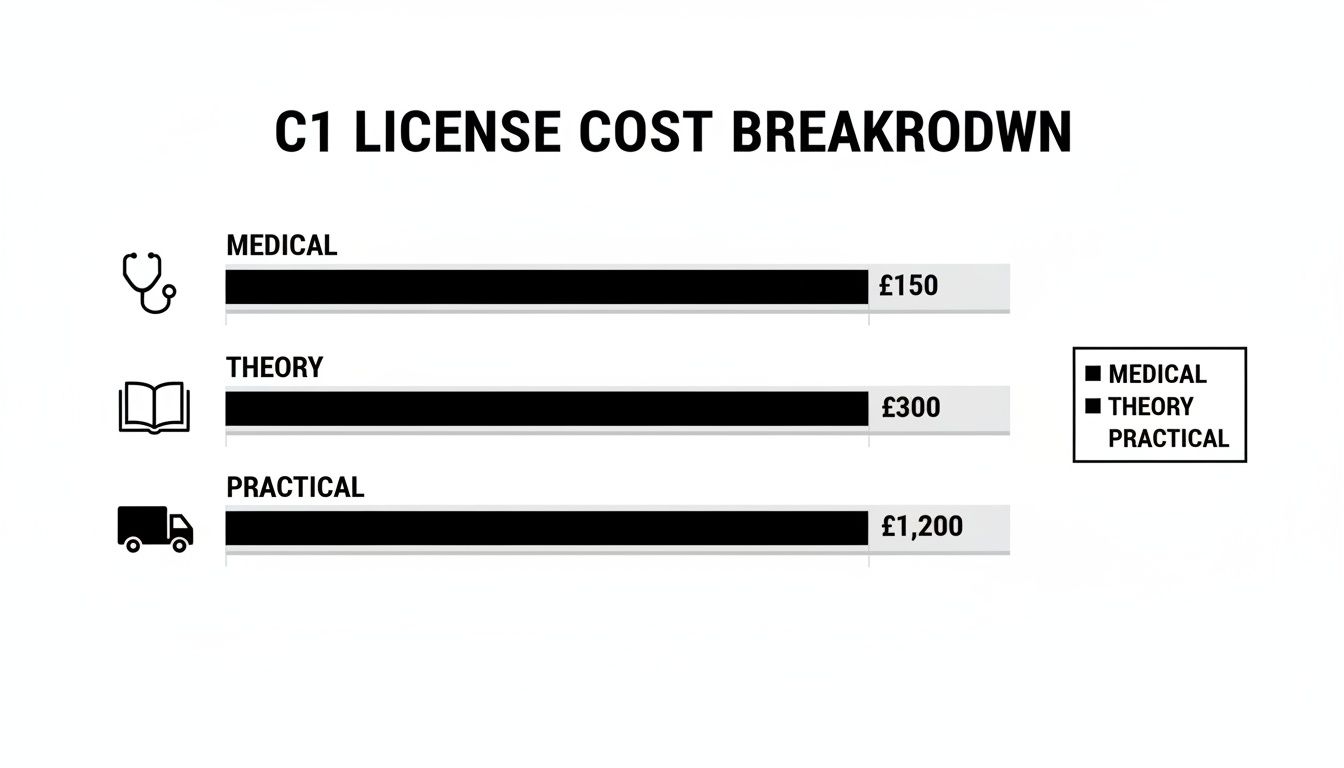
The infographic below shows how these initial costs stack up against the main event – the practical training.
As you can see, the medical and theory are small but essential stepping stones towards the biggest investment: your practical training.
Step 3: Practical Training and The Final Test
This is where the bulk of the C1 licence training cost comes from. The price here is all about how much time you need behind the wheel of a 7.5-tonne vehicle with a qualified instructor. Any good training provider will first assess your driving skills to suggest the right course length. For instance, if you have spent years driving large vans, you will probably need fewer hours than someone who has never driven anything bigger than a car.
When you add up the medical (£50-£150) and theory (£37), your all-in investment for the licence itself typically lands between £800 and £1,400. The practical training and test portion usually falls in the £700 to £1,200 range, depending entirely on your experience. A confident driver might need less time, whereas a complete newcomer will benefit from a more comprehensive course.
The key is to pick a package that fits your current skill level. Paying for too many hours is a waste of money, but skimping on training could mean you fail the test and have to pay for a retest.
Step 4: The Driver CPC for Professional Drivers
The final piece of the puzzle is the Driver Certificate of Professional Competence (CPC). This is only for those who plan to drive a C1 vehicle for a living – or ‘for hire or reward’, as the official term goes. If you are just getting the licence to drive a personal motorhome or horsebox, you do not need to worry about this part.
The initial Driver CPC qualification involves two modules:
Module 2 Case Studies: A computer test using real-world scenarios to check your professional knowledge.
Module 4 Practical Demonstration: A hands-on test where you show you can handle vehicle safety and security checks.
Passing Modules 2 and 4 will typically cost between £250 and £350. This price covers both the training and the test fees. It is a vital investment for a professional career, but an expense you can skip if your driving is purely for personal use. Knowing whether you need the CPC is key to figuring out your final, true cost.
What Factors Influence Your Final Training Cost
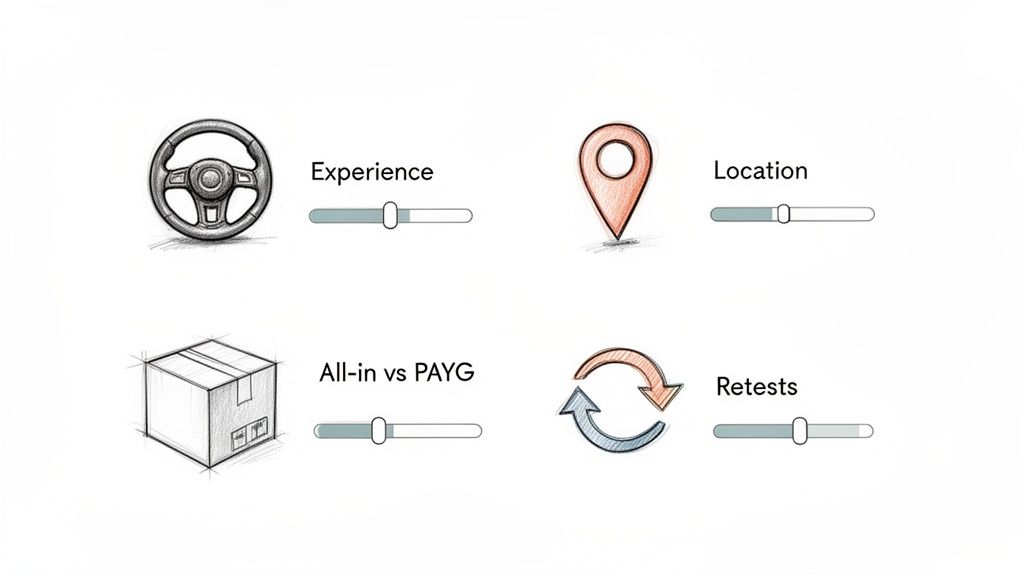
As you start looking into C1 training, you will probably notice the prices can vary quite a bit. It is not unusual for two people to pay different amounts for the very same licence, and there are good reasons for it. Several key factors have a direct impact on your final C1 licence training cost.
Understanding these variables will help you see why one quote might be higher than another. More importantly, it puts you in control, allowing you to choose a training path that gives you the best value for money. Let’s break down what shapes the price you will pay.
Your Previous Driving Experience
This is, without a doubt, the single biggest factor affecting your final bill. Think of it like learning any new practical skill—if you already have a solid foundation, you will pick up the advanced stuff much faster. A driver who has spent years confidently handling a large van, for instance, already has an instinctive feel for a bigger vehicle’s size, blind spots, and road behaviour.
Because of this, they will likely need fewer hours of practical training to get ready for their test. On the other hand, someone whose only experience is driving a small hatchback will naturally need more time to get comfortable with the weight, dimensions, and handling of a 7.5-tonne truck. A good training provider will assess your current skills to recommend the right amount of training for you.
The bottom line is simple: more time behind the wheel with an instructor means a higher cost. Your existing skills directly relate to how many training hours you will need to book.
Geographic Location Matters
Where you decide to do your training can also make a real difference to the price. Just as the cost of living varies across the UK, so do the running costs for training schools. A provider based in Central London or another major city has much higher overheads for everything from renting their yard space to insurance.
These higher operational costs are often passed on in their training fees. In contrast, a school in a smaller town or a more rural area might have lower running costs, allowing them to offer more competitive prices. It is always a smart move to compare a few quotes from providers in different nearby areas to see where you can get the best deal without compromising on quality.
All-Inclusive vs Pay-As-You-Go
Training providers generally offer their pricing in one of two ways. The one you choose affects both the final cost and how easy the process is.
All-Inclusive Packages: These are bundled deals that cover everything in one go—from booking your medical and supporting you through theory tests to all your practical training and test fees. They offer simplicity and are often better value, as the provider might get discounts on things like medicals which they can pass on to you.
Pay-As-You-Go: This route involves paying for each stage of the process one by one. While it offers flexibility, it can sometimes work out to be more expensive overall. It also means you have to manage all the bookings and admin yourself.
For most people starting out, an all-inclusive package is the smarter choice. It gives you a clear, upfront cost and makes the entire journey much smoother. You can get a better feel for the whole process by reading our guide on what is involved in a C1 driving course.
The Hidden Cost of Retests
Finally, there is a significant potential cost that many people forget to factor in: failing a test. If you do not pass your practical driving test on the first try, you will have to pay for a retest. This is not just the £115 test fee from the DVSA; you also have to cover the cost of using the training vehicle and your instructor’s time for the test slot.
This can easily add another £200-£300 (or more) to your total bill for every attempt. This is precisely why investing in high-quality training from a reputable provider is so important. A school with a high first-time pass rate might look a little more expensive at first glance, but they can save you a huge amount of money and stress in the long run by ensuring you are properly prepared to pass first time.
Smart Ways to Fund Your C1 Licence
Getting your C1 licence is a direct investment in your career, but the upfront cost should not be a roadblock. Thinking about how to finance your training can turn the C1 licence training cost from a hurdle into a simple, manageable plan. It is all about opening the door to new jobs without immediate financial strain.
There are a few practical and accessible ways to fund your journey. You do not need to think about high-interest credit cards or awkward personal loans to get going. Many training providers, including us at HGV Learning, offer structured pathways designed to make the whole process affordable and clear.
Flexible Payment Plans
One of the most popular ways to fund training is through a flexible payment plan. This approach is simple: it lets you break down the total cost into smaller, predictable monthly payments spread over an agreed period.
So, instead of needing to find a single lump sum of over £1,000, you could spread the payments out over several months. This makes budgeting a lot easier and means you can start your training right away while managing the cost in a way that fits your finances.
Spreading the cost makes professional driver training accessible. It removes the pressure of finding a large sum upfront, allowing you to focus on learning while the payments are handled in manageable chunks.
These plans are usually offered directly by the training company, which means the terms are clear and designed specifically for learners. You can get more details on how these options work in our dedicated guide to financing your HGV training.
Employer-Funded Training
Another excellent route to explore is getting your employer to pay for your licence. This is a very common setup, especially in sectors where a C1 licence is a basic job requirement. Think about roles in logistics, 7.5-tonne delivery services, or even the emergency services.
Many companies are more than willing to invest in their staff to fill essential roles. The arrangement can work in a few different ways:
Upfront Payment: Some employers will pay for the training in full before you start. This is common for new starters joining a specific role.
Training Agreements: A popular model is a training agreement where the company covers the cost. In return, you agree to stay with them for a set period, often 12 to 24 months.
Tuition Reimbursement: You might pay for the training yourself, and your employer reimburses you in instalments once you have qualified and are on the job.
It is always worth asking a potential or current employer if they offer funded training schemes. It is a win-win situation: they get a qualified driver they need, and you get your licence without dipping into your own pocket.
The Return on Your Investment: C1 Job Opportunities
It is easy to see the C1 licence training cost as just another bill to pay. But it is far better to see it for what it truly is: a direct investment in your career. Gaining this qualification is your first major step towards a range of stable, rewarding jobs that are always looking for skilled people.
Once you pass, you are no longer just a car driver. You become a professional ready to fill vital roles across the country. This simple shift opens up a job market where your new skills are in constant demand, giving you security and potential for financial growth that is hard to find elsewhere. Let’s break down what that return on your investment looks like.
In-Demand Roles and Salary Expectations
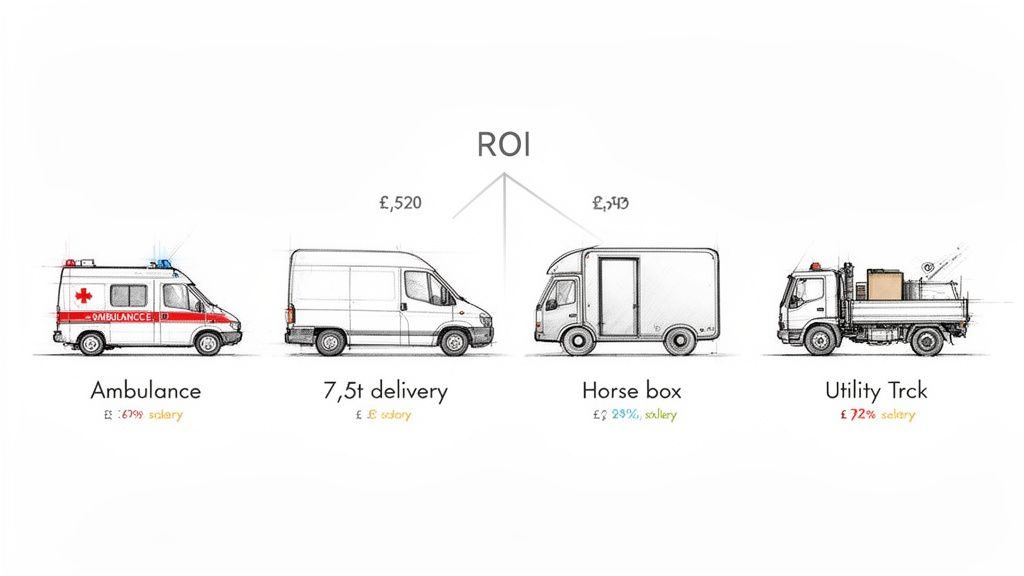
The career paths that a C1 licence unlocks are more varied than most people think. Each one offers a different work environment and salary, so you can find a role that genuinely suits you.
Here are some of the most common jobs you can walk into:
Ambulance Driving: A vital, respected role where new drivers can expect a starting salary of around £23,000 to £25,000.
7.5-Tonne Delivery Driver: You will be the backbone of local logistics, with typical starting salaries between £24,000 and £28,000 a year.
Horsebox Transport: This is a more specialised field for those with an interest in the equestrian world, often with competitive rates for private or commercial jobs.
Utilities and Construction: Driving for trades like scaffolding or utilities often pays more, sometimes starting near £30,000 because of the specialist nature of the work.
When you compare these salaries to the initial training cost of roughly £1,000 to £1,500, the decision makes clear financial sense.
In most cases, a C1 driver can earn back their entire training investment within their first month’s salary. This makes it one of the fastest and most effective returns you can get from any professional training course.
This quick payback turns the initial cost from a barrier into a smart, strategic career decision.
Calculating Your Return on Investment
Let’s put some real numbers on it. Imagine your total training cost comes to £1,200. If you land a delivery driver job with a monthly take-home pay of around £1,800, you have covered your investment with change to spare from your very first payslip.
But it is not just about getting that initial money back; it is about what comes next. The demand for qualified C1 drivers is consistently high across the UK. This gives you a level of job security that many other industries cannot offer.
That stability, combined with a solid income, is the true value of your investment. It is the foundation for building a more secure financial future, and it all starts with the decision to get qualified.
Your C1 Licence Cost Questions Answered
We get it. Even after a full breakdown of the costs, there are always a few practical questions that pop up. To make sure you go into this with your eyes wide open, we have put together answers to the most common queries we hear from trainees.
How Long Does It Take To Get A C1 Licence From Start To Finish?
Realistically, you should budget for around 6 to 8 weeks for the whole process. That is from the moment you apply for your provisional licence right through to passing your practical test.
Of course, this can vary a little. It depends on how quickly the DVLA processes your paperwork and the waiting times at your local test centre. This timeframe covers everything: your D4 medical, passing both theory tests, and your hands-on practical training. A good training provider will help you line everything up to keep things moving as smoothly as possible.
Do I Need The Driver CPC To Drive A C1 Vehicle?
This is a big one, and the answer really depends on why you are getting the licence. If you will be driving a C1 vehicle as your job – what the industry calls ‘for hire or reward’ – then yes, you absolutely need the initial Driver CPC qualification.
On the other hand, if it’s for personal use, you are in the clear. Driving a private horsebox to shows, taking your own motorhome on holiday, or using other vehicles for purely non-commercial reasons means you are exempt from the CPC. Most emergency service staff, like paramedics, are also exempt.
Understanding your CPC obligations from the start is key to calculating the true C1 licence training cost for your specific career goals.
What Happens If I Fail My C1 Practical Test?
First off, do not panic. It can be a setback, but it is not the end of the world. If you do not pass on the day, you will simply need to book a retest.
This does mean an extra cost. You will have to cover the hire of the training vehicle again, your instructor’s time for the test slot, and the official DVSA retest fee. This is exactly why choosing a high-quality training school with a solid first-time pass rate is so important. Better instruction gives you the confidence and skills you need to get it right the first time, saving you potential stress and money.
Can My Employer Pay For My C1 Licence Training?
Yes, absolutely. This is a very common route for many drivers. Lots of employers, especially in logistics, delivery services, and even the public sector, are happy to fund C1 training for their staff.
It usually works in one of two ways. Some will pay for everything upfront, no strings attached. Others might ask you to sign a ‘training agreement’, where they cover the cost. In return, you agree to stay with the company for a fixed period, like 12 or 24 months. It is always worth asking a current or future employer if this is an option.
Ready to turn your C1 licence from a plan into a reality? At HGV Learning, we provide a clear, supportive pathway to get you qualified and on the road. Explore our C1 training options and start your journey today by visiting https://hgvlearning.com.
Related Articles
09/03/2026
UK CPC Course Cost: A Complete 2026 Pricing Guide
When you're looking to get on the road professionally, one of the first questions on your mind is bound to be about the cost. In...