If you’ve found yourself searching for “telehandler training near me,” you’re on the right track towards a solid, in-demand career. Across the UK, industries like construction and agriculture are crying out for certified operators. Local training is the most direct route to getting qualified and on-site. This guide is your starting point for building the hands-on skills that employers desperately need: or if you’re ready to book straight in, see our telescopic handler training course for dates and pricing.
Why Local Telehandler Training Is a Smart Career Move
Deciding to get your telehandler ticket is more than just learning to operate a new piece of kit; it’s an investment in your future. The demand for skilled operators is strong and steady, creating reliable job opportunities right on your doorstep. Instead of a long commute, local training centres let you gain qualifications without turning your life upside down.
This local approach also means you’re learning in an environment that understands the regional job market. Many training providers have solid connections with local building firms, farms, and logistics companies. This can give you a huge head start when it’s time to find work.
The Growing Demand for Skilled Operators
The need for qualified telehandler operators isn’t going away. In fact, major infrastructure projects across the UK are increasing the demand. The Construction Industry Training Board (CITB) predicts the sector will need around 47,860 extra workers each year from 2025 to 2029 just to keep pace. This skills gap is a golden opportunity for anyone looking for a secure field with great earning potential.
For anyone thinking about a career change, this translates into stable, well-paid jobs. Average salaries can reach £28,000 a year, starting around £24,000 for new operators and climbing to over £33,000 for seasoned professionals.
Benefits of Getting Certified
Earning your telehandler ticket opens up many professional benefits that go beyond just driving the machine. Proper training gives you the confidence and competence to work safely and efficiently, which is precisely what every employer wants.
Here’s a quick look at the key advantages:
Better Job Prospects: A recognised certification, like NPORS or CPCS, makes your CV stand out and proves you meet the industry standard.
Top-Notch Safety Skills: You’ll learn exactly how to handle complex machinery without taking risks, protecting yourself and everyone around you.
Higher Earning Potential: Certified operators command better pay than general labourers, a clear reflection of their specialist skills.
Career Flexibility: Your skills aren’t just for one industry. You can take them anywhere, from building sites and farms to warehouses and even event management.
Understanding Your Accreditation Options: CPCS vs NPORS
When you start searching for “telehandler training near me,” you’ll quickly spot two key acronyms: CPCS and NPORS. Figuring out which one is right for you isn’t just a box-ticking exercise. It’s a crucial decision that can shape your career path and even determine which job sites you can get onto.
Getting this right from the start will save you time, money, and hassle down the road.
The two main schemes in the UK are the Construction Plant Competence Scheme (CPCS) and the National Plant Operators Registration Scheme (NPORS). Both are highly respected, but they serve slightly different purposes and are favoured by different types of employers.
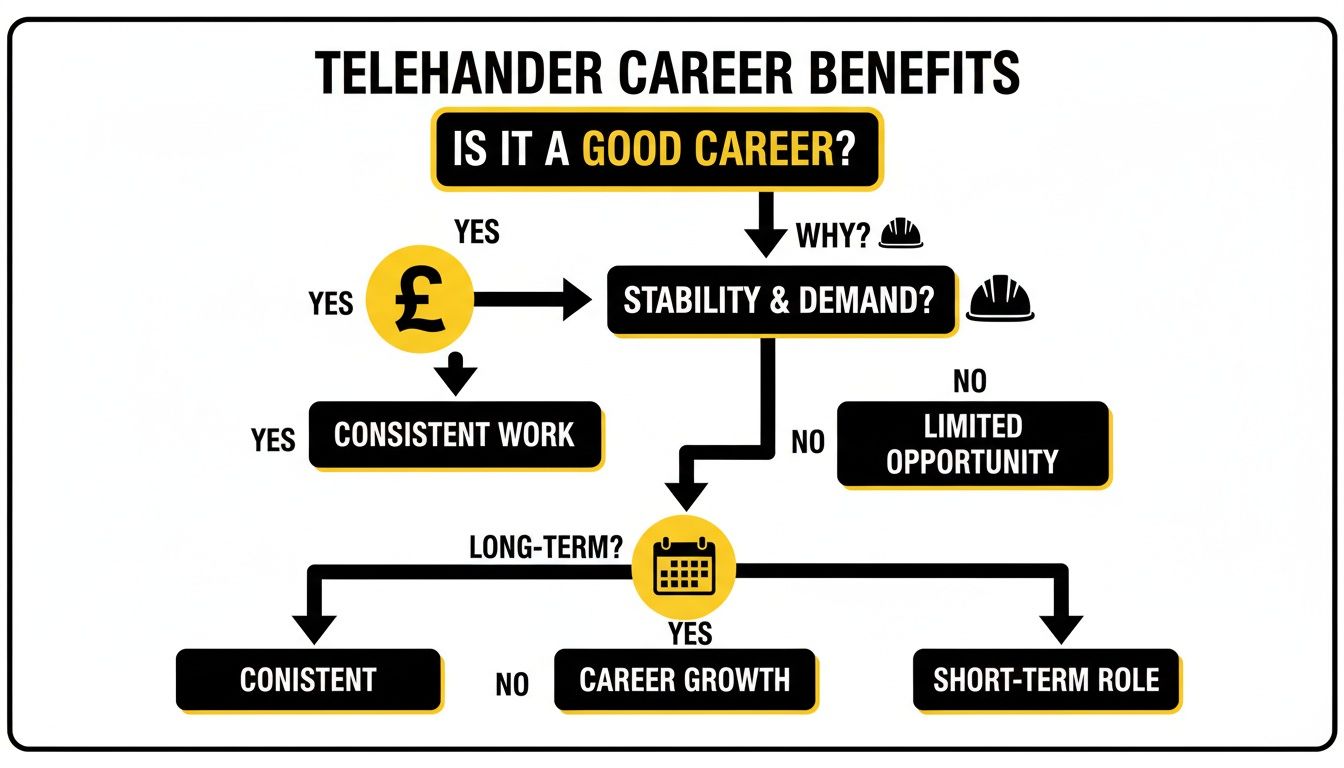
This flowchart gives you a clear idea of why getting certified is such a solid career move.
As you can see, getting your telehandler ticket is a direct route to better pay and job stability, thanks to high industry demand and consistent work.
Which Ticket Do Major UK Construction Sites Prefer?
For a long time, the CPCS card has been seen as the gold standard, especially on large, national construction projects. If you have your sights set on working for major contractors like Balfour Beatty or Kier, you will almost certainly need a CPCS ticket. It’s often a non-negotiable requirement written into their site entry policies.
NPORS, on the other hand, was traditionally known for its flexibility. An NPORS card can be tailored to a specific company or even a single machine. This makes it a great fit for smaller businesses or roles outside of major construction, like in agriculture or at builders’ merchants.
That said, NPORS has gained much wider acceptance on big construction sites in recent years, particularly if the card carries the CSCS (Construction Skills Certification Scheme) logo.
Key Takeaway: If your ambition is to work on the UK’s largest building sites, a CPCS card is your safest bet. For more varied roles or work with smaller firms, an NPORS card offers excellent, flexible training.
A telehandler ticket is a fast track to a secure career, especially with the current skills shortage. Operators can earn an average of £28,000 a year, with starting salaries around £24,000. Experienced professionals can earn over £33,000 as the construction sector booms.
With the CITB forecasting a need for 47,860 new workers each year until 2029, qualified operators are in a very strong position.
Your Career Path with a CPCS Card
The CPCS scheme is highly valued because it’s designed to show clear career progression. Your journey with CPCS typically follows two key stages:
Red Trained Operator Card: This is your first card, which you get after passing your practical and theory tests. It proves you’ve been trained to a competent standard but are still building your on-the-job experience. This card is valid for two years and is not renewable.
Blue Competent Operator Card: To upgrade to the Blue card, you have to complete a relevant NVQ (National Vocational Qualification) in Plant Operations within the two years your Red card is valid. The Blue card is then valid for five years and is renewable by passing the relevant CITB HS&E test and the CPCS renewal test.
This structured path shows a real commitment to your professional development, which is something major employers look for. Just like with other industry tickets, keeping your qualifications current is vital to staying compliant and employable. You can find more information about this in The HGV Learning Guide to CPC Training.
How to Find and Vet the Best Local Training Providers
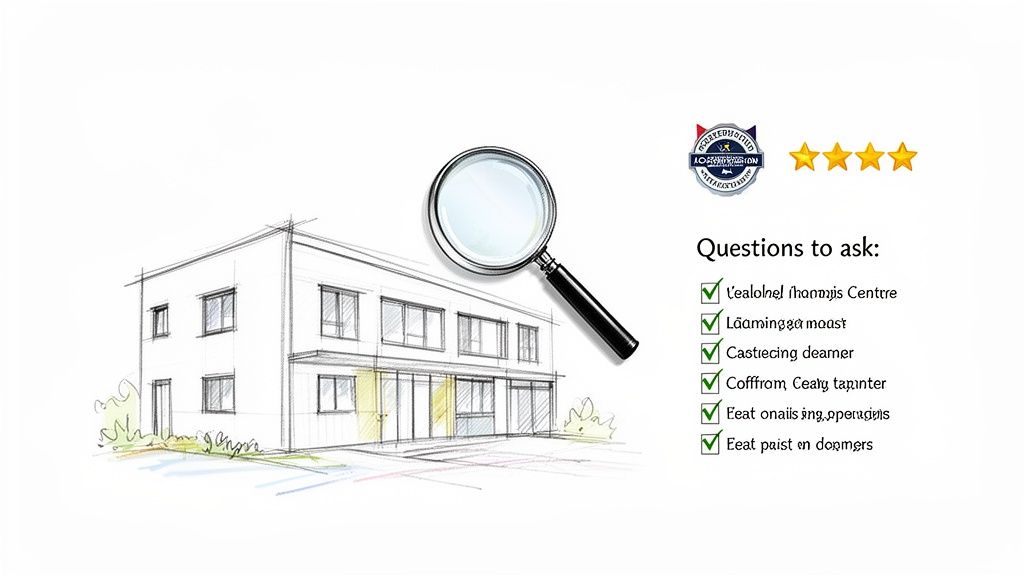
Typing “telehandler training near me” into Google will return a huge list of options. But how do you sort the good from the genuinely great? Picking the right provider is about more than convenience; it’s an investment in your career. A bit of due diligence now will pay off in the skills and confidence you walk away with.
The first port of call should be what past students have to say. Online reviews are your window into a training provider’s real reputation. Don’t just skim the star ratings: read the comments to see what people’s actual experiences were like.
Understanding why customer reviews are important helps you cut through the marketing noise and choose a business you can trust. Look for recurring themes in the feedback. Are people constantly praising the instructors, the quality of the machines, or the support they received? These details are golden.
Verifying Accreditations and Standards
Next, you need to confirm the provider is officially recognised to deliver the tickets they’re advertising. A fancy website doesn’t mean much if their qualifications aren’t legitimate. You’re looking for clear proof that they are an approved CPCS or NPORS training centre.
This information should be easy to find on their website. If you have to dig for it, that’s a bit of a red flag. To be absolutely sure, you can always check their status on the official CPCS or NPORS websites. This simple check guarantees that the card you earn will be recognised and accepted on UK construction sites.
Key Questions to Ask Before You Book
Once you have a shortlist, it’s time to get on the phone or send an email. Asking a few sharp questions can tell you everything you need to know about the quality of their training. A good centre will welcome your questions and give you straight answers.
Here’s a practical list of things you should ask:
What’s the instructor-to-trainee ratio? You want small groups. Ideally, no more than three trainees per instructor. This ensures you get plenty of hands-on machine time and direct feedback.
What kind of telehandlers do you train on? You want to learn on modern, well-maintained equipment that you’ll see on site, not an old machine that has seen better days.
Are there any hidden costs? Be direct. Ask if the quoted price includes everything: test fees, card registration, materials, and VAT.
What’s your pass rate? While it’s not the only thing that matters, a consistently high pass rate is a good sign that they know how to prepare their students properly.
A provider’s willingness to answer these questions openly says a lot about their professionalism. If you get vague replies or they seem reluctant to share details, it’s probably best to look elsewhere.
Finding a solid training provider is a lot like searching for any other specialised service, such as HGV training. For extra tips, our guide on finding HGV training near you has some excellent advice that also applies here. By being thorough, you can book your course with confidence, knowing you’ve chosen a centre that delivers real value.
What a Telehandler Course Involves (And What It Costs)
Knowing what you’re signing up for is the best way to get the most out of your telehandler training. When you understand the course structure and the costs involved, you can budget properly and arrive on day one ready to learn: not worrying about hidden fees.
Let’s pull back the curtain on what a typical course looks like and how much you should expect to invest.
A Look Inside a Typical Novice Course
If you’re starting from scratch, your training will be a solid blend of classroom theory and practical, hands-on learning. The aim is to build your skills from the ground up, making sure you’re not just competent, but also safe and confident behind the controls.
The curriculum is designed to give you a complete picture of the machine and its role on a busy site. You can expect to cover:
Rules and Responsibilities: You’ll get a clear rundown of key health and safety laws, including the Health and Safety at Work Act 1974, so you know what’s expected of you.
Machine Anatomy and Daily Checks: Here you will learn to identify all the key parts of the telehandler and how to conduct thorough pre-use inspections. Spotting a potential fault before you start work is a vital skill.
Safe Operating Practices: This is the core of your practical training. You’ll get comfortable starting and stopping the machine safely, travelling over different types of terrain, and understanding all the factors that affect its stability.
Mastering Load Charts: A large part of the course is learning how to read the machine’s load chart. This is critical for preventing tip-overs. You’ll get plenty of practice lifting, moving, and placing different loads at various heights and reaches.
This well-rounded approach ensures you’re fully prepared for both the theory and practical tests.
Of course, not everyone is a complete beginner. Many operators just need to renew their ticket or prove their existing skills. This is where the experienced worker test comes in.
Here’s a quick comparison to help you see which path is right for you.
Comparing Novice Courses vs Experienced Operator Tests
Feature
Novice Operator Course
Experienced Worker Test
Duration
Typically 3-5 days
Usually 1 day
Focus
Comprehensive training from scratch, covering both theory and practical skills in depth.
A focused assessment of existing skills. It’s a test, not a training course.
Who It’s For
Newcomers with little to no telehandler experience.
Seasoned operators who are confident in their abilities and need to formalise or renew their qualification.
Ultimately, the novice course is about learning the skills, while the experienced test is about proving you already have them.
How Course Costs Are Calculated
When you start searching for “telehandler training near me,” you’ll quickly see that prices can vary. Several factors influence the final cost, and knowing what they are helps you spot genuine value.
Typically, the price you’re quoted will be influenced by:
The Accreditation Body: CPCS courses often come with a slightly higher price tag, due to their rigorous standards and associated card registration fees.
Course Length: It makes sense that a 5-day novice course will cost more than a 1-day experienced worker test.
Training Centre Location: Costs can differ depending on the region. Centres in major urban areas sometimes have higher overheads, which can be reflected in their prices.
Instructor-to-Trainee Ratio: A lower ratio is a huge plus. It means more one-on-one time with the instructor and the machine, and this quality of training can affect the cost.
On average, a typical 3-5 day novice course can range from £600 to over £1,200. A 1-day experienced test is usually between £300 and £500. Always ask if the price you’re given includes VAT, test fees, and card registration to avoid surprises.
Finding Flexible Payment Options
Investing in your career is one of the best things you can do, but it shouldn’t break the bank. Many people worry about the upfront cost of training, but good providers understand this. They often have ways to make payment more manageable, so don’t hesitate to ask about payment plans when you enquire.
Here at HGV Learning, we believe that professional development should be within reach for everyone. We offer flexible payment options, including in-house plans that let you spread the cost over several months. This approach helps you focus on your training without financial pressure, getting you qualified and into a better-paying job much faster.
Getting Ready for Your Training and Test Days
It’s completely normal to feel a few nerves before your training and test days. It shows you’re taking it seriously. This section is about turning that nervous energy into quiet confidence, giving you a clear rundown of what you need to do, bring, and expect.
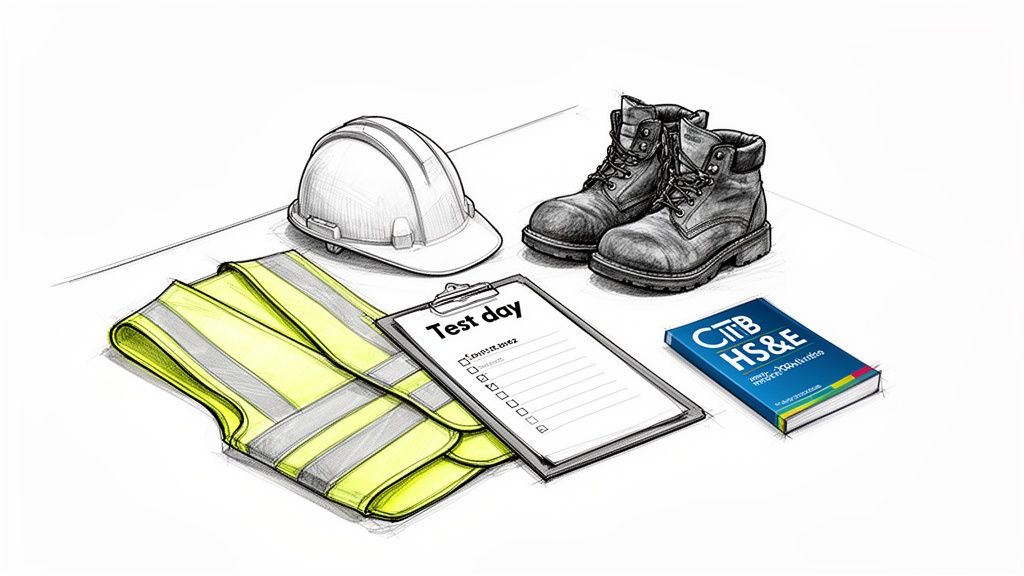
First things first, let’s talk about paperwork. Before you even think about climbing into a telehandler, you need to have passed the CITB Health, Safety & Environment (HS&E) test. This is non-negotiable for both CPCS and NPORS courses.
Crucially, your pass certificate must be dated within the last two years of your practical test date. Don’t leave this to the last minute. Get it booked well in advance and make sure you bring the certificate with you. No certificate, no test. It’s as simple as that.
What to Bring on the Day
Showing up with the right Personal Protective Equipment (PPE) is your first test, and it happens the moment you walk through the gate. It tells your instructor you’re serious about safety. You’ll also need to be familiar with current high-visibility apparel standards, which are critical when working around heavy machinery.
While your training provider will give you a specific list, you should always be ready with the basics:
Steel toe-capped boots to protect your feet.
A high-visibility vest or jacket so you can be seen clearly.
A hard hat for essential head protection on site.
All your paperwork, including your CITB HS&E pass certificate and some form of photo ID.
Passing Your Theory and Practical Tests
Your assessment is split into two parts: theory and practical.
The theory test is usually a one-on-one verbal Q&A with your instructor. They’ll cover everything from the nuts and bolts of safety regulations to how to read load charts. Pay close attention in the classroom, make notes, and never be afraid to ask a question if something isn’t clear. There’s no such thing as a stupid question.
Then comes the practical test – your chance to show what you can do. You’ll be guided through a series of manoeuvres designed to test your real-world skills. This typically includes:
Running through a full pre-use inspection of the machine.
Navigating the telehandler forwards and backwards through a tight chicane made of cones.
Lifting a palletised load and placing it with precision onto a high-level scaffold or platform.
Demonstrating the correct and safe shutdown procedure.
The key to passing isn’t about being the fastest; it’s about precision and safety. The instructor is looking for smooth, controlled operation and proof that you’re always aware of your surroundings. Stay calm, listen to the instructions, and work through your checks methodically. If you’ve put the preparation in, you’ll be fine.
Taking the Next Step to Get Your Ticket
You now have a good understanding of what’s involved. You know the difference between CPCS and NPORS tickets and what to expect on your test day. The route to becoming a certified telehandler operator isn’t complicated once you know the steps. Now it’s time to get things moving.
This is where we turn research into a practical plan. The goal is to get you from typing “telehandler training near me” into a search engine to booking the right course for your new career.
Your Personal Action Plan
Let’s keep it simple and break down the main things you need to do. Think of this as your personal checklist to get you from where you are today to holding a new operator card. It’s all about taking one step at a time.
Here are your immediate priorities:
Book Your CITB HS&E Test: This is the first thing you need to sort out. Find your local test centre and get it booked, as you can’t take the practical test without a valid pass certificate.
Find Local Training Providers: Look online for two or three well-regarded centres in your area. Check their reviews and make sure they are officially accredited for either NPORS or CPCS.
Get on the Phone: Ring your shortlisted providers. Ask them about their instructor-to-trainee ratio, what kind of machines you’ll be on, and the all-inclusive price. The way they answer will tell you a lot.
A good training provider will be happy to walk you through everything and answer your questions. If you get the hard sell or they’re vague on the details, trust your gut and look elsewhere. This is your money and your career, so you need to be confident in your choice.
From First Call to Fully Certified
Once you’ve picked a provider you’re happy with, the rest of the pieces will fall into place quickly. You’ll get your course date locked in, sort out your PPE, and start looking over the theory material. This is a well-trodden path, and thousands of people get qualified every year.
With skilled operators in high demand across the UK, there’s never been a better time to get these skills. Acting today is the first real step towards a secure, rewarding, and well-paid career in an industry that needs qualified people. Your new job is out there waiting for you.
At HGV Learning, we take the hassle out of finding and booking the right telehandler course. We connect you with accredited training centres all over the UK and can even offer flexible payment plans to help you get started. Get in touch with us today to find a course near you and begin your journey.
Related Articles
16/10/2026
What Age Can You Start HGV Driver Training? A 2026 UK Guide to Licence Age Requirements
If you're asking what age you can start HGV driver training, the honest answer depends on which licence you're after. A C1 licence, covering vehicles...