An LGV (Large Goods Vehicle) licence is your official qualification to get behind the wheel of commercial vehicles weighing over 3.5 tonnes here in the UK. Think of it as the modern, official term for what many people still call an HGV (Heavy Goods Vehicle) licence.
For anyone looking to build a stable and rewarding career on the road, getting your LGV licence is the essential first step.
Opening up Your Career With An LGV Licence
Your standard car licence gets you from A to B. An LGV licence, on the other hand, is the master key that opens up an entire industry. It’s far more than just a permit: it’s your ticket into the world of professional logistics, construction, retail distribution, and so much more.
LGV vs HGV: What Is The Difference?
You’ll see the terms LGV and HGV used all the time, and it can be a bit confusing. In the UK today, they mean exactly the same thing. The official term was changed from HGV to LGV to align with European standards, but the vehicles, the job, and the licence requirements are identical.
To put it simply, here’s a quick breakdown:
LGV vs HGV: What You Need to Know
Term
Meaning
When It’s Used
LGV
Large Goods Vehicle
The official, modern term used by the DVLA and on your licence.
HGV
Heavy Goods Vehicle
The older, more traditional term still widely used in the industry and conversation.
So, whether you call it an LGV or HGV licence, you’re talking about the same qualification needed to operate everything from smaller lorries right up to the massive articulated trucks you see on the motorway.
An LGV licence is more than just a piece of paper. It represents a real commitment to safety, professionalism, and the skill needed to handle large vehicles responsibly on Britain’s roads.
Getting started means understanding what’s required. For a full rundown, you can learn more about what you need to drive an LGV vehicle in our detailed guide. The journey involves a few key stages, from medical checks to theory and practical tests, all designed to make sure you’re fully prepared for the road ahead.
With this qualification, you become a crucial part of the UK’s supply chain, making sure goods get where they need to go, safely and on time. It’s a profession that offers great stability, solid earning potential, and a clear path for growing your career.
Breaking Down the LGV Licence Categories
Getting your head around the idea of an LGV licence is the first step, but the real key is understanding the different categories. Think of it like a set of keys – each one opens up a different type of vehicle and, with it, a different career path.
Each category qualifies you to drive specific vehicles, so picking the right one from the get-go is a smart move. It means your training lines up perfectly with the job you actually want. Let’s walk through the main UK licence categories and see what you can actually drive with each one.
Category C1: The Versatile Starting Point
A Category C1 licence is your gateway into the world of medium-sized commercial vehicles. This ticket lets you get behind the wheel of any rigid vehicle weighing between 3,500kg and 7,500kg. It’s the perfect launchpad for many new drivers, opening up plenty of job options without throwing you straight into the deep end with the biggest lorries.
You’ll find C1 drivers doing all sorts of crucial jobs. With a C1 licence, you could be driving:
Ambulances: It’s a non-negotiable requirement for most paramedics and patient transport staff.
Larger Vans: Many delivery firms use vans that tip the scales over the standard 3.5-tonne limit, making a C1 essential.
Horseboxes: A very common choice for anyone involved in the equestrian world.
Small Lorries: The kind you see making local deliveries or handling smaller house removals.
If you want to get into the nitty-gritty of this qualification, we’ve got a full guide on what C1 on a driving licence means and the doors it can open.
Category C: The Industry Standard
The Category C licence is what most people picture when they think of a “lorry driver.” It’s the true workhorse of the haulage industry, letting you drive any rigid vehicle over 3,500kg with no upper weight limit. This is the licence that opens up the vast majority of HGV driving jobs in the UK.
A Category C licence is incredibly flexible. You’ll be qualified for a huge range of roles, driving vehicles like:
Tipper Trucks: Absolutely essential on construction sites and in quarries.
Refuse Collection Vehicles: A vital public service role that keeps our communities running.
Flatbed Lorries: Used to haul everything from building materials to heavy machinery.
Box Lorries: The backbone of supermarket and retail distribution networks.
Holding a Category C licence makes you a highly desirable driver. You’re equipped to handle the backbone vehicles of UK logistics, making it the most direct route to a full-time professional driving career.
Category C+E: The Ultimate Qualification
Finally, we have the top tier: the Category C+E licence. The ‘+E’ bit simply means you can tow a trailer that weighs more than 750kg. This is the licence you need to drive the massive articulated lorries: the “artics” or tractor-trailers you see cruising down the motorway.
With a C+E licence, you can operate enormous vehicle combinations, often weighing up to 44 tonnes. This is the ticket for long-haul routes, international transport, and specialised haulage jobs that command the highest salaries in the industry. It’s your key to a career moving anything from fuel tankers to shipping containers across the country, and even into Europe.
Your Step-by-Step Path To Getting Licensed
The road to getting your LGV licence can seem a bit daunting at first, but it’s really just a series of clear, manageable steps. Think of this as your personal roadmap. We’ll walk you through each stage, breaking down what might feel like a complicated process into a simple, straightforward plan for your future.
Every step, from the initial health check to the final driving assessment, is designed to build your skills and ensure every professional driver on the road is safe, competent, and knowledgeable.
Step 1: The Medical Examination
Before you can even think about getting behind the wheel of a lorry, you have to prove you’re medically fit to drive one. This isn’t just a box-ticking exercise; it’s a critical safety requirement for everyone on the road. A doctor will need to complete a D4 medical form, which covers everything from your eyesight and neurological health to any conditions that might affect your driving.
A good training provider can often help you get this arranged, making sure this first hurdle is as smooth as possible. Once that signed D4 form is in your hands, you’re ready for the next piece of the puzzle.
Step 2: Provisional Licence Application
With your medical sorted, the next move is applying for your provisional LGV licence. This involves sending your D4 form, along with a D2 application form, directly to the DVLA. This officially notifies them of your intent to start training.
It usually takes a few weeks for the provisional licence to arrive in the post. When it does, you’ll see the new LGV categories you’re entitled to learn in, which opens the door to the next phase of your training.
Step 3: Conquering The Theory Tests
Once your provisional licence has arrived, it’s time to hit the books. The theory test is split into two separate parts, and you’ll need to pass both before you can even think about booking your practical test.
Part 1a Multiple-Choice Questions: This exam covers a huge range of topics. Expect questions on everything from road signs and drivers’ hours to safe vehicle loading and essential procedures. It’s all about proving you have a solid grasp of the rules governing professional driving.
Part 1b Hazard Perception: This is a video-based test where your job is to spot developing hazards on the road. It’s designed to test your awareness and reaction times: two skills that are absolutely crucial for any LGV driver.
Studying can feel intense, but a structured training programme will give you all the resources and mock tests you need to feel confident. For a complete overview of the entire process from start to finish, you might find our guide on how to get an HGV licence in the UK really helpful.
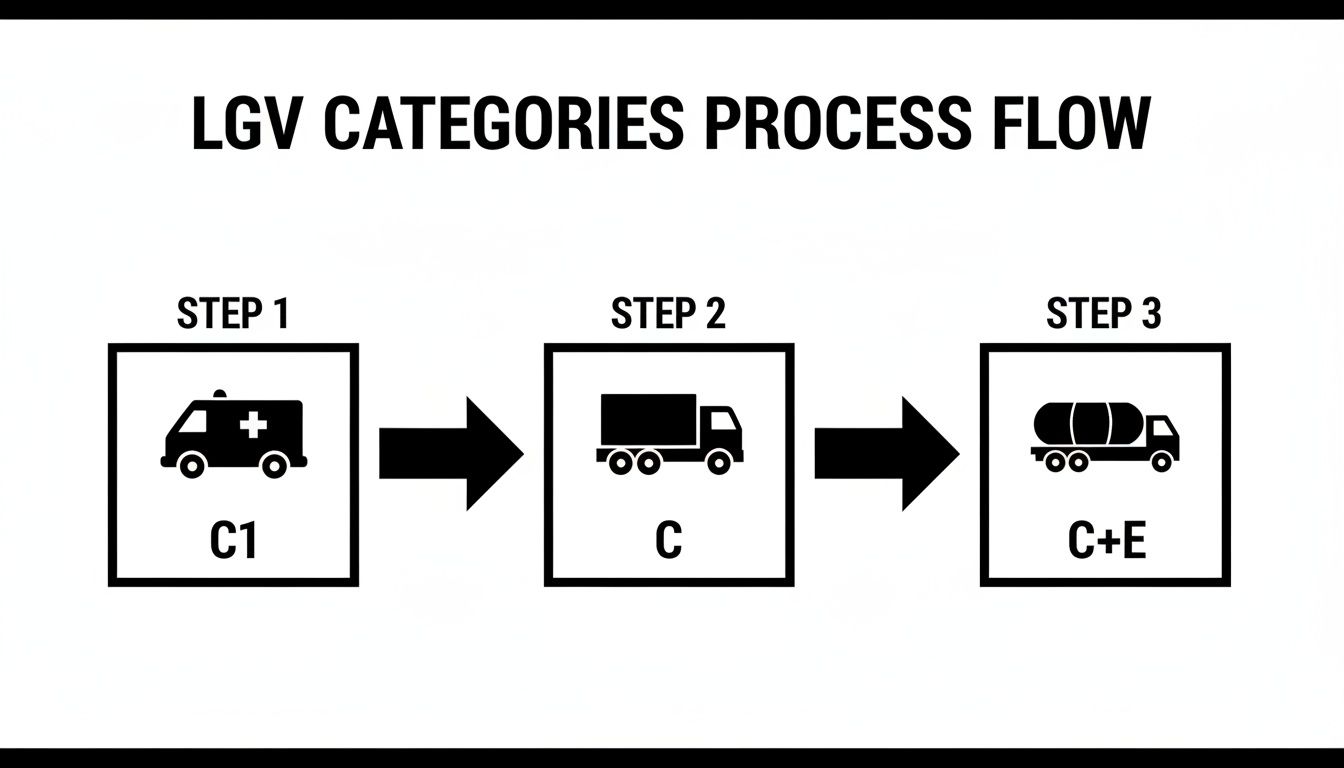
The infographic below shows the typical progression through the main licence categories.
This visual guide clearly shows how each category builds on the last, taking you from medium-sized C1 vehicles all the way up to the largest C+E articulated lorries.
Step 4: The Practical Driving Test
This is it: the final hurdle. The practical driving test is where you put all that learning into action. You’ll need to prove to an examiner that you can handle a large vehicle safely and confidently out on public roads. The test covers vehicle safety checks, on-road driving across different road types, and a series of reversing manoeuvres.
With the right training and plenty of practice under your belt, you’ll be well-prepared to pass this test and officially earn your LGV licence. From there, a new career is waiting.
Boosting Your Career with Specialist Certifications
Passing your LGV test is a brilliant achievement, but it’s really just the start of your journey. Think of your Category C or C+E licence as the solid foundation for your driving career. To build a taller, more impressive structure, and command a higher salary, you’ll want to add specialist certifications to your toolbox. These qualifications make you far more versatile and valuable in a competitive market.
Each ticket you add opens up new industries and lets you take on specialised, and often better-paid, work. By investing in these extra skills, you aren’t just getting another bit of paper; you’re actively building a more secure and rewarding future for yourself.
ADR Certificate for Hazardous Goods
One of the most valuable additions you can make to your LGV licence is an ADR certificate. This ticket is a legal must-have for any driver who transports dangerous or hazardous goods by road. We’re talking about everything from flammable liquids and toxic chemicals to corrosive materials and gases.
With an ADR certificate under your belt, you’ll gain crucial knowledge in:
Handling Procedures: How to safely load, unload, and secure hazardous materials.
Emergency Response: Knowing exactly what to do if a spill or incident happens.
Legal Compliance: Getting to grips with the strict rules that govern transporting dangerous goods.
This qualification is always in high demand in sectors like fuel, chemicals, and waste management, where getting safety and compliance right is non-negotiable. Unsurprisingly, drivers with an ADR ticket often command higher salaries because of the specialist nature of the work.
HIAB Training for Lorry-Mounted Cranes
You’ve probably seen them about – lorries with their own cranes, used for lifting heavy items without needing a separate machine on site. To operate one of these, you need a HIAB certificate. While HIAB is technically a brand name, it’s become the go-to term for any lorry-mounted crane.
This training gives you the skills to operate the crane safely and efficiently. It makes you incredibly useful on construction sites, for builders’ merchants, and in logistics operations that deal with bulky goods. A driver who can deliver and unload heavy materials all on their own is a massive asset to any company.
Adding a HIAB or ADR certificate to your LGV licence is like adding a turbocharger to an engine. It takes what you can already do and dramatically increases your power and value in the industry.
The Growing Demand for Skilled Drivers
The logistics world never stands still; new technologies and regulations are always shaping its future. For instance, recent government stats show a huge 77% increase in the registration of new zero-emission LGVs compared to last year. You can read more about the industry’s shift to greener fleets in the Department for Transport’s latest vehicle licensing data.
This trend just goes to show the need for adaptable drivers who are ready to learn new skills. Holding specialist qualifications proves you’re committed and prepares you for these future opportunities, making your LGV licence the key that opens up a long and successful career.
Job Opportunities with Your New LGV Licence
So, you’ve got your LGV licence in hand: what now? A whole world of career opportunities just swung wide open. This isn’t just about finding another job; it’s about stepping into a vital profession that genuinely keeps the UK moving.
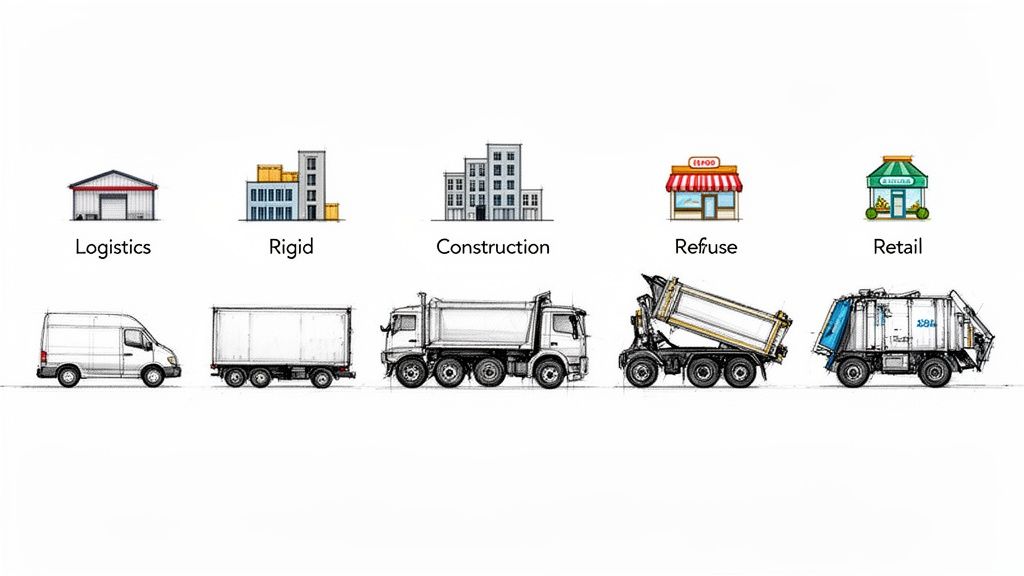
From delivering essential goods that stock our shelves to supporting massive construction projects, qualified drivers are the absolute backbone of our economy. The demand for skilled professionals is high across logistics, retail, construction, and waste management, creating a stable and secure job market for newly qualified drivers.
The Driver Shortage Creates Opportunity
Right now, the UK is facing a major driver shortage, which puts you in a surprisingly strong position as a newly qualified driver. Earning your LGV licence today means entering a sector hungry for fresh talent.
According to the latest Logistics UK Compliance Report 2025, the active driver pool shrank by 1.9% at the start of the year. This gap creates immediate openings and puts you in a stronger position when looking for that first role. It means employers are more eager than ever to recruit and retain good people, often offering competitive salaries, benefits, and clear career progression to attract the best candidates.
Finding a Role That Suits Your Lifestyle
A career behind the wheel isn’t a one-size-fits-all deal. The type of work you do can be shaped around the lifestyle you want, offering a level of flexibility that many other jobs just can’t match.
There are several common paths you can take:
Local Multi-Drop Driving: This involves making lots of deliveries within a local or regional area. It’s ideal if you prefer being home every evening and enjoy a fast-paced, active day.
Long-Distance Trunking: This role is all about long-haul routes between depots, often driving overnight. It’s a great fit for drivers who love life on the open road and prefer straightforward, point-A-to-point-B journeys.
Specialised Roles: With extra qualifications like ADR or HIAB, you can move into specialised sectors like fuel transport, construction, or event logistics. These roles often come with higher pay and more varied work.
With an LGV licence, you are not just getting a job; you are gaining a professional skill that offers security, variety, and the chance to build a lasting career on your own terms.
As you build up experience, your options will only expand. Many drivers progress into transport management, become driver trainers, or even start their own haulage companies. Your LGV licence is the first, most important step on a rewarding career path, putting you firmly in control of your future.
Your Top LGV Licence Questions Answered
Starting out on a new career path always throws up a few questions. To make sure you feel completely clear and confident about your decision, we’ve put together direct answers to some of the most common queries we get from new drivers.
Getting the right information from the get-go is the key to a smooth start. Below, we’ll cover everything from age limits to the all-important Driver CPC, giving you the final pieces of the puzzle.
Are There Age Restrictions for Getting an LGV Licence?
Yes, there are a couple of firm age limits you need to be aware of. To get your hands on a Category C or C+E LGV licence, you must be at least 18 years old.
But here’s the first hurdle everyone needs to clear: before you can even think about applying for a provisional LGV licence, you absolutely must hold a full car (Category B) driving licence. This is a non-negotiable first step, so make sure that’s sorted before you dive in.
How Long Does the Whole Process Take?
The timeline can vary a bit from person to person, but most of our trainees find they can get fully qualified in around 8 to 10 weeks.
That timeframe covers the entire journey, from start to finish:
Booking and passing your medical exam.
Applying for your provisional licence.
Studying for and nailing both parts of your theory test.
Getting stuck into your hands-on, practical training.
Passing that final practical driving test.
A good, well-organised training provider will manage all the bookings for you and map out an efficient schedule, guiding you through each step without any frustrating delays.
Thinking about the process from start to finish is the best way to manage your expectations. A clear plan turns what feels like a huge mountain to climb into a series of small, achievable steps.
What Is the Driver CPC and Do I Need It?
The Driver Certificate of Professional Competence (CPC) is a mandatory qualification for pretty much every professional LGV driver in the UK. Think of it less as an optional extra and more as a legal requirement to earn a living in the industry.
To get your initial Driver CPC, you’ll need to pass two extra tests on top of your standard theory and practical exams. These are a case studies test (known as Module 2) and a practical demonstration test (Module 4).
Once you’re qualified, you’ll need to complete 35 hours of periodic training every five years. This keeps your Driver CPC valid and ensures you stay legally on the road. Any decent training course will build the initial CPC qualification right into your programme, so you’re fully compliant and ready for work the second you pass.
Can I Pay for My LGV Training in Instalments?
Yes, absolutely. Most reputable training providers understand that funding your course is a big investment and offer flexible payment options to make it much more manageable.
These plans typically let you spread the cost over several months, which takes the pressure off finding a large lump sum upfront. It makes kicking off a new career far more accessible, allowing you to focus on your training without worrying about the finances.
Ready to get behind the wheel and start your journey towards a rewarding career on the road? The team at HGV Learning is here to guide you through every stage, from your medical and theory tests to your practical training and beyond. Find out more about our comprehensive courses and flexible payment plans by visiting HGV Learning.